









The naturally shaped system of Polish waterways favors inland navigation, both in local, national, and international relations, and the relatively high density index of the network highlights the favorable natural conditions for the development of inland shipping.
Polish inland waterways are divided into five classes of navigability. According to this classification, different parameters for inland vessels apply to pushed convoys and different ones for self-propelled ships and barges. These parameters are: length, width, draft, and load capacity. Clearances under bridges are also taken into account. Waterways of classes I to III are of regional importance, while classes IV, V, and Va are of international importance.
Despite the fact that the length of inland waterways in Poland considered navigable between 2000 and 2009 decreased by 447 km, it remains significant and currently stands at 3659 km. In 2012, 3346 km (91.4%) of the waterways were in use for navigation. Of these, only 214 km, i.e., 5.8% of the length of the waterways, meet the requirements for waterways of international importance (classes IV and V).
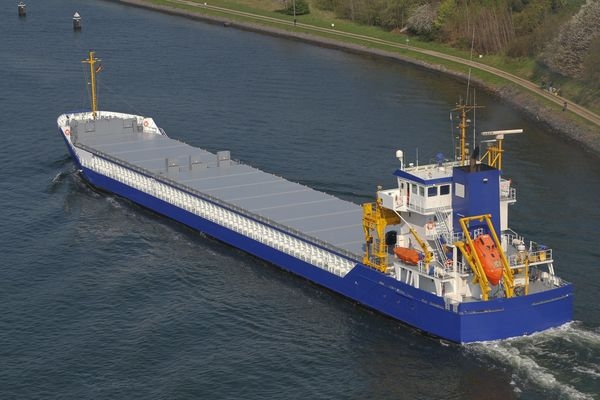
According to the IV class of waterway, the maximum dimensions of inland vessels are as follows: length – 85 m, width – 9.5 m, and draft – 2.5 m. The use of these vessels allows for the transport of up to 1500 tons of cargo by inland waterway, which is equivalent to 75 truck sets with a load capacity of 20 tons each or a rail set consisting of 38 freight wagons with a load capacity of 40 tons each.
In accordance with European Union recommendations, member states are obliged to develop waterways to specific parameters and ensure class IV and higher. However, this requires continuous modernization of existing routes as well as the construction of new connections.
The main inland waterways in Poland are the Oder Waterway (ODW) together with the Gliwice and Kędzierzyn Canals, the Vistula Waterway, and the Vistula-Oder Waterway. These routes and their river basins form a national network of waterways, unfortunately non-uniform and with qualitatively low parameters. The ODW is used for navigation only in its upper and lower reaches, bypassing the middle section due to its low transit depths. The Vistula, on the other hand, is a slow-flowing river for most of its course, not divided into barrages.
Compared to other European Union countries, only a few countries have both a longer network of waterways and a higher network density index. These countries include Germany, France, the Netherlands, and Finland. In Poland, this index is 11.6 km/1000 sq km.
The article contains 21,900 characters.
Source: Logistyka Magazine