









In 1987, the United Nations World Commission on Environment and Development noted in a published report that a level of prosperity had been reached that could be maintained provided that the state of the economy was preserved. This is possible by introducing the principle of sustainable development into management, i.e., development in which the needs of the current generation can be met without compromising the ability of future generations to meet their own needs.
The concept of sustainable development has been modified several times by the United Nations. Consequently, the idea of sustainable development has become one of the main goals included in the European Union’s policy. The reasons for introducing policy in this direction include, among others:
- excessive dependence on fossil fuels, which threatens economic security and negatively affects the natural environment and society,
- constantly growing demand for natural resources, which increases pressure on the environment,
- progressive climate change caused, among other things, by carbon dioxide emissions and the occurrence of natural disasters that have a destructive impact on the economy,
- slowly developing competitiveness, which can be increased through the use of ecological solutions, such as, among others, the use of innovative energy sources.
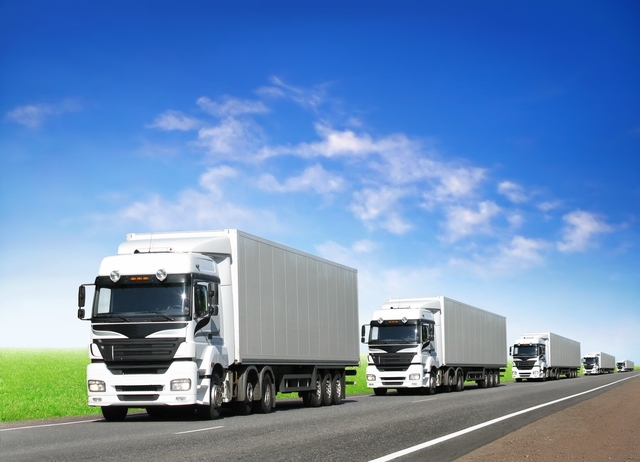
Poland, as one of the member states of the European Union, also implements the assumptions of the sustainable development policy. This has been guaranteed in the Constitution of the Republic of Poland. In Polish legislation, sustainable development is understood as socio-economic development in which the process of integrating political, economic, and social actions takes place, while maintaining environmental balance and the durability of basic natural processes, in order to guarantee the possibility of meeting the basic needs of individual communities or citizens, both of the current generation and future generations. In the above definitions, 3 aspects can be distinguished that should guarantee an appropriate level of sustainable development of the economy – both Polish, European, and global. These are environmental, economic, and social aspects. This means that individual sectors of the economy should use resources more efficiently, have a minimal impact on the environment, and be more competitive compared to the current state. One of the sectors of the national economy is transport. It is therefore also covered by the principles of sustainable development. It follows that one should strive for the efficient use of transport resources (superstructure and infrastructure), minimization of the impact on the natural environment, and strengthening its competitiveness.
The article contains 33,170 characters.
Source: Logistyka Magazine
GoAEubiowski_Jacyna-GoAEda_Jachimowski_Lewczuk_KAEodawski_SzczepaAIski_Wybrane_aspekty.pdf