
Just a few years ago, transport in logistics was practically limited to the relatively simple concept of road haulage, moving pallets around. Goods were received into the warehouse and dispatched according to a scheme many called “pallet in – pallet out.” After receipt, forklifts would move the pallets to pallet racks, and once an order was called, they would retrieve them from the racks and take them to the loading ramp.
Only the dynamic development of e-commerce, the expansion of omnichannel retailing, and the modification of the order unit from a pallet level to individual items have forced transport to keep up with changes in logistics and growing customer expectations. Furthermore, transport is not only involved in the journey to and from the warehouse. The warehouse itself is now a place where we sometimes install kilometers of conveyors, sorters connected to packing stations, sorters that distribute ready-made packages to individual destinations, as well as autonomous picking robots and cobots that work alongside humans. We can imagine that the transport of the future will be the unmanned movement of goods, from delivery to the supplier all the way to delivery to the end customer. How is this possible? Let’s try to map out the supply chain of the future. (Fig. 1)
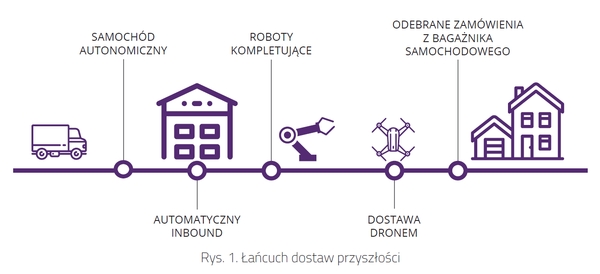
We can therefore assume that goods will be delivered to the warehouse by autonomous vehicles. Then, a system of sensors, detectors, and kilometers of conveyors will transport them to the appropriate place in the warehouse, for example, to mini-load racks. From there, picking robots will retrieve orders, which could be collected by drones and delivered to any location, perhaps even to a car trunk from which we could pick up the package by opening it with our key. A distant future – really? Let’s take a look at three main elements of logistics operations that are already being tested and even implemented on a larger scale, namely autonomous vehicles, picking robots and cobots, and drone deliveries.
Autonomous vehicle
Regular daily deliveries using a fully autonomous truck are still in the testing phase, but it is worth mentioning that they have already taken place on public roads, namely in the vicinity of Jönköping, a city in southern Sweden. The 26-ton truck was provided by the Swedish technology company Einride AB, which specializes in the production of autonomous cars, and above all, autonomous delivery and heavy-duty vehicles. Thanks to the approval granted by the Swedish Transport Agency, the T-Pod truck model began daily cargo runs. The tests are groundbreaking because the car moves completely autonomously, and there is also no possibility for a real driver to take control if necessary. T-Pods do not even have a cab. Control can be taken over by a trained operator who supervises the vehicle’s movement via a 5G network. Permission for regular T-Pod trips was granted under certain conditions, of course. These concern not only continuous human supervision but also the use of a fixed, strictly defined route. The autonomous truck in Jönköping will only travel between two industrial facilities – a warehouse and a transshipment terminal of one of the logistics operators. The entire route is equipped with a special communication system that allows the operator to take control of the vehicle at any time.
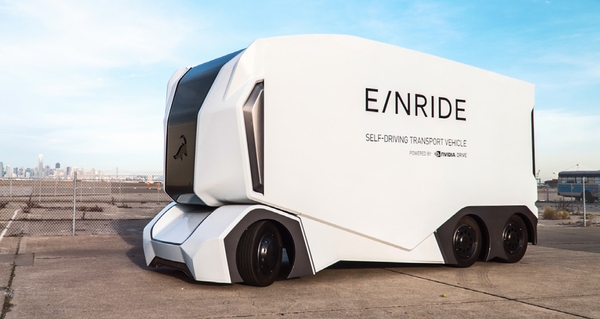
Although the T-Pod can reach speeds of up to 85 km/h, there is currently no permission to reach such a speed. The vehicle has been programmed not to go faster than 5 km/h. It will therefore move along the road at roughly the same speed as a walking human. The distance the autonomous truck will cover is also not long – just 300 meters. However, this is a public road, so for the first time, the trial is not taking place on a closed factory track, and the permit is valid until December 30, 2020. Although the T-Pod’s runs are still just a test, the autonomous truck will actually carry real goods for specific recipients. That is why approvals from the appropriate Swedish authorities were needed for everything. One of the founders of the company, whose name can be translated as “lone rider,” has already announced that he will seek permits to test this model in natural conditions in other locations, including outside Europe. If the tests are successful, the Swedish manufacturer wants to obtain permission to use its vehicle on a larger scale. Einride is already in talks with its first potential customers – the German grocery giant Lidl and the Swedish courier company Svenska. Let us also mention that next to the T-Pod, another model of an autonomous truck is being tested, although for now under closed conditions. This is the T-Log, a slightly heavier truck adapted for moving in more difficult conditions (e.g., on forest roads) that can transport, for example, wood, sand, or gravel. Both vehicles – the T-Pod and the T-Log – are equipped with a fully electric powertrain.
Picking robots and cobots
Once the autonomous vehicle delivers the goods to the warehouse and the conveyor system transports them to the storage location, we can begin picking the goods. Various types of picking robots and cobots can be used for these tasks—devices that collaborate with warehouse workers and perform picking operations together with them. The market for cobots is growing, and manufacturers, often technological start-ups, are racing to come up with new products. Depending on whether we intend to invest in devices that do not have the ability to move (e.g., KUKA, a static robot often used for manufacturing and the so-called assembly of small components, or transferring plastic containers from conveyors to transport containers) or fully autonomous cobots (e.g., the TORU robot, which can move without limitations related to inductive fields or rails and is capable of picking items, such as boxes of footwear, from shelf racks), we will easily find something suitable for ourselves.
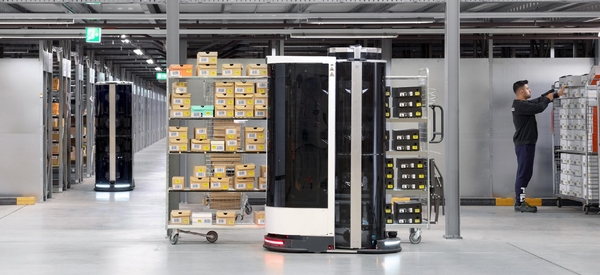
Importantly, the range of autonomous robots is constantly developing, and the devices themselves are equipped with countless sensors, lasers, and artificial intelligence modules, which means that with each cycle, the machines learn about the warehouse and are able to more accurately program a picking path based on existing constraints or even the people working in individual aisles. Picking robots are the perfect answer to the fluctuations we encounter in e-commerce, sales peaks, and human resource issues. The ideal solution is for robots to work on weekends so that on Monday morning, when employees come to work, they have orders picked and ready to be packed, which can then be shipped and delivered to the end customer within a few hours.
Drone deliveries
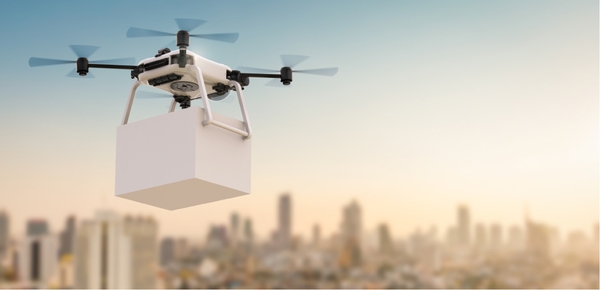
Picked and packed packages should be delivered to the customer as quickly as possible. Why not try using drones for this purpose? This service is already offered as part of a strategic partnership in China between one of the German logistics operators and the Chinese company Ehang. In May of last year, an inaugural flight took place, which ended with the successful delivery of an order. The route, which was customized to the customer’s needs, covered a distance of about eight kilometers. It used the most advanced unmanned aerial vehicle (UAV) from the newly introduced Ehang Falcon line, featuring the highest level of intelligence, automation, safety, and reliability. Drone delivery has one undeniable advantage—above all, it avoids difficult road conditions and traffic congestion typical of large urban areas. As a result, delivery time can be reduced from several hours to just a few minutes. Importantly, drone delivery can also be cost-effective. According to Ehang’s analysis, it reduces delivery costs by up to 80 percent while consuming less energy and emitting less carbon dioxide compared to road transport. The Ehang Falcon drone is equipped with eight propellers mounted on four arms. Furthermore, it is fitted with multiple systems ensuring full support and intelligent, safe flight control modules. Its functions include vertical take-off and landing, accurate GPS tracking, intelligent flight path planning, fully automated network connectivity, and real-time planning. Drones can carry up to 5 kg of cargo at a time and have been adapted for fully autonomous loading and unloading. Drone deliveries are not only a Chinese domain. For two years now, the Swiss post has been using drones for the delivery of laboratory samples in Lugano. Laboratory and hospital staff use special applications to start the vehicle and collect samples from it. For this purpose, a Matternet drone with a diameter of 80 cm and a maximum range of 20 km is used, which moves at a speed of 10 meters per second and is additionally equipped with a parachute that deploys in the event of a failure.
Cars, robots, and drones
Much will certainly change in the logistics landscape before these solutions become permanent fixtures, but 20 years ago, no one could have assumed that online shopping would become a permanent part of Polish households and that online orders would not be placed via email to stores treating e-commerce as an interesting hobby, but would instead account for a double-digit share of retail trade, with a growth prospect of at least 20% over the next few years. To meet this dynamic and offer customers state-of-the-art solutions and the fastest delivery times, the transport of the future will certainly become the transport of everyday life, and drones flying over our heads should not surprise anyone anymore, provided that legislation and administration keep pace with the needs of the market and its consumers.

This article comes from the magazine Logistyka 4/2020.
The e-edition of the magazine is available in our offer!