Toyota has recently unveiled a new fuel cell module that will facilitate the implementation of hydrogen technologies for new applications in transport and industry.
Almost half of the railway lines in the European Union are electrified and enable emission-free transport. On the remaining routes, locomotives with diesel engines are in operation. As part of the European FCH2RAIL (Fuel Cell Hybrid Power Pack for Rail Applications) program, a consortium consisting of partners from Belgium, Germany, Spain, and Portugal is designing and testing prototypes of emission-free trains. The most important project the group is working on is an electric train with a bimodal power system, combining power from the overhead line with a hybrid system consisting of a fuel cell stack and batteries.
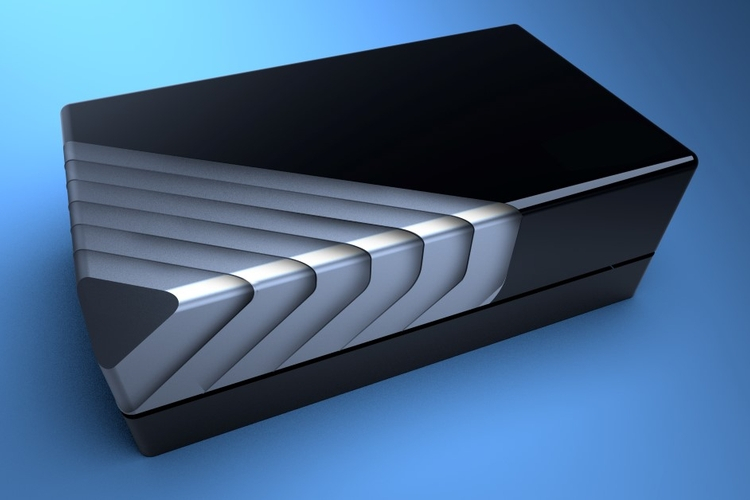
Toyota recently announced that it is launching a new modular fuel cell kit. Sales will begin in the spring or summer of 2021. The new product is intended for manufacturers of hydrogen vehicles and equipment, such as trucks, buses, trains, ships, and stationary generators. One of its first applications will be the bimodal prototype of the FCH2RAIL consortium. The module is equipped with air and hydrogen supply systems, a cooling system, and a power control unit. The device can provide 60 kW or 80 kW of power. It is not yet known which variant of Toyota’s FC module will be used in the prototype train. The FCH2RAIL project was launched in January of this year. As part of the first task, reference routes and operational scenarios for the prototype train were established. The new train model will use the overhead line wherever it is available. If it cannot draw power directly from the grid, it will switch to a hybrid power system combining a battery and hydrogen fuel cells (Fuel Cell Hybrid Power Pack).
– We want to show that this type of hybrid train operating in two modes is a competitive and environmentally friendly alternative to diesel locomotives – explained Holger Dittus, project leader and scientist at the German Aerospace Center at the Institute of Vehicle Concepts (DLR).
Currently, work is underway in Europe to increase the range of overhead lines on railway routes. These are very expensive and time-consuming investments, the feasibility of which depends on the terrain. An alternative is battery-powered trains, but they have a very limited range, which, depending on the route and ambient temperature, is between 30 and 70 km. Currently used diesel trains have unsatisfactory performance – low maximum speed and poor acceleration compared to electric trains powered by the grid.
– Our hybrid battery and fuel cell system, capable of operating in two modes, combines the advantages of both solutions – power from the overhead line and from its own source. This will make rail transport even more sustainable and energy-efficient – said Sergio Gascon, Technical Project Manager at Construcciones y Auxiliar de Ferrocarriles (CAF).
The power system of the new train has been designed in a modular layout so that power and range can be increased by adding fuel cell stacks, hydrogen tanks, and batteries. The train’s range on routes without overhead lines will be determined by the number of hydrogen tanks. Thanks to the modular design, the new drive will be able to be used not only in passenger trains but also in freight trains. Developing, testing, and approving the new drive is expected to take four years. 14 million euros have been allocated for this purpose, of which 10 million euros come from the European organization Fuel Cells and Hydrogen 2 Joint Undertaking (FCH 2 JU).
Source: Toyota