









For the first time in Poland, awards were presented in a competition distinguishing e-commerce directors and teams, organized by the Chamber of Electronic Economy. You received the main award and the title of E-commerce Director of the Year 2020. Electronic commerce is developing at a lightning pace, but in your opinion, are Polish entrepreneurs able to meet market demands?
<\/strong><\/p>
 <\/strong><\/em> <\/em>
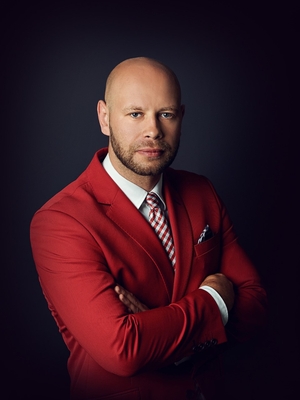
Jakub Gierszyński, E-commerce and Marketing Director at Inter Cars SA<\/strong><\/em>:<\/p>
The Chamber of Electronic Economy represents and supports the interests of companies related to the electronic economy market in Poland. For 8 years, it has been conducting the e-Commerce Polska Awards, rewarding projects of small, medium and large stores, e-commerce platforms, e-services, as well as the e-finance sector. This year, for the first time, the Chamber of Electronic Economy held the E-commerce Director of the Year Competition. It was created with the people behind the success of innovative projects, activities and implementations in e-commerce businesses in mind. Their work has long been noticed due to the constant increase in the role of e-commerce in sales. The events of recent months have shown that the digital channel has become a key element of many businesses’ operations.
In the E-commerce Director of the Year 2020 competition, I received a distinction in the industry category and the Grand Prix. I am very proud and pleased that my professional, educational, and social activities have been recognized. I would like to thank you on my own behalf and on behalf of the team, without whom this success would not have been possible to achieve.
E-commerce is currently the fastest-growing sales branch in recent years. The year 2020 can be called a breakthrough, and no one has any doubt that the COVID-19 pandemic contributed to this to a large extent. Its effects will permanently change customer purchasing habits and company operations. Similar trends could be observed in China after the SARS outbreak in 2003 – especially in the case of Alibaba. The turnover of its contractors increased fivefold at that time.
The events of recent months have, as it were, pushed us into digital – work, shopping, communication, spending free time… This is confirmed by a number of studies. In one of them: “Omni-commerce. I buy comfortably”, prepared by the e-Chamber, it turns out that 72 percent of internet users shop online. This is a 15 percent jump compared to the pre-pandemic situation. The second significant change is that during COVID-19, as many as 20 percent of people who had not previously shopped online made their first purchases in this channel. To a large extent, these are people from the so-called silver generation<\/em>, i.e., over 60 years old.
The growing Polish e-commerce market is already worth many billions of zlotys, approaching the 100 mark. However, more and more companies realize that something more will determine success in the future – a strict connection of all sales channels in an omnichannel<\/em> model. The real connection of the online and offline world, however, is not that simple. It is crucial to understand one simple principle: in the omnichannel<\/em> strategy, we do not differentiate the customer. We treat them as a brand customer, not a sales channel customer. In the modern, digital world, all sales and customer reach channels overlap.
This year’s events were a cold shower for all those who treated e-commerce as a subsidiary. Management boards that did not see a strategic area in their business model that was not only to sell, but to redirect the customer to a traditional sales channel, or connect two channels via click and collect – suffered severely. There is no more time to lose…
We are currently observing a boom in digital projects in organizations, which results in the number of job offers for specialists. People who understand where modern reality is heading and where business must find itself – using technology – are worth their weight in gold.
We have several fantastic examples of businesses on our market that are doing great in the omnichannel<\/em> transformation. These are: Decathlon, Empik, Sephora, eObuwie, CCC, Żabka, Oponeo and Ikea. Each of the mentioned brands systematically introduces improvements for customers, combining sales and communication channels into one coherent brand channel. We are on the right track and should be proud when looking at the e-commerce projects taking place in Poland. We are not lagging behind the European trend, and often – e.g., when using PUDO points for collection – we are ahead of Europe. We still have a lot of work to do and to pay off the “technological debt” that plagues all organizations. Customer needs and expectations are growing faster than IT throughput. This is just the beginning of the lasting changes that await us…<\/p>