








The article participated in the 4th edition of the “Pen of the Logistician” competition.
To better illustrate the problem of supply chain integration, one can cite “The Fifth Discipline” [7]. In his book, the author described a simulation that helped participants prove the existence of certain systemic difficulties. The main characters of the game are a retailer, a wholesaler, and a brewery marketing director. As it turns out, after the game is over, each of the three players (retailer, wholesaler, and marketing director) views the problem from a different perspective and reaches different conclusions. This causes bitterness and worsens relations between them. Everyone lost, and the customer, who did not receive the desired goods (beer), suffered the most. After the game, everyone draws their own conclusions. One does not need to be inventive to state that everyone blames someone else. Who (or what) was therefore the culprit of everyone’s failure? The answer can only be one: the structure of the system. It is very often responsible for failures. Therefore, one should be able to control it, and this is very difficult without integration. That is why the ePC technology was discussed here, which can: reduce the number of errors, save time (possibility of quick inventory of goods/issues/receipts), increase the accuracy and availability of offered goods, reduce the number of stocks in each place, increase the level of customer satisfaction (which may lead to increased sales), quickly identify goods throughout the logistics network, and reduce the number of shortages. Fig. 2 shows a chart of the biggest challenges of RFID technology. As you can see, integration plays a very large role here, which should be remembered when implementing ePC.
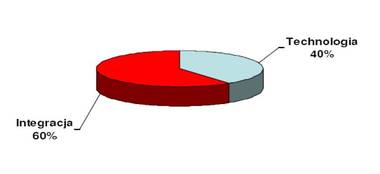
Fig. 2. The biggest challenge of RFID.
Source: [4].
Source: [4].
In the book “Informatics for Logistics” [3], we can read about the stages of implementation of MRP II class systems. This example was given to illustrate the scale of the problem under consideration, which was presented in Fig. 2. Well, when evaluating MRP II class systems, 4 implementation classes were adopted: A, B, C, D, of which A means the highest rating of system implementation, and D the lowest. Unfortunately, most companies in Poland are in class D, because employees and company management responsible for implementation do not understand that the human factor plays a very important role in implementations. A company that decided to implement an ePC system would have to carry out far-reaching changes in its operations. After all, true integration is about sharing problems and full exchange of information between contractors, and it seems that in Poland, as well as in the world, this is not going well.
The example in Fig. 3 shows a diagram of a simple ePC system based on the supply chain.
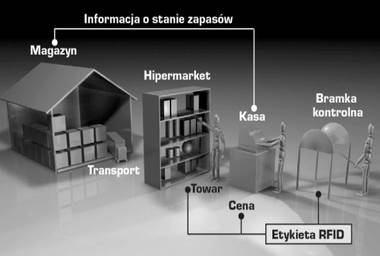
Fig. 3. Example of supply chain integration.
Source: [6].
Source: [6].
In a few years, after shopping at a supermarket, we will pass our shopping cart through a gate with a detector that will remotely read the type, quantity, and prices of the goods we have purchased. No more scanning purchases at the checkout. Over time, checkouts will disappear altogether because the calculated amount will be automatically deducted from our payment card. The figure above shows an example that does not look that far into the future, as it assumes their existence. However, checkouts are limited here only to collecting money. The system of smart store shelves has been tested for a long time by Gillette. Such a shelf receives a signal from a microchip placed on razors (e.g., Mach3) and if the shelf turns out to be empty, information will be sent to suppliers, who will automatically initiate delivery. The store could, for example, determine the required level of customer service and the maximum shelf space, and goods suppliers, having current data on demand and inventory levels, would know when they need to initiate delivery.