








Humanitarian logistics is not just about moving goods from one place to another. It is a complex supply chain and a process where every second counts, and every decision can impact human lives. Organizing aid shipments to those most in need requires a very good knowledge of both complicated international customs procedures and specific rules for handling aid cargo, as well as the ability to organize transport on difficult routes. This is not a simple task and can be a major challenge for humanitarian organizations. Support from an experienced logistics operator is essential.
What challenges must humanitarian logistics face, and how does the specialized knowledge of logistics operators influence the speed and safety of deliveries? These questions are answered by CEVA Logistics, a global 3PL logistics operator that has been involved in providing humanitarian aid around the world for many years.
Customs and tax exemptions
As CEVA experts emphasize, a common mistake is the belief that humanitarian cargo is automatically exempt from customs duties and taxes. This is possible, but it requires obtaining the appropriate exemptions, which is a complex and often time-consuming process. It is not enough to mark a shipment as “humanitarian aid.” The entire procedure requires the involvement of many parties, including the recipient, the local partner responsible for transport in the given area, as well as government institutions and ministries.
An example would be medical aid programs that require approval from the ministry of health in the destination country. Every document must be prepared correctly and flawlessly. Due to the lack of even one attachment, the entire cargo can get stuck in a port or airport for many months. And this means that the shelf life of essential products like medicine or food will be shortened. In this case, the time pressure is enormous; suppliers must ship the cargo quickly, and the lack of a confirmed exemption causes costly delays and complications.
Local expert knowledge is essential
In this context, in-depth knowledge of local conditions is of key importance. Effectiveness is increased by the presence of experienced logistics operator teams with an extensive network of contacts and a very good knowledge of import regulations. An example is CEVA Logistics, which has been managing shipments covered by customs and tax exemptions worldwide, including in Africa, for over 30 years.
Local CEVA teams not only know the formal requirements well, but also know which institutions and ministries are responsible for issuing approvals, which reduces risk and shortens delivery times. They provide support at every stage of the process of obtaining the required permits, from preparing documentation to final clearance. In this case, knowledge of internal procedures within institutions is equally important, i.e., which department receives the documents and who is responsible for the subsequent stages of the process.
Coordinating activities on the ground helps to reduce the risk of delays. Although there have been cases where shipments waited for exemptions for more than six months, in countries where CEVA has the appropriate authorizations, the average lead time is 30–45 days. This translates into faster delivery of aid while maintaining the quality and shelf life of the products.
Preparation for the last mile
Delivering cargo to a port is only part of the entire process. The next stage of delivery, the so-called last mile, involves a series of challenges. Very often, poor road infrastructure, political instability, and extreme weather conditions are serious obstacles to delivering aid to remote or particularly dangerous regions.
Effective delivery depends on how extensive the logistics infrastructure is in a given region, with access to warehouses where cargo can be safely stored until conditions allow for safe distribution. Additionally, humanitarian organizations often request the division of large shipments into smaller batches before the next stage of distribution. For example, CEVA regularly carries out such deliveries from central warehouses to regional ones and medical facilities in East and West African countries.
Infrastructure limitations
In many regions of Africa, the distribution of aid cargo is hindered by poorly developed infrastructure. In many regions, airports have only short runways, which is why CEVA cooperates with specialized operators of small charter planes, and the task of its local teams is to supervise the organization of flights to avoid costly downtime.
Another obstacle is the poor condition of roads, which become impassable or completely inaccessible during the rainy season. Therefore, before starting a delivery, as CEVA points out, it is necessary to conduct road inspections, often in cooperation with certified auditing companies. They allow for the identification of passable routes and the finding of alternative solutions. An example is a project implemented by CEVA in Indonesia, where, thanks to the optimization of the last-mile route, both land and sea, 9 industrial oxygen plants were delivered to remote islands.
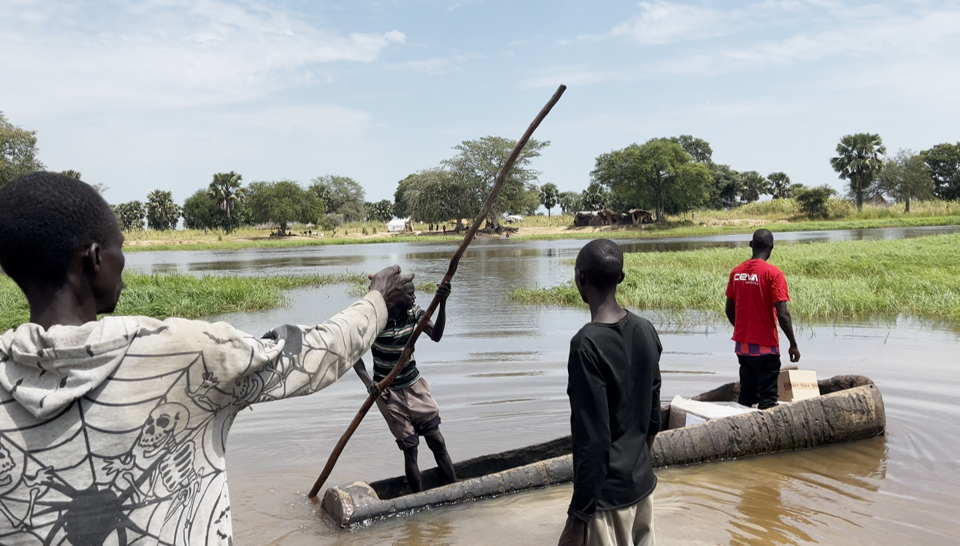 CEVA Logistics / Delivery of malaria medication in Africa
Innovations for medicine deliveries in East Africa
What distinguishes the pharmaceutical industry are specific operational requirements, which, combined with the needs of humanitarian logistics, increase the complexity of processes. Here, innovations provide support, and an example is the use of the CEVA pharmaceutical warehouse in Nairobi, Kenya, in humanitarian logistics.
Traditionally, the Republic of South Africa serves as the main storage hub for pharmaceutical products for East Africa. Although local customs warehouses offer high standards, they do not always guarantee delivery efficiency. Therefore, CEVA alternatively uses a modern pharmaceutical warehouse in Nairobi for aid deliveries, which provides better access to key transport corridors in East Africa and brings additional benefits.
The Kenyan CEVA warehouse meets global standards for handling medical cargo. Its location in a free trade zone allows it to avoid the restrictive control procedures of the local Pharmacy and Poisons Board (PPB). It is also one of the few such facilities exempt from the railway levy, which standardly covers all cargo imported into Kenya.
What distinguishes the Nairobi warehouse is its design. It contains 14 independent chambers, each with a temperature regulated from 2°C to -20°C, which guarantees the safe storage of sensitive medical products. Value-added services are also carried out in the warehouse, and repacking and kit assembly are conducted under the supervision of a certified pharmacist. Cargo produced in Kenya is also consolidated here with imported goods, which ensures supply chain consistency.
At CEVA Logistics, we are constantly looking for increasingly effective ways to support humanitarian aid and relief efforts. The pharmaceutical warehouse in Nairobi is the best proof of this commitment. It is not just a warehouse; it is an integrated solution designed for maximum efficiency and flexibility. By combining a strategic location, advanced technologies, and value-added services, we help our partners reach the residents of East Africa with medical aid and hope more effectively than ever before.
– says GB Anand, Global Director of Aid and Relief, CEVA Logistics.
A partner in global humanitarian logistics
CEVA Logistics coordinates aid and relief operations from strategic control towers in India, the United Arab Emirates, Kenya, the Netherlands, and Denmark, supporting humanitarian efforts around the world.
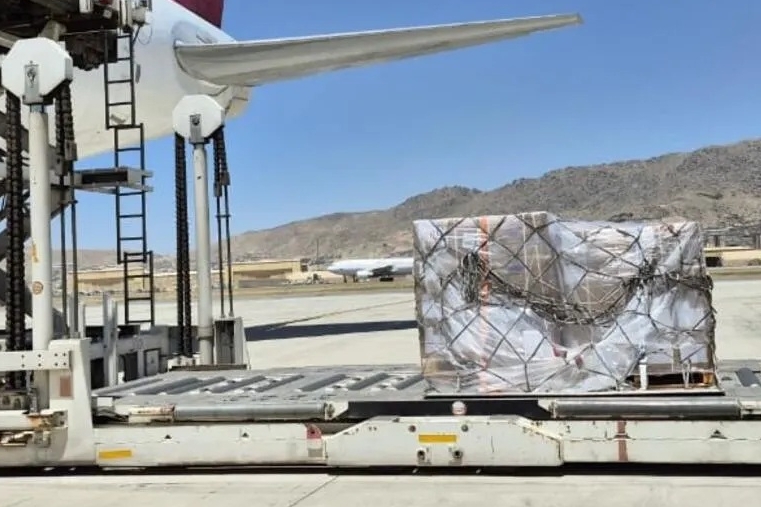
Based on a global network of air, sea, and land connections, as well as warehousing, CEVA teams manage regular aid deliveries, including food, medical supplies, sanitary items, and medicines, also to regions affected by disasters and natural calamities. One example of organizing special transport is the air delivery of 154 tons of medical supplies, including temperature-sensitive medicines and medical equipment, carried out in cooperation with the UN. They were transported on board two Boeing 747 cargo planes from Dubai to Kabul, Afghanistan.
CEVA’s cooperation with non-profit organizations and support for the organization of aid and humanitarian deliveries is part of its CSR strategy, implemented based on 3 pillars: Acting for People, Acting for Planet, and Acting for Fair Trade.
Source: CEVA Logistics