











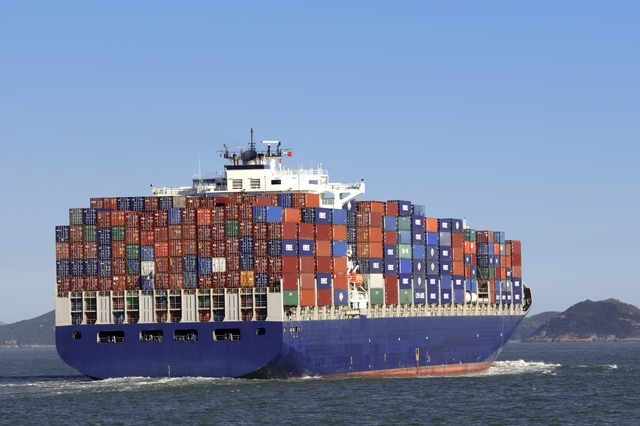
Until the 1960s, most general cargo was transported in bulk or packed in small cargo lots. However, the increase in trade with Europe caused congestion of both cargo and transport means at transshipment points, especially in seaports. This led to a slowdown in the movement of goods, and consequently, the delivery time of products was significantly extended. Attempts were made to resolve this situation, but only one solution was accurate. It was the idea of packing small cargo into larger units that could be moved quickly and efficiently without wasting time on individual batches of goods. The embodiment of these concepts became containers, initially operated in “port-to-port” relations, and later more and more commonly, also in “door-to-door” relations.
Generations of container shipping
In the initial period, containers were transported by general cargo ships or bulk carriers that were not adapted. Only in a later period, when the amount of containerized cargo increased, was the design of ships for this type of cargo undertaken. The history of typical container ships begins in 1956 when Malcolm McLean rebuilt the “T2” tanker, adapting its structure for container transport. Subsequent ships, “Ideal X” and “Maxton”, were rebuilt from general cargo ships. The first of them sailed from the port of Newark near New York to the port of Houston in Texas, carrying only 58 35-foot containers. A year later, the s/s “Gateway City” ship was specialized, which regularly served the same route. It moved 226 35-foot containers, which were placed both on deck and in the ship’s holds. The container ship covered the route at a speed of 15 knots. This ship started the first generation of container ships, which has been growing to this day. The first container ship in Europe appeared in Rotterdam only ten years later (May 3, 1966). The S/S “Fairland”, serving the container line of the American carrier Sea Land, sailed on April 23 from Port Elizabeth in New Jersey, taking 225 35-foot containers with it.
The article contains 14,420 characters.
Source: Logistyka Magazine