










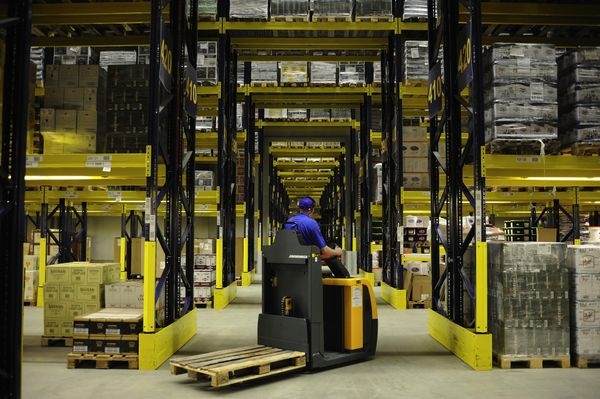
A well-tailored contract logistics model can optimize all logistics processes. One of the most important issues to consider before signing an agreement with a logistics solutions provider is the duration of the cooperation.
The duration of an agreement with a logistics operator depends on many factors, including: the company’s plans, the project for which the company needs outsourcing, and the projected financial outlays. Setting all these issues usually takes from a few weeks to several or even a dozen months, and the duration for which the agreement is signed is at least a few years. What are the arguments for such a long contract period?
Scale of investment
A new investment requiring additional logistics support could be, for example, the launch of a new production line or reaching new markets. If its scale is large, it can be expected that it will require additional logistics space. It may also turn out that the involvement of expensive equipment or highly qualified staff will be necessary to handle specialized processes.
– The duration of the agreement is a matter agreed upon individually with each client, but I can say that with our largest contractors, for whom we have appropriately reorganized our resources and processes, we have agreements of at least 3 to 4 years – says Wojciech Cipiur, contract logistics manager at Dachser.
If logistics support requires renting warehouse space, it would be best to set at least such a contract duration that it coincides with the warehouse lease period, and these are also for several years.
– The warehouse space market is very demanding; it often takes a lot of time just to find a suitable facility and adapt it to the specifics of the planned project – claims Wojciech Cipiur. – Therefore, signing short contracts, e.g., one-year ones, is highly uneconomical.
Efficiency
One should be prepared for the fact that the implementation of new projects, especially large, more complex ones, may not be 100% efficient at the beginning. Achieving full performance takes time.
– Usually, it takes from a few weeks to half a year from the implementation of the project to achieve the desired work efficiency on both sides – says Wojciech Cipiur.
The company and the logistics operator need time to “sync” their processes, establish the details of cooperation, and develop and implement any changes to the project.
Only when the full level of efficiency planned in the contract is reached can the effects of the cooperation be evaluated.
– As a result of the cooperation, our clients first see an increase in the efficiency of logistics processes and a significant improvement in their quality – says Wojciech Cipiur. – Our many years of experience and know-how, which we can pass on to our clients, play a huge role here – he emphasizes.
Risk minimization
A longer, multi-year contract also involves reducing business risk for both parties. The entrepreneur is guaranteed constant service throughout the duration of the agreement. The operator, on the other hand, can be sure that the outlays incurred will be recouped. Since it is impossible to predict how the market will change, including the demand for specific products, it is worth it for the entrepreneur to ensure that appropriate provisions are included in the agreement to avoid price risk.
– We are perfectly aware that things can change, which is why we enable our clients to define the conditions for possible price changes, even if it means a reduction – explains Wojciech Cipiur.
Such a provision appropriately protects the interests of both the clients and the operator.