











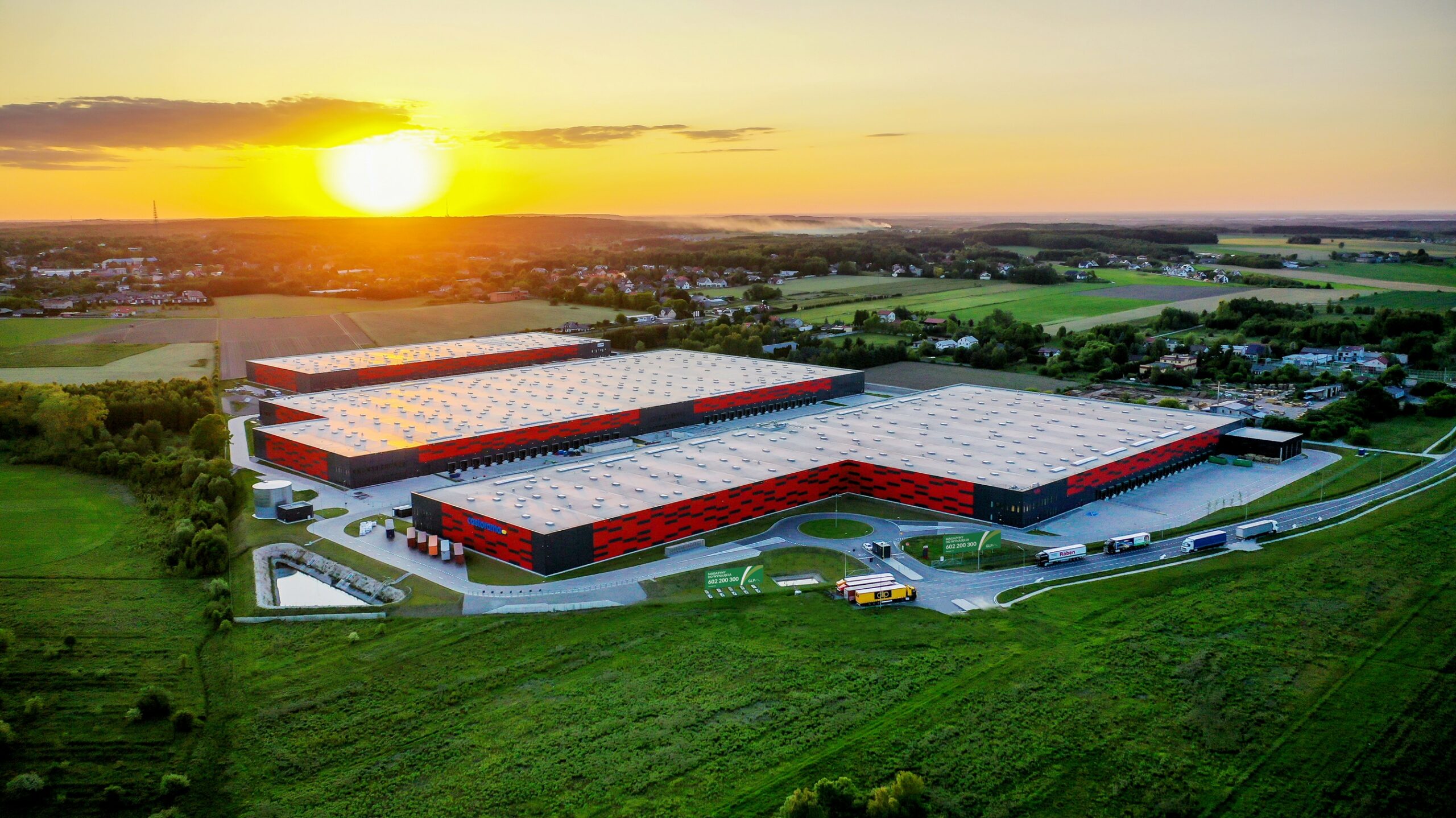
Castorama Polska has extended its lease agreements for two logistics facilities that are key to its operations in the Łódź region: one in Stryków, where it occupies over 100,000 sqm, and another at the Marq Logistics Łódź III park (formerly GLP Łódź East), covering 36,000 sqm. The decision to continue operations in these locations is the result of a comprehensive, multi-stage distribution network analysis conducted by Castorama together with its long-term partner – the advisory firm JLL.
Castorama – a leader in the DIY market
Castorama Polska is a leading retail chain in the DIY category in the country, employing over 12,000 people. The company is consistently developing its presence on the Polish market – it recently opened its 109th store and is planning further investments in the coming months.
Traditional large-format markets (so-called “big boxes”) remain the foundation of the chain’s business. At the same time, Castorama is developing new, more flexible sales formats that allow it to reach customers in smaller towns as well. These include “smart” format stores with an area of up to 3,000 sqm located at smaller retail parks and modern design studios located in shopping malls.
In parallel, the importance of the online channel and the omnichannel sales model is growing dynamically. Castorama Polska, part of the international Kingfisher group, which serves millions of customers in Europe and around the world, is constantly implementing solutions that ensure efficient sales both in-store and online, thereby responding to changing customer expectations regarding product availability and delivery speed.
The supply chain is today one of the key elements of building value in retail. It increasingly determines how quickly a company can grow, what value proposition it offers to the customer, and how effectively it uses its capital. In an omnichannel model, the customer does not think in terms of sales channels but expects product availability, convenience, and predictable order fulfillment. Therefore, when designing a distribution network, we start from customer needs and business strategy, and then build an operational model that allows them to be realized in a scalable and effective way. Our goal is a supply chain that not only supports today’s business but gives Castorama the potential for further growth and the development of new sales models.
– comments Wojciech Gondek, Supply Chain and Logistics Director at Castorama Polska.
E-commerce and a new consumer reality are driving changes in distribution
The Polish e-commerce market is undergoing an unprecedented transformation. JLL forecasts indicate over 100 percent growth in the real volume of online purchases by 2035, which will fuel the market with an additional amount of nearly 97 billion PLN.
At the same time, the structure of Polish households is undergoing a profound transformation. Although, according to Statistics Poland (GUS) projections, the population of Poland will shrink by 1.2 million inhabitants by 2035, the number of households themselves will increase by about 200,000. Phenomena such as “singlization” and “empty nests” (i.e., parents remaining alone after their children become independent) are progressing faster than the average family size is shrinking.
For the DIY sector, this means a fundamental change – a larger number of smaller households will demand finishing and renovation products. Customers will buy more often but in smaller batches, expecting flexibility, lightning-fast delivery, and a wide assortment.
Within Castorama’s structures, online trade is developing extremely dynamically. The click and delivery service already generates 400,000 orders per year, and the total e-commerce volume (including the click and collect option) amounts to about 700,000 and will soon exceed the threshold of one million orders per year. Castorama’s offer includes over 50,000 products (on average 40,000 physically available in-store and additional assortment available on the marketplace platform).
Therefore, last-mile organization is gaining importance, where 100 percent delivery predictability is crucial. To meet these requirements and ensure a high standard of service without burdening the customer with additional transport costs, Castorama delivers some orders with its own delivery vehicles from stores, while others are handled in cooperation with professional couriers.
Logistics network as an element of growth strategy
Achieving ambitious goals in omnichannel retail and keeping promises made to customers require full synergy of all business elements. Responding to customer expectations, Castorama declares both excellent service at points of sale as well as predictability and reliability of order fulfillment. A key condition for maintaining this ecosystem is a stable, optimally configured warehouse background that smoothly supports daily retail operations. Therefore, decisions regarding this area require a comprehensive approach.
The approaching end of lease agreements is for every mature business a moment to verify whether the current infrastructure still sufficiently supports the achievement of business goals, and whether more effective solutions have appeared on the market.
Castorama began the process by defining what logistics model it would need in the coming years to support the development of the chain of stores, e-commerce, and new sales formats, while maintaining high operational and capital efficiency. Together with JLL, the company then analyzed alternative development scenarios for the distribution network – from location and network structure to ownership models, and the financial and operational consequences of individual variants.
In this project, together with the Castorama team, we thoroughly verified the current logistics model against other options available on the market. We analyzed alternative locations, transport costs, and various ownership models. Ultimately, it turned out that the current facilities in the Łódź region are simply the best possible choice for both e-commerce and stationary operations. For Castorama, this is powerful proof that their existing logistics strategy was extremely mature, and for us – a huge satisfaction that the decision was made very consciously after a thorough comparison of different scenarios. We are happy about this, all the more so because this result also confirms the validity of our long-term consulting – after all, we also supported Castorama in the initial selection and leasing process of these facilities years ago.
– says Tomasz Mika, Head of Industrial Agency, JLL.
As part of the process, JLL experts conducted multi-stage analyses. First, the team focused on identifying the best geographical location (gravity center analysis), taking into account the distribution of stationary stores, the frequency of deliveries, and transport cost simulations throughout Poland.
Once it was confirmed that Central Poland is the optimal starting point for Castorama’s distribution network, the second step was to define the warehouse network structure. It was examined whether consolidating operations in one large facility would be a better solution, or maintaining a distributed model, which would involve higher operational costs and the need to duplicate assortment in several places.
In the third stage, JLL and Castorama experts examined various forms of logistics infrastructure ownership – from purchasing land for their own investment and sale-and-lease-back transactions, through consolidation and implementation of a dedicated built-to-suit project, to traditional leasing. Financial and operational analyses showed that leasing space is the best option – it combines moderate capital commitment with the flexibility to respond to market changes.
Only after going through these steps did the final, fourth stage begin, which was a detailed comparison of commercial and technical terms in 5 identified locations. After a thorough review of the considered options, the optimal solution for the chain turned out to be maintaining leases in the facilities where Castorama had operated so far, i.e., in the central warehouse in Stryków (over 100,000 sqm) dedicated to supporting imports and smart formats, and in the warehouse in Łódź (36,000 sqm) supporting direct, fast customer service.
Infrastructure adapted to the requirements of modern DIY trade
The buildings, which have been the heart of Castorama’s logistics in Poland for several years, fully meet its requirements – they ensure efficient distribution to traditional retail outlets and the flexibility necessary to handle the growing volume of e-commerce.
We did not treat the ending lease agreements as a simple real estate project. For us, this was a moment to re-answer a much broader question: which network model will best support Castorama’s strategy in the coming years. We compared different locations, operational models, and capital commitment scenarios, while evaluating them from the perspective of the customer, costs, risk, and opportunities for further growth. The result of the analysis confirmed that maintaining current locations gives us the best balance between efficiency, operational resilience, and the flexibility needed to scale the business. For me, that is what modern operations management is all about – combining the quality of customer service, an economic model, and long-term development opportunities.
– comments Wojciech Gondek, Supply Chain and Logistics Director at Castorama Polska.
Operational decisions that support long-term business development
The Łódź region consistently maintains its status as one of the most important distribution hubs in the country. Its central location at the intersection of main transport routes enables efficient reaching of recipients throughout Poland within 24 hours. In the realities of the dynamic development of e-commerce, the right geographical location of the warehouse becomes a key element of building a competitive advantage and fighting for delivery time to the final customer.
The location in the Łódź region perfectly matches Castorama’s distribution strategy – it ensures easy and efficient access to key markets throughout Poland. Equally important is the infrastructure of the buildings themselves. In this case, the facilities not only meet the chain’s current operational requirements but also offer the flexibility needed to handle the growing e-commerce channel. For a tenant who is already conducting operations in a given location, this is exactly what is crucial – whether the building can evolve along with the business without the need for a costly and risky relocation.
– says Paulina Dziubińska, Senior Director, Industrial Agency, JLL.
The project implemented by Castorama and JLL is a valuable example of mature distribution network management. It shows that a regular review of logistics facilities – carried out with sufficient lead time, in conditions of operational stability – enables more informed and balanced decisions than acting under time pressure or in reaction to sudden market changes.
Source: JLL