








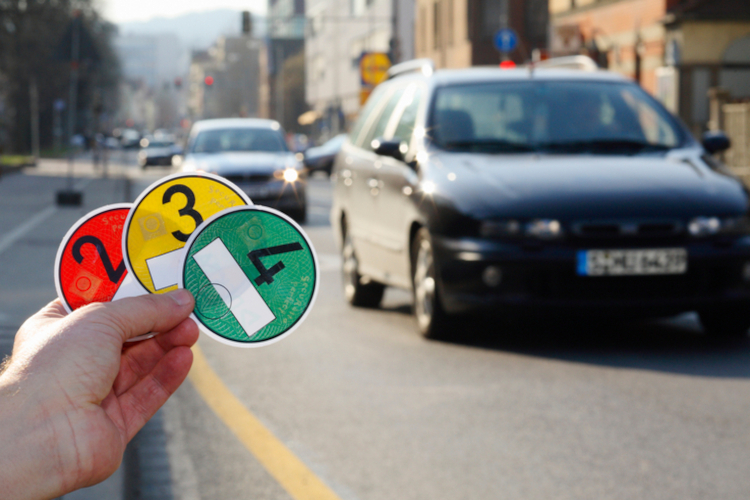
Kraków was the first to officially announce the creation of a Clean Transport Zone. Warsaw and Gliwice are currently in the stage of public consultations. Although examples from the West show that such zones have a significant, positive impact on the quality of life, Poles remain skeptical about them. Experts from the autobaza.pl service have examined the issue.
Do Clean Transport Zones make sense?
A Clean Transport Zone is an area where internal combustion engine vehicles that do not meet specific exhaust emission standards are prohibited from entering. They have been in operation in Western Europe for many years, and as studies prove, they have a beneficial effect on air quality in cities and the health of their residents.
Sweden was the first country in Europe to introduce the possibility of establishing low-emission zones into its legislation as early as 1996. The zone in force in Stockholm, which in its initial form restricted entry only to heavy goods vehicles over 3.5 tons, led to a reduction in particulate matter emissions by about 15-20% and nitrogen oxides by about 5-8%. In 2008, similar zones were introduced by the capitals of Germany, Great Britain, and Portugal. Thanks to them, about 70,000 non-compliant vehicles disappeared from the streets of Berlin, and by 2010, particulate matter emissions from vehicles had fallen by 50%, and nitrogen oxides by about 20%. A similar effect was achieved by restricting traffic in London and Lisbon, where studies showed a significant improvement in air quality.
Poles are not ready for change
In Poland, such solutions are only just being implemented. On November 23, the Krakow City Council approved the first Clean Transport Zone (SCT) in this part of Europe, which will cover almost the entire city of Krakow. In the first stage, which is to take effect from July 2024, the restriction will apply to gasoline cars that do not meet the Euro 1 standard (production year at least 1992), and for diesel cars – at least the Euro 2 standard. From 2026, the restrictions will be raised to the Euro 3 standard for gasoline cars and Euro 5 for diesel cars.
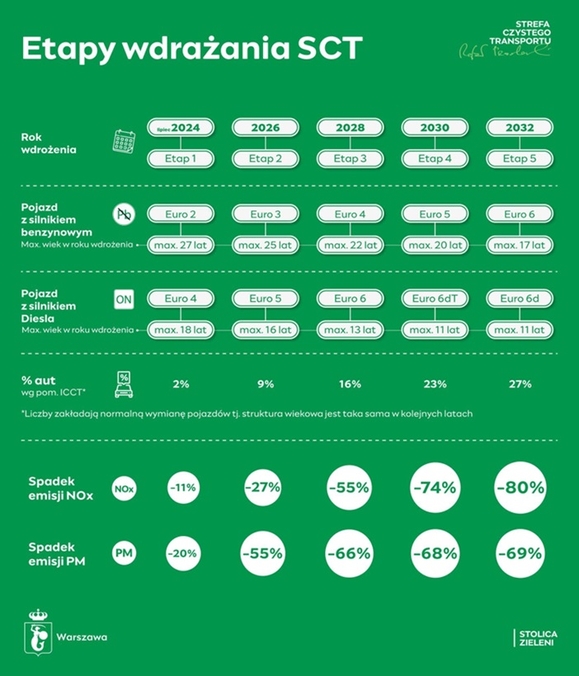
Meanwhile, on January 25, the Mayor of Warsaw, Rafał Trzaskowski, confirmed that another Clean Transport Zone will be created in the capital next year. The details of the project presented show that they are more stringent than those announced in Krakow. In the first stage, the restriction on entering the SCT is to apply to gasoline vehicles that do not meet the Euro 2 standard (older than 27 years) and diesel vehicles that do not meet the Euro 4 standard (older than 18 years). Later, consistently every two years, the requirements regarding exhaust emission standards for cars moving in the zone will be increased.
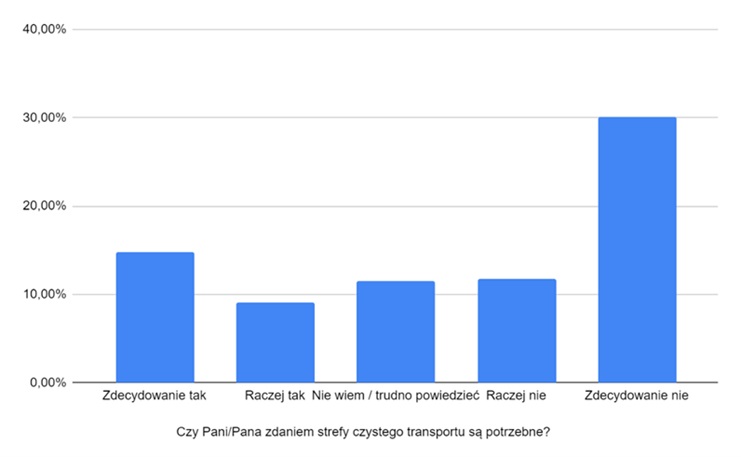
Changes in traffic organization, however, arouse many extreme emotions. A study conducted by the autobaza.pl service shows that over 40% of respondents are against the introduction of the SCT.
– Clean Transport Zones in Poland are met with great dissatisfaction from citizens. Drivers accustomed to using a private means of transport in any way do not agree to restrictions. Voices often appear that the changes are the result of pressure from electric car manufacturers, or simply that city authorities want to force residents to use public transport – comments Natalia Sokołowska from the autobaza.pl service.
Importantly, a large part of society does not understand what Clean Transport Zones are and cannot answer whether or in which cities they are in force. They also often do not link air pollution with road traffic. Furthermore, according to the Polish Smog Alert, over 80% of internal combustion vehicle owners do not know the exhaust emission standard their car meets.
There are also concerns that restricted traffic in city centers will affect the fluidity of deliveries to shops or pharmacies, as well as complaints that it will make it difficult for the elderly or disabled to use, for example, medical facilities. It is worth knowing, however, that traffic restrictions will not apply to, among others, vehicles of disabled persons and those specially adapted for their transport, or cars of people who have reached the age of 70, upon meeting certain conditions.
The other side of the coin
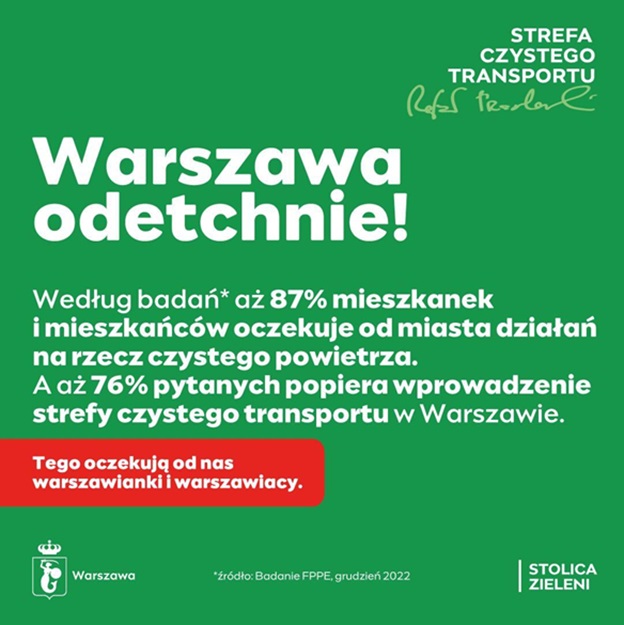
A study conducted by the autobaza.pl service shows that at the opposite pole there are about 25% of respondents who are in favor of introducing Clean Transport Zones, while the Warsaw authorities speak of as many as 76% of residents who support this idea.
As key advantages of restricting combustion engine car traffic in cities, enthusiasts cite the improvement of air quality, the reduction of excessive noise, or the need for general changes in urban space to be more resident-friendly.
– According to data from the European Environment Agency, transport is responsible for 27% of greenhouse gas emissions in the EU, of which almost 3/4 results from road transport, which is why the European Parliament has decided that after 2035 it will no longer be possible to purchase a combustion engine car in the EU. Given such community policy, solutions that will allow drivers to gradually get used to its requirements seem to be a natural consequence – summarizes Natalia Sokołowska from the autobaza.pl service.
It is not without significance that many car manufacturers, e.g., Toyota, assume a carbon neutrality strategy in the perspective of the coming years, i.e., reducing the carbon footprint of vehicles throughout their entire life cycle, from the production stage, through use and service, to disposal. One of the elements of this process is limiting the production of cars with internal combustion engines in favor of zero-emission models.
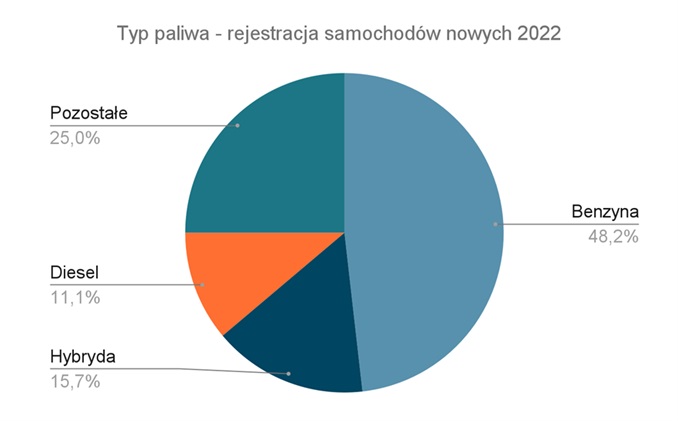
– The trend is also visible in the used car market. Already over 80% of cars registered in 2022 meet at least the Euro 4 standard. Although the number of purchased diesel cars is successively falling, they are still very popular, and according to the project’s assumptions, we will soon not be able to enter Krakow or the center of Warsaw with them. The problem does not concern new cars, which usually meet the highest exhaust emission standards, so it seems that in a dozen or so years, drivers will no longer have such dilemmas – comments Natalia Sokołowska from the autobaza.pl service.
– Even though Poles are very skeptical and do not like change, Clean Transport Zones will be successively introduced in the country. EU policy sets the directions for CO2 emission reduction and this cannot be avoided. Therefore, it should be remembered that when buying a used car, it is also worth checking what exhaust emission standard it meets. Such information is available on our service autobaza.pl, where you can generate a full report for the model you are interested in, including information about the exhaust emission standard – suggests Natalia Sokołowska, expert at autobaza.pl.
Source of information: Autoiso Sp. z o.o.