











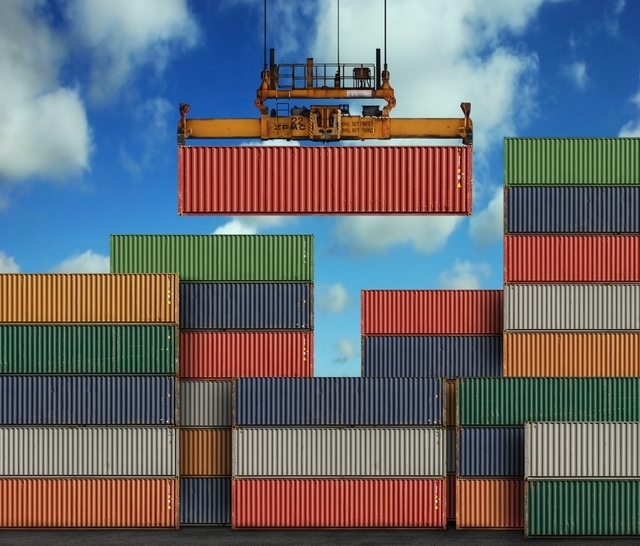
In the field of intermodal transport, two components of infrastructure can be distinguished. The first is linear infrastructure, which includes railway lines and roads. The second is point infrastructure, the main element of which are transshipment terminals. These can be divided into port terminals, which are the point of contact between maritime and rail transport branches, and inland terminals, which are the point of contact between rail and road transport branches.
The article focuses on the subject of inland transshipment terminals, which play a significant role in the development of intermodal transport. Their equipment, functional-spatial layouts, and work organization principles directly affect the entire transport cycle and, consequently, their competitiveness against road transport. Therefore, it is a very important issue to develop a complete and universal algorithm (procedure) for designing inland transshipment bases, aiming to achieve a sub-optimal solution. However, due to the need to consider many parameters in the scope of rail transport, road transport, and storage zones, this is a complex issue. The design procedure should be divided into stages containing successive design steps, each of which is the result of decisions made in the previous ones. In the case of making decisions that do not meet the imposed design requirements, it is necessary to return to the appropriately related earlier stage and change its parameters in such a way as to achieve a more favorable result, which will allow finding a sub-optimal solution. We are therefore dealing with an iterative loop aimed at obtaining the best possible solution. Such a procedure, in which the sequence of actions is systematized, is extremely helpful for designers as a tool that will significantly contribute to improving work efficiency. This is concluded based on the content of works [7, 19, 20, 23, 25].
The purpose of this paper is to review the scientific literature in the field of transshipment terminal design, present the elements necessary for designing such facilities, and discuss aspects related to the functioning of inland transshipment bases for intermodal transport. […]
Basic assumptions for the design procedure of a rail-road transshipment base
When designing rail-road transshipment bases, many aspects affecting the efficiency of the design solution must be taken into account. The basic ones include, citing [6, 7, 12, 13, 14, 15, 20, 25, 27, 31]:
– number of working days,
– daily and annual throughput capacity of the designed transshipment base (for average and peak conditions),
– determination and selection of transport and transshipment systems,
– functional-spatial layout of the transshipment terminal for individual areas,
– purpose and dimensions of handling and storage yards,
– road and rail layouts and designation of traffic zones for external transport and loading equipment,
– administrative and technical facilities,
– size of parking zones for road sets and passenger vehicles, both in the internal zone of the container terminal and in the one belonging to it.
The article contains 26,450 characters.
Source: Logistyka Magazine
044_Kostrzewski_Nader_Analiza_zagadnienia_projektowania_ladowych_terminali.pdf