









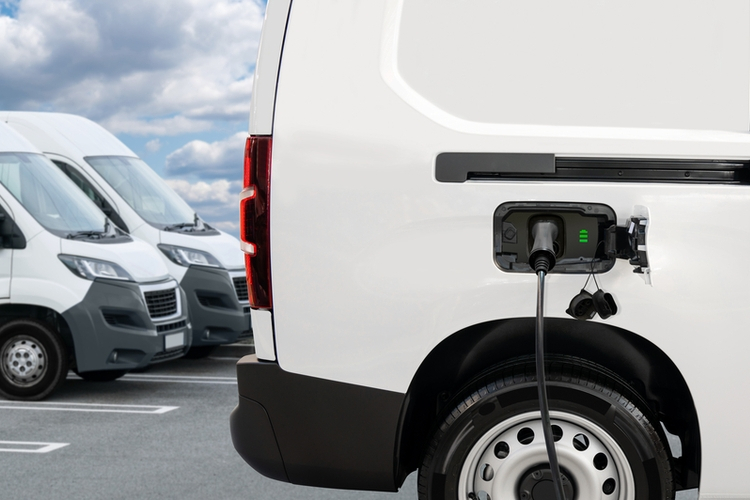
The logistics industry is responsible for 24 percent of global carbon dioxide emissions, with the majority resulting from transport activities. Due to legislative changes, such as the EU’s Alternative Fuels Infrastructure Regulation (AFIR), as well as pressure from consumers, investors, and business partners, the TSL sector must take steps to reduce its impact on the planet. Currently, companies’ efforts are focused on decarbonization and the implementation of alternative energy solutions, which, beyond their ecological nature, are intended to generate savings.
According to data from the Polish Alternative Fuels Association (PSPA), the TSL industry generates 6 percent of Poland’s GDP, bringing together 125,000 companies and employing approximately 750,000 people. This places Poland among the five largest heavy transport markets in Europe, alongside Germany, France, Spain, and the Netherlands. However, if Polish entrepreneurs want to remain competitive, they must electrify their heavy vehicle fleets.
The motivation for faster development of electromobility is the entry into force of the Alternative Fuels Infrastructure Regulation (AFIR), which imposes a requirement on EU countries to place charging stations along the main European TEN-T network roads. In the case of Poland, this covers a significant portion of motorways and expressways. The proposal for the deployment of charging infrastructure for heavy-duty vehicles includes 29 locations by 2025, 77 by 2027, and by 2030, the number of charging points is expected to increase to 166 with a total capacity of almost 4,000 kW.
Mass electrification of the Polish truck fleet, currently the largest in Europe according to PSPA (1.2 million units), requires support from the government, however. So far, subsidies have been available for the purchase of electric or hydrogen passenger cars or delivery vans. There are many indications that financial support will soon also be available to companies investing in zero-emission heavy-duty vehicles with a maximum mass exceeding 3.5 tons (category N2) and exceeding 12 tons (N3).
– In the context of breakthrough changes in the transport sector in the European Union, the development of electromobility and the reduction of CO2 emissions are becoming necessary factors for maintaining competitiveness and innovation in the market. Both the strategic goals of the EU and subsequent proposals to tighten emission standards for heavy-duty vehicles confirm this need. The aspect of vehicle electrification in Poland looks quite promising. Although the European electric truck market is currently valued at “only” 300 million euros, it is forecast to grow up to fifteenfold over the next five years. In this aspect, it is worth paying attention to the draft program of the National Fund for Environmental Protection and Water Management, which is intended to financially support buyers of zero-emission heavy-duty vehicles – says Adam Kwiatkowski, Vice President of Geis PL.
Green logistics – what does the industry think?
According to the PSPA report “Polish EV Outlook 2023,” the electric truck fleet in Poland numbered only 66 vehicles at the end of the first half of 2023, but by 2030 it could reach as many as 40,000 vehicles. An obstacle to the development of electromobility is currently the lack of adequate infrastructure for charging heavy-duty vehicles. Of the nearly 3,200 publicly accessible stations operating in Poland, not a single one was adapted to handle electric trucks at the end of October 2023.
Industry representatives also advocate for the abolition of road tolls for zero-emission vehicles, permission for eco-trucks to enter restricted traffic zones, and an increase in the permissible total weight for electric vehicles. Additionally, the introduction of tax breaks for those investing in ecological means of transport would accelerate the process of fleet electrification in Poland.
– Electric vehicles are characterized by many advantages, such as: low CO2 emissions, reduced noise, and fewer moving parts in the engine compared to traditional vehicles. However, there are still challenges related mainly to battery technology and the placement of chargers along routes, as well as, which is a significant issue, the maximum level of effective power available in the existing and planned infrastructure in Poland. Before a company decides to purchase an electric vehicle, it is worth considering the implementation of a system responsible for planning and managing transport fleet operations. This will allow for the optimization of delivery routes and distribution ergonomics, which will increase transport efficiency in the supply chain, reduce costs, and lower exhaust emissions – adds Leszek Zarzecki, FTL Director at Geis PL.
An alternative option is the installation of chargers at logistics and warehouse centers. Companies in the TSL sector are increasingly deciding to power them with solar energy by installing photovoltaic panels on the roofs of buildings. Thanks to such investments, energy expenditures decrease significantly, and new technologies applied in the facilities, including local charging stations, make them much more efficient.
Customers want ecological suppliers
Customers and business partners of transport companies are also making their voices heard on the matter. Market data shows that 60 percent of Polish consumers are willing to pay more to obtain goods and products produced and distributed in a sustainable manner, and 83 percent intend to change their purchasing habits to be more ecological. As a result, companies are checking how new solutions could be applied in their own supply chains, and the concept of sustainable development is becoming an important element of business strategy.
– By 2040, the entire Geis Group will become a climate-neutral enterprise. As part of this mission, we have started building a prototype of climate-friendly buildings and have purchased our first electric truck. We currently have 3 photovoltaic farms with a total capacity of 4 megawatts planned and under construction at our terminals in Germany. In Poland, we are also investing in ecological solutions. We have even had the opportunity to test deliveries with an electric vehicle in the vicinity of Rawa Mazowiecka – says Adam Kwiatkowski, Vice President of Geis PL.
Companies that actively promote ecological solutions are becoming more attractive to potential customers. Their ecological awareness is constantly growing, gaining importance during the purchasing decision-making process. In the long term, the implementation of green logistics also brings financial benefits through more responsible management of logistics processes and the reduction of electricity or water consumption. It can therefore be assumed that fleet electrification and decarbonization are the beginning of changes that are taking shape as a response to the increasing commitment to caring for the planet and reducing the transport industry’s impact on the environment.