











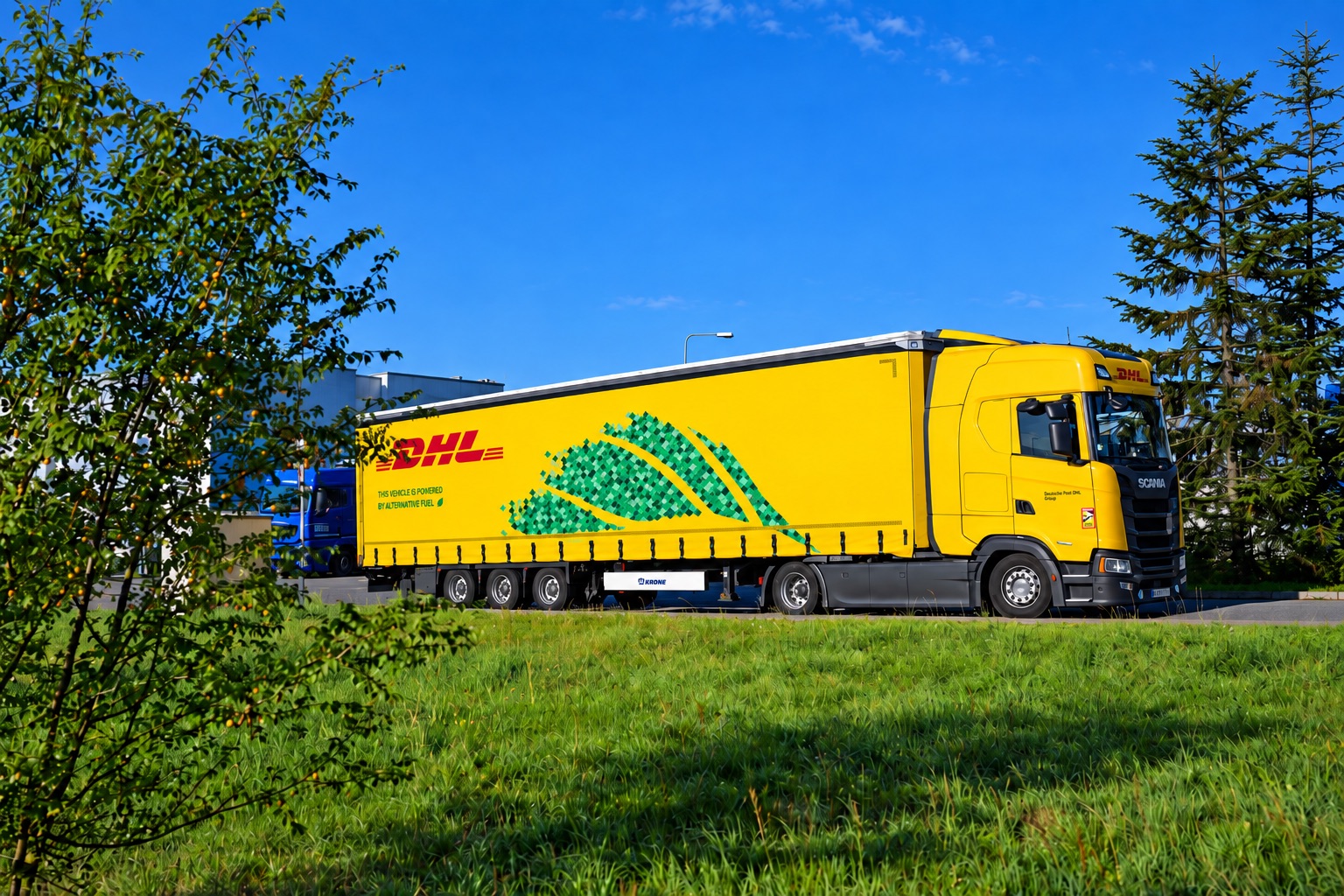
DHL Supply Chain, the global leader in contract logistics, and Volkswagen Konzernlogistik are reducing emissions in road freight transport on selected routes in the Czech Republic. Within six months, the partners introduced hydrotreated vegetable oil (HVO100) into regular operations serving Volkswagen production plants and suppliers. The project demonstrates that companies can reduce CO₂e emissions in transport by utilizing their existing fleet and infrastructure. As part of the project, approximately 250 trucks currently run on HVO100, including 96 vehicles operated by DHL. It is projected that they will consume about 485,000 liters of HVO100 per month. This is expected to lower CO₂e emissions by approximately 15,000 tons annually compared to the conventional fossil fuel used previously. HVO100 has been used on this route since November 2025.
The implementation is part of broader DHL Supply Chain efforts to test and introduce lower CO₂e emission transport solutions across the company’s network. Electromobility and other alternative drives continue to develop, and renewable fuels like HVO100 allow for the reduction of CO₂e emissions in road transport right now.
True change begins with the shared determination to take the first step – Together with Volkswagen, we moved quickly from plans to implementation and showed that lower CO₂e transport solutions can be applied in logistics at scale today. The results so far are a solid foundation for the further development of the project.
– says Kateřina Rázlová, Vice President of Transport for Central and Eastern Europe at DHL Supply Chain.
Volkswagen Group Logistics analyzes actions like this to reduce greenhouse gas emissions in its transport network, calculated across the entire life cycle. We are pleased that, together with DHL, we have introduced HVO100 into daily operations as a replacement for traditional diesel fuel on the routes covered by the project. At the same time, we continue to test electric trucks on routes where charging infrastructure and the specifics of transport allow for it. We want to further reduce greenhouse gas emissions across the entire life cycle in this way.
says Andree Clüver, Head of Material Logistics at Volkswagen Group Logistics.
The introduction of HVO100 was not just about switching one fuel for another. It required close cooperation with carriers, vehicle manufacturers, fuel suppliers, and sustainability teams. It involved preparing transport operations, ensuring fuel availability, and reporting emissions verified by an external entity.
Technology was only one piece of the puzzle. The success was determined by the cooperation of all partners in the supply chain – from carriers and fuel suppliers to sustainability experts. Thanks to jointly established, reliable procedures and transparent reporting, we incorporated HVO100 into daily operations in a very short time.
– says Lubomír Sasarák, Head of Transport Operations for the Automotive Sector at DHL Supply Chain
The project shows that close cooperation between cargo owners, logistics operators, and carriers can accelerate the transition to lower-emission freight transport – without compromising the efficiency and reliability of operations.
Source: DHL