








Rapid changes in demand, rising consumer expectations, and increasingly complex sales models make supply chain management in the beauty and luxury goods industry a major challenge. Brands must simultaneously ensure product availability and quality, order customization, distribution security, and responsible returns management. As shown by the FM Logistic report “Premium-class logistics: protecting and developing a brand in the luxury and beauty industry,” under these conditions, logistics is ceasing to be merely a sales back-office and is becoming a key element that builds brand value, customer experience, and competitive advantage.
Packaging that builds a brand experience
In the case of cosmetics and luxury products, the customer experience depends not only on the product itself but also on how it is prepared and delivered. According to a study published by Packaging Technology Today, cited by FM Logistic in its report, attractive packaging has a real impact on purchasing decisions and brand perception. 41 percent of consumers declare that it increases their propensity to repurchase the product, and the same percentage of respondents believe that it influences the perception of the brand as more luxurious.
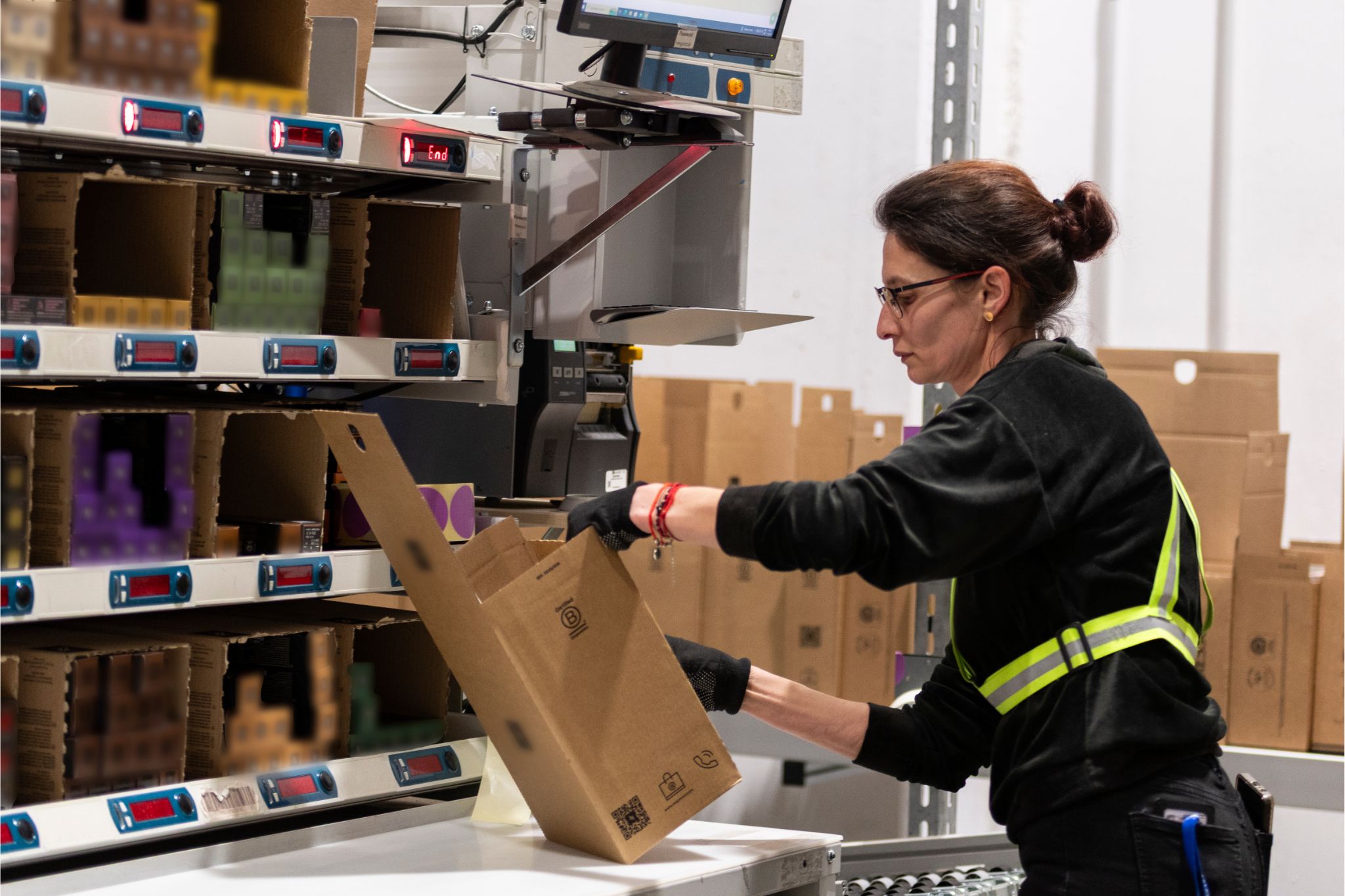
For logistics, this means the necessity of handling processes beyond standard picking: preparing gift sets, co-packing, packaging personalization, or adding promotional materials. The challenge is maintaining the quality and repeatability of these operations amidst variable volumes and short campaign lead times.
The organization of cooperation between the brand and the operator also matters. The One Roof model developed by FM Logistic combines warehousing, co-packing, and distribution services in one location. Such a solution can significantly shorten the time to market for promotional sets and limit unnecessary transport between subcontractors. It also facilitates ongoing agreement on changes and adapting operations to campaign requirements.
Demand volatility requires a new approach to inventory
Social media can radically change product sales in a short time. FM Logistic cites the example of an eye care cosmetic whose six-month stock sold out in less than a week after being promoted on TikTok. This situation shows that forecasting based solely on historical data is not always sufficient.
Brands must simultaneously limit the risk of shortages and excess inventory, which freezes capital and generates costs. Ongoing sales monitoring, visibility of stock levels across various channels, and the ability to quickly shift goods between locations are becoming increasingly important. Analytical tools and artificial intelligence can support forecasting, but their effectiveness also depends on data quality and the ability to translate recommendations into operational actions.
In a situation of rapid demand changes, it is not so much about maintaining the largest possible stocks as it is about the ability to manage them across the entire distribution network. The brand needs information on where the product is, how quickly it can be moved, and what the cost of such a decision will be. Only the combination of sales data with operational visibility allows for simultaneously limiting the risk of lost sales and excessive capital commitment.
– says Paweł Janicki, Senior Business Development Director, FM Logistic.
In the luxury industry, planning additionally requires taking the brand strategy into account, because in some segments, limited availability can strengthen the product’s positioning. In the case of cosmetics, the priority is usually ensuring availability while controlling surpluses. The inventory management model must therefore stem from the specifics of the product and the sales channel.
Quality and authenticity under control
In cosmetics logistics, it is essential to maintain product parameters during storage and transport. Some active ingredients are sensitive to temperature, light, or other external factors, which is why storage conditions and quality control procedures should meet the requirements of specific categories. Additional requirements may apply to international transport – for example, perfumes, due to their alcohol content, may be subject to regulations concerning the transport of dangerous goods.
Products of this type require a supply chain that meets medical standards and Good Distribution Practice (GDP) to ensure proper stability and the preservation of the properties of active biological ingredients.
Operator as a partner in supply chain management
The challenges of the beauty and luxury goods industry require the coordination of many areas – from imports and customs clearance, through warehousing and co-packing, to multi-channel distribution and returns handling. Their integration allows for improving information flow, reducing the number of touchpoints, and better controlling the efficiency of the entire supply chain.
The role of the operator should not end with the execution of fixed orders. It is important to understand how decisions regarding storage, picking, or distribution affect sales, service quality, and costs for the brand. Therefore, joint process design, setting performance metrics, and regular analysis of results are becoming increasingly important. Thanks to this, logistics can support not only current operations but also the realization of the company’s long-term strategy.
– says Paweł Janicki from FM Logistic.
Today, the ability to combine service quality, operational control, and flexibility determines logistical advantage in the beauty and luxury goods industry. An operator who understands the product specifics and the brand strategy can become a partner in building an efficient and resilient supply chain.
Source: FM Logistic