








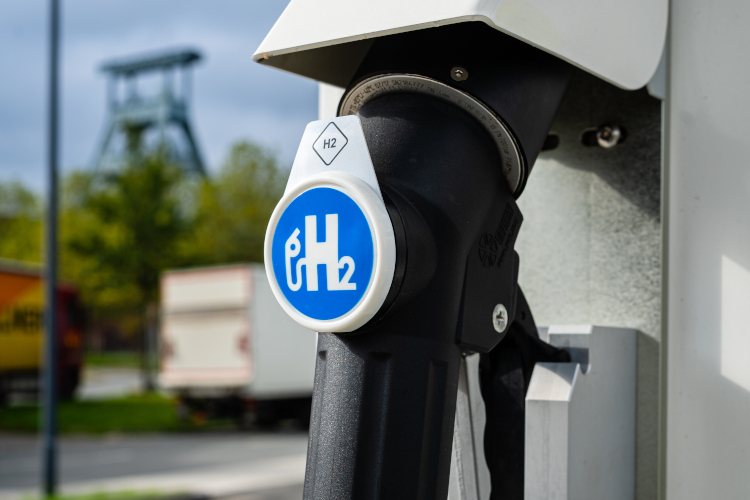
By 2030, PKN ORLEN will allocate PLN 7.4 billion to investments that will enable the company to develop in the field of low- and zero-emission hydrogen, based on renewable energy sources and municipal waste processing technology. The ORLEN Group Hydrogen Strategy will be implemented in four key areas: mobility, refining and petrochemistry, research and development, and industry and energy. As a result, 10 hydrogen hubs will be established by the end of this decade, and drivers in Poland, the Czech Republic, and Slovakia will be able to use a network of over 100 hydrogen refueling stations. The implemented projects will support the transformation of the ORLEN Group into a carbon-neutral multi-energy company.
– We must maximize profits and dynamically develop new areas of our business. These will also drive our transformation and the construction of a multi-energy company. Only in this way will we effectively respond to the challenges facing the fuel and energy sector. By 2030, we will allocate over PLN 7 billion to investments, thanks to which nearly half of the hydrogen produced in the ORLEN Group will be low- and zero-emission. In this way, we will reduce CO2 emissions by 1.6 million tons. We already have strong competencies in the development of hydrogen technologies, backed by extensive experience. In turn, the implementation of the strategy in this area will position us as the partner of first choice in building a hydrogen economy in Central and Eastern Europe – says Daniel Obajtek, CEO of PKN ORLEN.
Hydrogen is a gas that, thanks to its low or even zero emissions, is considered globally as one of the key elements of the energy transition. It is convenient to use and has a wide range of applications – it can be used in transport, industry, or in the municipal sector, e.g., in district heating. Due to these properties, the company has developed a development strategy in the field of the hydrogen economy, which complements the ORLEN Group Strategy until 2030.
By the end of this decade, the ORLEN Group wants to install approximately 0.5 GW of new hydrogen production capacity, obtained from renewable energy sources and the processing of municipal waste. Achieving this goal will be possible thanks to the construction of a total of 10 hydrogen hubs, mainly in Poland, but also in the Czech Republic. They will produce approximately 60 kt of low- and zero-emission hydrogen annually. Additionally, the use of carbon capture and storage/utilization (CCS/CCU) technology will enable the company to reduce the emission intensity of the production of another 120 kt of hydrogen from production facilities in Płock. As a result of these investments, nearly half of the hydrogen used in the ORLEN Group should come from zero- or low-emission sources in 2030.
The company launched its first hydrogen hub back in 2021 in Trzebinia. Currently, it produces grey hydrogen for transport purposes, but eventually, it will produce low-emission hydrogen from renewable energy sources. Another hub is being built in Włocławek. The start of green hydrogen production there is planned for the second half of 2023. Two years later, a hub in Płock will be launched. The green hydrogen produced there will be used in industry and transport.
By 2030, the company will also launch over 100 publicly accessible hydrogen refueling stations along with the necessary logistics. About 57 will be built in Poland, about 28 in Slovakia, and about 26 in the Czech Republic. Currently, the ORLEN Group already has two hydrogen refueling stations in Germany. This year, four more will be built: three in the Czech Republic and one in Poland, in Krakow. In 2023, the launch of hydrogen stations is planned in Poznań and Katowice. Each of them will have refueling stands for passenger cars and buses. A pressure of 700 bar will be used for refueling passenger cars, which will allow a car to be fully refueled in 5 minutes. In practice, about 5 kg of fuel will enter the car, which will allow for a range of up to 700 km.
Installations for the production of automotive-grade hydrogen, which will supply the stations, will also be built. According to the strategy, the company wants to produce at least 19 kt of hydrogen for transport. This is an amount that will allow for powering about 1,000 buses and 160 trains annually.
The ORLEN Group has already taken steps to develop hydrogen in urban public transport and rail, signing letters of intent for cooperation with 17 Polish cities and four companies that are potential recipients of hydrogen. This will enable the location of investments in places with the highest potential for the development of hydrogen transport.
In its Hydrogen Strategy, the company also places a strong emphasis on research and development. In 2021, an analytical laboratory for hydrogen testing was commissioned in Trzebinia. By 2025, a hydrogen laboratory will be established at the Research and Development Center in Płock. It will conduct tests and research on installations in the field of hydrogen production, its quality and purification, as well as storage and transport.
The ORLEN Group will also develop hydrogen technology in the area of industry and energy. The strategy assumes that the new CCGT units being built within the company will have the ability to co-fire hydrogen. Meanwhile, the company will be able to allocate surplus low- and zero-emission hydrogen foreseen in the longer term for the needs of other branches of industry at home and abroad (including as part of the planned European Hydrogen Backbone network).
Due to the innovative, comprehensive, and international nature of the projects, a significant part of them will be applying for co-financing. In 2021, the “Clean Cities” project, which assumes the expansion of infrastructure for transport needs, obtained 2 million euros of non-refundable co-financing from the EU CEF Transport Blending Facility program. In turn, the “Hydrogen Eagle” project, covering Poland, the Czech Republic, and Slovakia, is applying for non-refundable co-financing for the Polish and Czech parts as part of the EU IPCEI program.
Source: PKN Orlen.