









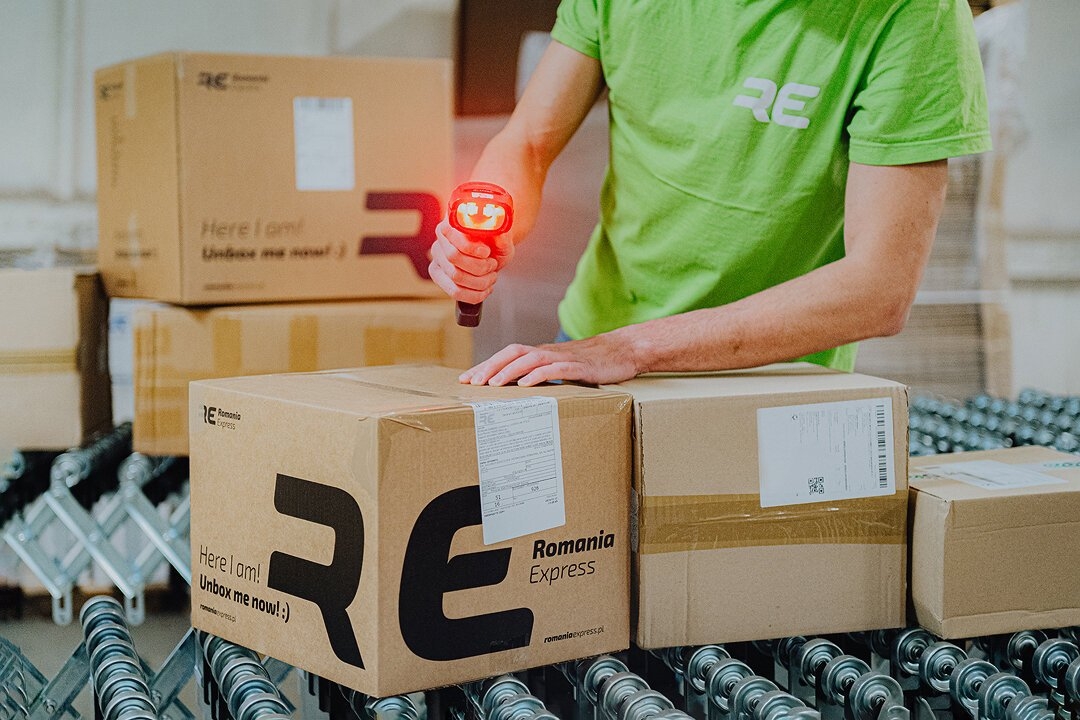
E-commerce companies selling abroad today need fast, secure, and fully predictable logistics. Shipping parcels abroad cannot be an add-on to operations – it is one of the key elements affecting conversion rates, customer feedback, and scaling sales.
You can do it on your own, or you can use ready-made courier services for companies such as: https://romaniaexpress.pl/, which handles international shipments to countries in Central and Eastern Europe and the Balkans, such as the Czech Republic, Romania, Hungary, Slovakia, Croatia, or Slovenia
Choosing a carrier and platform – what to look for?
Choosing the right international courier is crucial for online stores that process regular international parcels. It is not just the price that counts, but the entire delivery process – from dispatch to delivery to the customer.
When choosing an operator, it is worth paying attention to:
- parcel delivery time – in markets such as Romania, the Czech Republic, or Hungary, delivery within 2–3 business days is the standard
- local delivery – the last mile is carried out by a local courier who knows the market and the customers
- parcel tracking – available from the moment the label is generated
- Cash on Delivery (COD) – important in countries like Romania and Croatia
- local returns – the customer does not have to send the parcel internationally
- shipping automation – integration with the store’s system, integrators, and marketplaces
- the logistics operator’s unique know-how about the markets, which helps to understand the local customer
For online stores handling volume shipments to end customers, a lack of automation leads to errors in labels, delays in dispatches, and increased logistics costs.
How to prepare parcels for international shipment?
Proper preparation of the parcel has a direct impact on the safety of the shipment and the number of complaints. In international transport, parcels are sorted and handled more frequently than in domestic deliveries.
How to choose packaging for an international parcel?
- use 3–5 layer cardboard boxes, matched to the weight and content
- avoid shipping in original manufacturer packaging
- match the size of the carton to the product
How to secure the contents of the parcel for international transit?
- fill empty spaces in the carton
- secure electronics, glass, and fragile items
- limit the possibility of the product moving inside
How to correctly label the parcel and address data?
- generate labels in a system integrated with the courier
- adjust the address form to the target market
- e.g., In Romania, postal codes are not used in everyday addressing. They do not appear on ID cards, they are not used in company addresses, and online stores and marketplaces – including eMAG – do not require them (the eMAG form does not contain such a field). Instead, a two- or three-level address identification is used: city + county (județ), and if necessary, also the municipality (comună). Therefore, copying a Polish address form with a required postal code leads to abandoned carts or failed deliveries. The best solution is to remove the postal code field and use a drop-down list with counties and cities or a map of pickup points.
Customs requirements and other documents needed to send a parcel
Shipping parcels abroad to European Union countries (e.g., Czech Republic, Romania, Hungary, Slovakia, Croatia, Slovenia) does not require customs clearance, but it still requires correct commercial data and compliance with applicable regulations.
Online stores should ensure:
- correct sender and recipient data,
- compliance of products with regulations applicable in the destination country,
- a clear and reliable declaration of the parcel contents,
- correct sales data for cross-border shipments (e.g., for tax reporting purposes).
In the case of B2C sales to other EU countries, online stores can settle VAT under the OSS procedure, which allows for a single consolidated VAT declaration instead of tax registration in each country separately.
Shipments outside the European Union or the sale of regulated products require additional formalities.
How to easily outsource international parcel shipping in a company?
Modern international parcel shipping in e-commerce is based on automation and a proven cross-border process, not on manually sending each parcel with different carriers. In the Romania Express carrier model, the entire process is simple and repeatable.
In practice, it looks as follows:
- Placing an order
The customer places an order in the online store, and the data is automatically transferred to the shipping system. Parcel tracking works from the moment the label is generated. - Picking and packing the parcel
Orders go to the warehouse, where they are picked and safely packed. - Handing over parcels to Romania Express
Parcels are delivered to the Romania Express sorting center or picked up directly from the store’s warehouse by a Romania Express courier. - Sorting and international transport
At the sorting center in Tychy, parcels are scanned and directed to the appropriate markets. Then they go on daily cross-border lines without logistics bottlenecks. - Sorting and delivery in the destination country
Upon arrival in the destination country, the shipments go to a local hub and are then delivered by a local courier – to a home, a pickup point, or a parcel locker. - COD and returns
Cash on Delivery (COD) is processed upon delivery by the local courier, and the collected funds are then settled collectively with the store in accordance with the applicable agreement. Parcel returns are directed to a local return address in the given country, where they are consolidated and sent back to Poland, which optimizes the return handling process.
Who is international parcel shipping in this model for?
This solution is for:
- online stores selling to end customers,
- e-commerce stores that carry out regular international shipments,
- online sellers on local marketplaces, e.g., in Romania
- companies operating in several markets simultaneously (e.g., Romania, Czech Republic, Hungary),
- stores that want to shorten delivery times and limit returns,
- companies looking for one operator to handle the entire cross-border process.
This model is intended for regular e-commerce parcel shipping, not for occasional, one-off dispatches.
Effective international parcel shipping in e-commerce is not about choosing the “cheapest courier,” but about a smooth, automated process tailored to the realities of the target market. A cross-border model based on sorting centers, daily transport lines, local delivery, and COD and return services allows online stores to shorten delivery times, limit errors, and scale sales without complicating logistics.