








Some are effective for only a few hours. They allow for the imaging of a specific organ, but also help in verifying its functioning. They are used in tests of, among others, the thyroid, heart, or brain, and they destroy cancer cells. Radiopharmaceuticals are a key factor in the development of nuclear medicine, but their distribution involves significant logistical challenges. What conditions must be met to transport them safely and ensure their effectiveness?
Radiopharmaceuticals are used in medicine, for example, in the treatment of thyroid cancer, prostate cancer, neuroendocrine tumors, but also in diagnostics – enabling imaging and observation of organ function. Their use is increasingly widespread – the value of the radiopharmaceuticals market is currently estimated at 7.51 billion USD and may grow to approximately 14.44 billion USD in 2034.[1] Such a large projected growth makes them one of the most popular trends in modern medicine.
Valuable and radioactive
Radiopharmaceuticals are used, among other things, for their ability to damage and destroy pathological cells, such as cancer cells. This is because they consist of, among other things, radioactive isotopes. In therapy, those emitting beta or alpha radiation are used, while in diagnostics – gamma radiation, such as technetium (99mTc), iodine (123I, 131I), fluorine (18F), or gallium (68Ga).
Due to their specific nature, radiopharmaceuticals must be manufactured in accordance with exceptional safety and quality standards. What is also very important is the fact that the half-life of isotopes is short; they lose their properties over time, so they must be produced and delivered promptly to be effective. In some cases, they are stable for only 6 hours. In addition to the production process itself, efficient distribution of radiopharmaceuticals and ensuring proper transport conditions are of key importance.
– explains pharmacist Paulina Milcz, Deputy Manager of the Pharmalink Pharmaceutical Warehouse, a logistics company specializing in the transport of medicinal products at controlled temperatures, including radiopharmaceuticals.
Currently, more than a hundred radiopharmaceuticals are used in medicine, based on radioactive isotopes derived from a reactor or cyclotron. To obtain a form of the drug that is safe for the patient, it is necessary to maintain the highest standards at every stage of the manufacturing, storage, and transport of the substances.
Transport under special control
The number of cancer cases is increasing – according to the latest data in Poland, it is about 185 thousand people annually[2]. Consequently, there is also a constant increase in the demand for radiopharmaceuticals that are effective, safe, and precise in their action. From a patient’s perspective, therapy with such drugs does not require long hospital stays. However, as experts emphasize, the challenge is not the increasing scale of production, but logistics, including the distribution and transport of substances to medical centers. Due to the radioactive nature of the drug, its transport is subject to strictly defined conditions and requires compliance with international (ADR) and national safety standards.
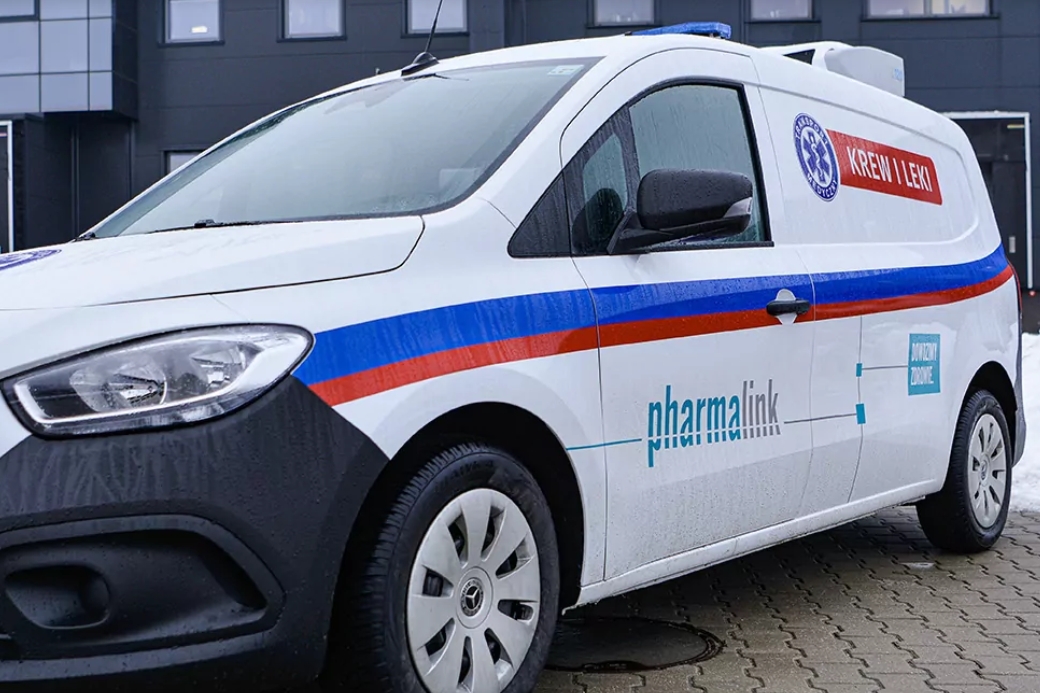
To be able to transport a radiopharmaceutical, it is necessary to use vehicles adapted for the transport of radioactive substances – they have radiation sensors and are marked with placards indicating ADR Class 7. It is necessary to minimize transport time, and the drivers themselves hold an ADR certificate, which guarantees knowledge of emergency procedures. Moreover, the transport of the drug is tracked in real-time by a GPS system, and full documentation of the route, transport conditions, and radiation doses is meticulously maintained. Products are prepared for transport in accordance with ADR requirements and are transported in special packaging that protects against radiation, which cannot be opened until reaching the destination. These standards are a guarantee of maximum safety throughout the entire supply chain of radiopharmaceuticals.
– points out Daniel Charucki, Transport Manager at Pharmalink.
Responding to growing demand
Pharmalink, a specialized logistics operator providing transport, storage, and distribution services for the pharmaceutical industry, also carries out radiopharmaceutical transport services.
In response to the growing demand in the industry, we decided to expand our services to include the transport of radiopharmaceuticals. Thanks to a properly equipped fleet and professional staff with the appropriate qualifications, we are able to meet the stringent safety standards associated with the transport of these types of substances. Temperature control, radiation measurement sensors, ADR certification, or anti-theft security systems – everything necessary for the transport of radiopharmaceuticals has been provided by us. In the case of transporting medicines, and especially radioactive preparations, there is no room for compromise. Precision, responsibility, and excellent logistics organization are of key importance here, and we – thanks to our many years of experience and close cooperation with the pharmaceutical industry – are able to guarantee them to our partners.
– emphasizes Daniel Charucki from Pharmalink.
Keeping detailed documentation, constant (24/7) monitoring of the transport location, specialized qualifications, or equipment with appropriate sensor systems – these elements contribute to maintaining full safety and meeting standards for the transport of radioactive products, including radiopharmaceuticals. Maintaining these standards is not easy, which is why only professional companies specializing in pharmaceutical logistics can guarantee the effectiveness of drugs and continuity of supply. Thanks to the radiopharmaceutical transport service offered by Pharmalink, these preparations arrive in an intact condition and on time wherever they are currently needed, allowing doctors to utilize the enormous potential inherent in nuclear medicine, which has a chance to become a breakthrough in the fight against diseases that increasingly affect us.
[1]https://www.precedenceresearch.com/radiopharmaceuticals-market
[2]https://www.zwrotnikraka.pl/rosnie-liczba-zachorowan-na-nowotworu-w-polsce/
Source: Pharmalink