









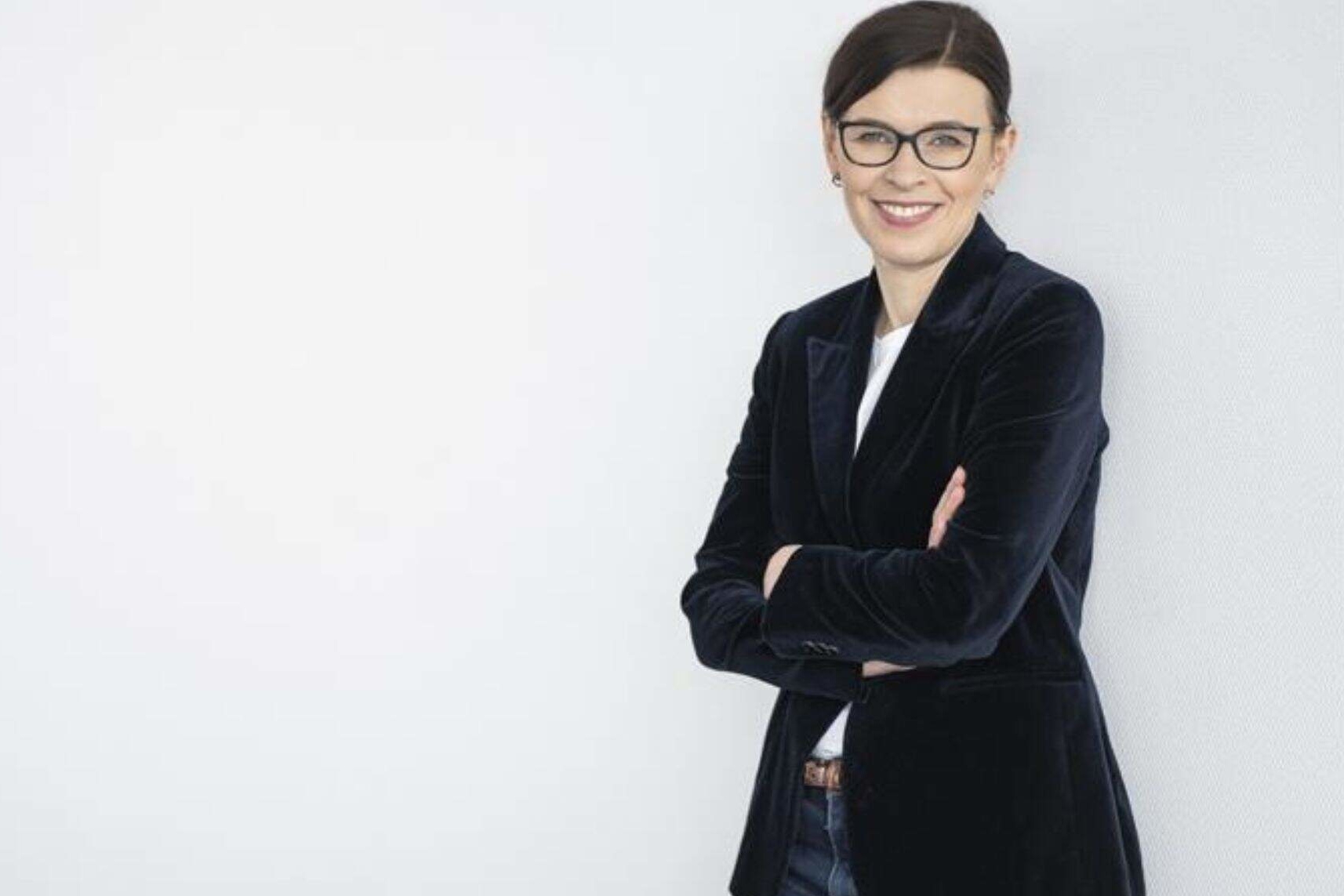
Logistics is a dynamic puzzle – full of challenges, quick decisions, and constant collaboration. Although often perceived as a male-dominated industry, in reality, success in this field depends on a diversity of skills and management styles. On the occasion of International Women’s Day, we present a conversation with Magdalena Jamroziak, HR Manager, about how women and men in logistics complement each other, what challenges await women in the industry, and what can be done to encourage more women to reach for promotions.
Bernadeta Forgacz: Magda, a warm-up question. A businesswoman you admire?
Magdalena Jamroziak: You’ve stumped me with that question. I realized that I can immediately name men I admire in business – both in terms of the results they’ve achieved and perhaps even more for the organizational culture they create and their approach to people and business. It is much harder for me to point to a specific businesswoman. Maybe that’s also because you read about examples of men in business more quickly than women. Statistically, men are still in the top executive positions of global and even local companies. Nevertheless, back to the question – the woman I admire from a business perspective is Dr. Irena Eris – for her consistency in action, immense courage, and at the same time, a “there’s no such thing as impossible” attitude. Especially since she created her own company in 1983 as a 33-year-old pharmacy graduate, borrowing money from her mother, having an idea to simply create high-quality cosmetics. Her story is an inspiring example for me of how passion, knowledge, and determination can lead to success, such as creating a cosmetics brand with a global reach and reputation.
B.F: Logistics is often perceived as a man’s world. Is that a myth or reality? What does it look like in numbers?
M.J.: It is partly reality, although with elements of a myth. It turns out that (following observerlogistyczny.pl) according to 2024 data, women make up 47% of all those employed in the logistics sector in Poland. Interestingly, 10 years ago, in 2014, according to a European Commission report, women accounted for 21% of employed persons in our sector. So, to be precise – yes, logistics is still a male world – however, it seems that the proportions are already very close, and over the last 10 years, our sector has become feminized by more than double. Nevertheless, if we look at what % of women in our industry hold so-called key management positions (in the sense of management and director positions) – it is only 18%.
B.F: And what is the collaboration between women and men in logistics like? Do you see differences in their approach to work and management?
M.J.: Perhaps I will be biased, but I am convinced that the collaboration goes very well, provided that we have a partnership mindset on both sides. In other words, we treat every role in the organization and every position as necessary, contributing its brick to the common result. Sometimes I actually see differences in the approach to work and management – but surprisingly, they are not always consistent with stereotypical thinking. I see both incredibly concrete and task-oriented women achieving ambitious goals, as well as men from whom I would very gladly learn mindfulness towards people and empathy. So the difference does not always stem from gender. I lean towards the option that it stems much more from the specific individual – their beliefs, approach, and attitude towards people, work, or the world. Observing these different strategies and approaches to work or management is, for me, discovering, broadening my own perspectives, and learning to draw from diversity.
B.F: It is said that women have to work twice as hard to prove their worth. Do you think that time has passed, or are we still on that path?
M.J.: You know what, Benia, that’s a saying I really don’t like because I’m convinced it stems from some beliefs that are inadequate to reality. I started my adventure with logistics over 20 years ago and I don’t feel like I worked harder or more diligently than my male colleagues. Maybe it’s because I encountered a boss who set goals and fairly accounted for them, just as he evaluated competencies and skills. I am convinced that this stems rather from the way some of us were raised – in “misunderstood humility and politeness.” And it often happens that as women, we have trouble talking about our achievements at work, including money. So simply about speaking well of ourselves – openly communicating what I can do, what I do well, while simultaneously clearly specifying what I need and in which areas I would like to develop and how much I want to earn. Sometimes it’s enough to just say it or ask – the worst that can happen is that we hear the word “no” or “not now.” From my experience, saying it out loud opens the path to a conversation, to a new quality in life (yes, not always).
B.F: Are there any traits or skills that particularly help women stand out as leaders in this industry?
M.J.: Definitely! However, it is worth emphasizing that these are universal competencies that are crucial in a leadership position – regardless of the industry or gender. In logistics, the ability to build relationships and collaborate turns out to be particularly important. Logistics is a service sector based on close cooperation between many entities – suppliers, customers, warehouses, or transport companies. The ability to communicate effectively, negotiate, and manage relationships is invaluable here. Another important aspect is the ability to solve problems and stress resistance. This is a dynamic industry, requiring quick reactions to unforeseen situations, such as delivery delays, customs issues, or sudden changes in the supply chain. Leaders who can keep a cool head and find the best solutions gain a huge advantage. One also cannot forget about the orientation towards innovation and openness to new technologies. Modern logistics is increasingly based on digitization, data analysis, and process automation. Leaders who are up to date with technological trends can manage operations more effectively and optimize processes. Empathetic and sustainable leadership is also very important. Modern team management increasingly requires the ability to build engagement and motivate employees. Empathy, the ability to listen, and creating a supportive work environment are of great importance for team efficiency. Finally, I will add – strategic thinking and the ability to anticipate trends. Leaders in logistics often stand out with their ability to analyze the market and forecast changes, which allows them to effectively manage the supply chain and adapt strategies to changing conditions.
B.F: Are women eager to apply for higher positions?
M.J.: Surprisingly, no. Looking through the prism of our recent recruitments for the position of Sales Manager or Branch Manager, the candidates meeting our requirements accounted for less than 10% of the applicants. Although in the last 3 recruitments for the position of Sales Manager, we selected 2 women for these positions, who started working at our company this year.
B.F: So how would you encourage them?
M.J.: Primarily by looking for people in your environment who will be support on your professional path and development. There are people around us who constantly encourage us to step out of our comfort zone, giving us wings, and those who sometimes effectively clip them (even unconsciously). By education, I am an economist and I look at the decision to participate in recruitment through the prism of profits, also taking into account potential losses and at the same time trying to estimate the probability of success – that is, an analysis of data and facts. When making such a decision, it is worth looking at what the tasks in that position are, what competencies are required – do I have situations in my experience that confirm these skills or competencies? And if I don’t, what can I do in the meantime that will allow me to acquire them? You can also ask someone from your support group what they think about such an idea – to bounce ideas off someone you trust.
And most importantly in this aspect – it is worth being stubborn in the good sense of the word. If it doesn’t work out – check why. Ask for feedback, ask for an indication of what exactly was missing, what is worth strengthening. I believe that when one door closes, a window opens somewhere nearby. And if I were to encourage them in one sentence, I would use a quote from Winnie the Pooh, who used to say, “You can’t stay in your corner of the Forest waiting for others to come to you. Sometimes you have to go to them.”
Logistics, although still largely perceived as a male industry, is dynamically changing and opening up to diversity. The participation of women in the sector is growing, and their competencies, such as the ability to build relationships, stress resistance, or strategic thinking, are becoming crucial for success. It seems key not only to break through one’s own barriers and thinking patterns, but also to actively seek support, speak openly about one’s competencies and aspirations. May this conversation be an inspiration for all women in logistics and beyond – to boldly reach for more, develop, and take on challenges.
Source: Dachser