








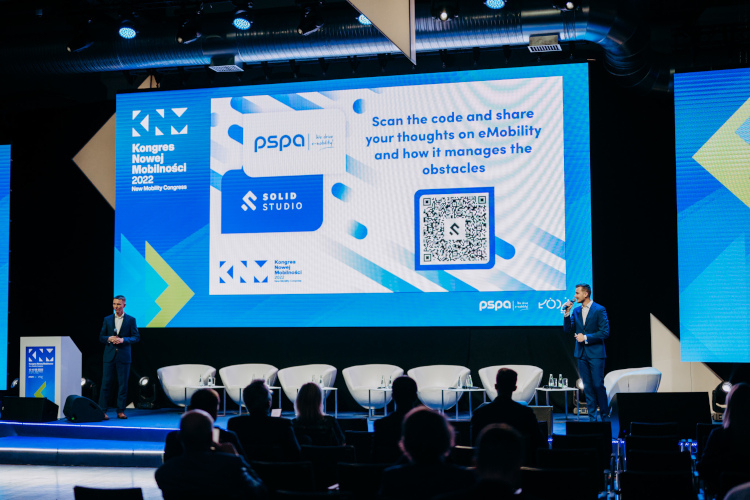
For 72 hours, Łódź once again became the Polish capital of electromobility. The third edition of KNM 2022 – the largest zero-emission transport sector conference in the CEE region, which broke attendance records – has come to a close. What are the most important conclusions from the Congress?
KNM 2022 took place from September 12-14 in the over 3,500 m2 space of the Łódź EC1. The organizers of the conference, which brought together a record number of 1,500 participants from all over Europe, including representatives of central government, local authorities, e-mobility market experts and practitioners, as well as dozens of exhibitors, were the Polish Alternative Fuels Association (PSPA) and the City of Łódź. The New Mobility Congress 2022 hosted over 80 substantive debates, round-table sessions, and workshops attended by nearly 250 panelists, as well as accompanying events – premieres, exhibitions, and demonstrations.
1. Poland should focus on innovation
The automotive sector, currently in a period of deep transformation, has faced severe global supply chain disruptions, falling supply of cars on the primary and secondary markets, rising prices of vehicles, raw materials and components, high inflation, the war in Ukraine, and the COVID-19 pandemic in recent years. Examples from many countries prove that in times of heightened geopolitical and economic challenges, it is worth investing in innovative solutions that lead to the modernization of the economy. In this regard, Poland can learn from the best. One of the goals of the New Mobility Congress 2022 was to exchange good practices and strengthen the cooperation of the Polish e-mobility industry internationally.
– We know that Poland is a strong player in the electromobility market. That is why it is worth supporting this industry. Let us not forget Poland’s leading role in the production of electric buses and lithium-ion batteries. The Dutch contribution can further increase the potential of the Polish e-mobility industry. However, the development of this sector requires closer cooperation between leading stakeholders, and I am glad that PSPA is devoting so much space to this issue during the New Mobility Congress – said Daphne Bergsma, Ambassador of the Kingdom of the Netherlands.
2. The domestic market is key to strengthening Poland’s position in the e-bus segment
Zero-emission public transport is one of Poland’s specialties in the European electromobility supply chain. This was confirmed by the New Mobility Congress 2022, which saw the premiere of the all-electric MAN Lion`s City 18 bus, produced at the factory in Starachowice. Furthermore, the report “Case study: Poland – The European export center for electric buses”, which PSPA developed in cooperation with the World Bank Group, was presented during the conference. One of the reasons for the leading position of electric bus manufacturers operating in Poland is the growing demand from local government units. By the end of the first half of 2023, the Polish e-bus fleet is expected to grow to 950 units, which will represent a 32.5% y/y increase.
– In the years 2017-2021, a total of 1,937 electric buses were delivered from our factories to other EU markets. That is almost 1/3 of all e-buses exported from the European Union. The total value of Polish exports from this sector in the aforementioned period was over 750 million EUR, which is almost 40% of the total value of exports from Member States. A stimulator of the export capabilities of Polish companies is the high demand on the domestic market. However, competition is increasing, and maintaining Poland’s leading position requires, among other things, the continuation of the subsidy program for local governments – said Maciej Mazur, Managing Director of PSPA.
3. The expansion of publicly accessible charging infrastructure in Poland must accelerate
In recent years, Poland has seen a significantly faster development of the EV fleet compared to the pace of expanding the network of public charging stations. The ratio of electric-powered cars per charging point increased from 5.6 in 2019 to 10.7 in 2021. The continuation of this trend, in the context of the ban on the sale of combustion-engine cars in the European Union, creates a risk of a shortage of chargers and a significant deterioration of the situation on the Polish automotive market. Without an adequate number of charging stations, mass electrification of the Polish vehicle fleet will not be possible. However, the expansion of infrastructure is hindered by a number of systemic barriers. Aware of these challenges, PSPA, together with partners including leading charging infrastructure operators, presented proposals for amendments to current regulations. The postulates were presented during the New Mobility Congress 2022.
The proposed draft special act is driven by four main goals. The first is to significantly shorten the time needed to implement the construction of connections for public charging stations to the DNO (Distribution System Operator) network. The second is to implement mechanisms that facilitate and stimulate DNOs to invest in the expansion of distribution networks. The third category of postulates aims to define precisely specified standards for the construction of connections by DNOs (e.g., regarding the location of the connection point or the possibility of selecting the voltage level, regardless of the charging station power). Fourth, our proposals should lead to organizing the ownership structure of energy infrastructure located in Motorway Service Areas – said Rafał Czyżewski, CEO of GreenWay Polska.
4. Poland is a European leader in the battery sector
Poland ranks fifth in the world and first in Europe in terms of lithium-ion battery production. We are only behind China, South Korea, the USA, and Japan. In our country, both li-ion cells and a whole range of related components are produced, including electrolytes, separators, cathodes, copper foil, as well as battery modules and traction batteries for electric vehicles. Representatives of business, public administration, and universities discussed how to maintain Poland’s leading position in the global lithium-ion battery supply chain during the New Mobility Congress 2022.
– A strong point of Poland and other CEE markets from the perspective of LG Energy Solution Wrocław is certainly the location – the center of Europe. It is also the unique potential of people – educated and specialized experts. Thanks to this, the sales of LG Energy Solution car batteries are constantly growing, and production is ongoing all the time. It is worth remembering that Poland has a chance to strengthen its position as a key player in such a rapidly developing electromobility sector – not so much in terms of sales, but above all in the production of components – said Yong Girl Lee, Business Support Director, LG Energy Solution Wrocław.
5. Cooperation between local governments will accelerate the implementation of Clean Transport Zones
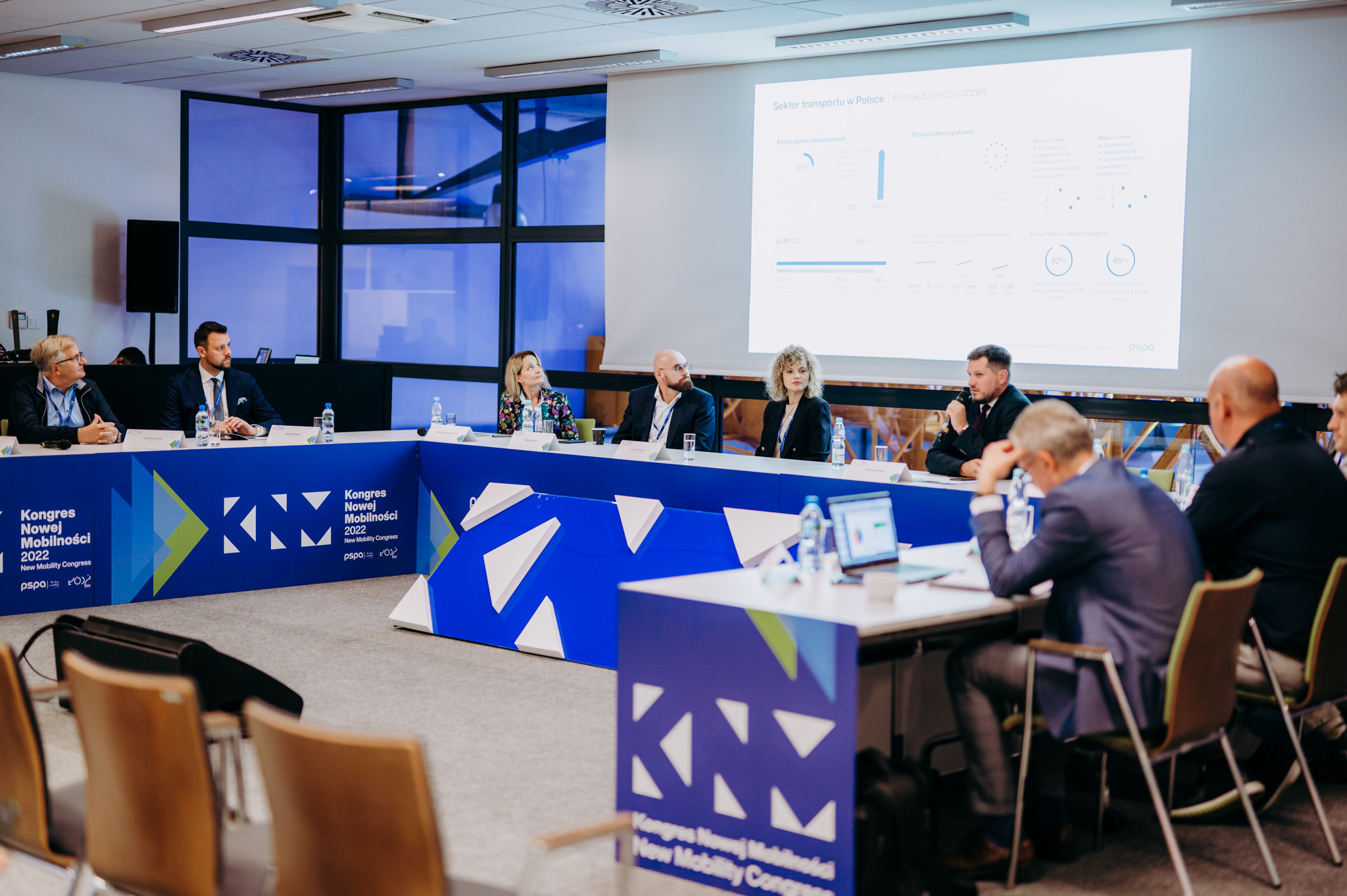
One of the points on the agenda of the New Mobility Congress 2022 was the Presidential Debate “Coalition of Cities for the Development of Clean Transport Zones” with the participation of a dozen or so mayors and deputy mayors of Polish cities (including Bydgoszcz, Łódź, Opole, Rzeszów, Słupsk, Sosnowiec, and Warsaw), representatives of the Union of Polish Metropolises, and the Upper Silesian-Zagłębie Metropolis. The discussion concerned, among other things, best practices and law optimization regarding the establishment of clean transport zones.
– In 2021, we launched a fantastic project serving to exchange knowledge between Polish local government units – the PSPA Local Government Committee. It is a platform for planning future, joint actions. We discuss there all issues related to the development of zero-emission transport in Polish cities. Within a year of the Committee’s launch, we held 7 meetings, which were attended by a total of 168 participants. One of the effects of our activities was the establishment of the Coalition of Cities for the Development of Clean Transport Zones. Importantly, the postulates addressed to the government were mostly taken into account. The subject of the Committee’s further work will be the priority challenges of local governments in terms of modernizing transport and its transformation towards zero-emission, including instruments favoring the expansion of urban charging infrastructure or starting a dialogue with residents in order to establish clean transport zones as effectively as possible – said Adam Wieczorek, Deputy Mayor of the City of Łódź.
6. Electrification of a company fleet requires comprehensive planning
Enterprises are the pillar of the Polish electromobility market. According to the PSPA “Polish EV Outlook” report, in 2021, companies accounted for 3/4 of EV registrations on the Polish market, even without including individuals conducting business activity. A number of debates, panels, and discussion workshops during the New Mobility Congress 2022 were devoted to the issue of optimal implementation of electrified fleets in companies. – Companies should approach fleet transformation like a project. Adopt assumptions and, at a pre-determined date, verify whether they have proven true. Replacing vehicles should be divided into stages – a pilot, the first phase, and the second phase. A utility analysis of the fleet should be performed, e.g., using online surveys addressed to potential EV users. It is also worth conducting an audit of the electrical network to determine the connection possibilities for charging stations. Driving training is also important – operating electric cars differs from using internal combustion vehicles. Fleet electrification can bring numerous benefits – both financial, related to a lower Total Cost of Ownership (TCO), and in terms of image – said Dr. Daniel Trzaskowski, Director of the Fleet Sales Department at Volkswagen Financial Services.
7. Poland must prepare for AFIR
A key postulate of the “Fit for 55” package presented in 2021 by the European Commission is the repeal of Directive 2014/94/EU of the European Parliament and of the Council of 22 October 2014 on the deployment of alternative fuels infrastructure and its replacement with a regulation. The AFIR project assumes, among other things, linking the development of the electric car fleet with the increase in the power of public charging infrastructure. From the perspective of Poland and other European Union Member States, this means the need to multiply expenditures on the development of the public charger network.
– Due to the relatively small fleet of electric-powered cars, Poland is currently able to meet the requirements of the planned regulation. In March 2022, the installed capacity in the public charging infrastructure network was 77 MW – 39 MW more than the AFIR project foresees. However, taking into account the forecasts regarding the development of the Polish BEV and PHEV fleet, included in the PSPA “Polish EV Outlook 2022” report, as well as the regulation’s requirements, already in 2025 the power of charging stations operating in Poland should increase to 435.8 MW, in 2030 to 1383.5 MW, and in 2035 – to 2613.1 MW. This means the need to increase the installed capacity in public infrastructure by 2035 by 34 times. Thus, meeting the requirements set by AFIR for the coming years will be a huge challenge – said Aleksander Rajch, Director of External Relations at PSPA.
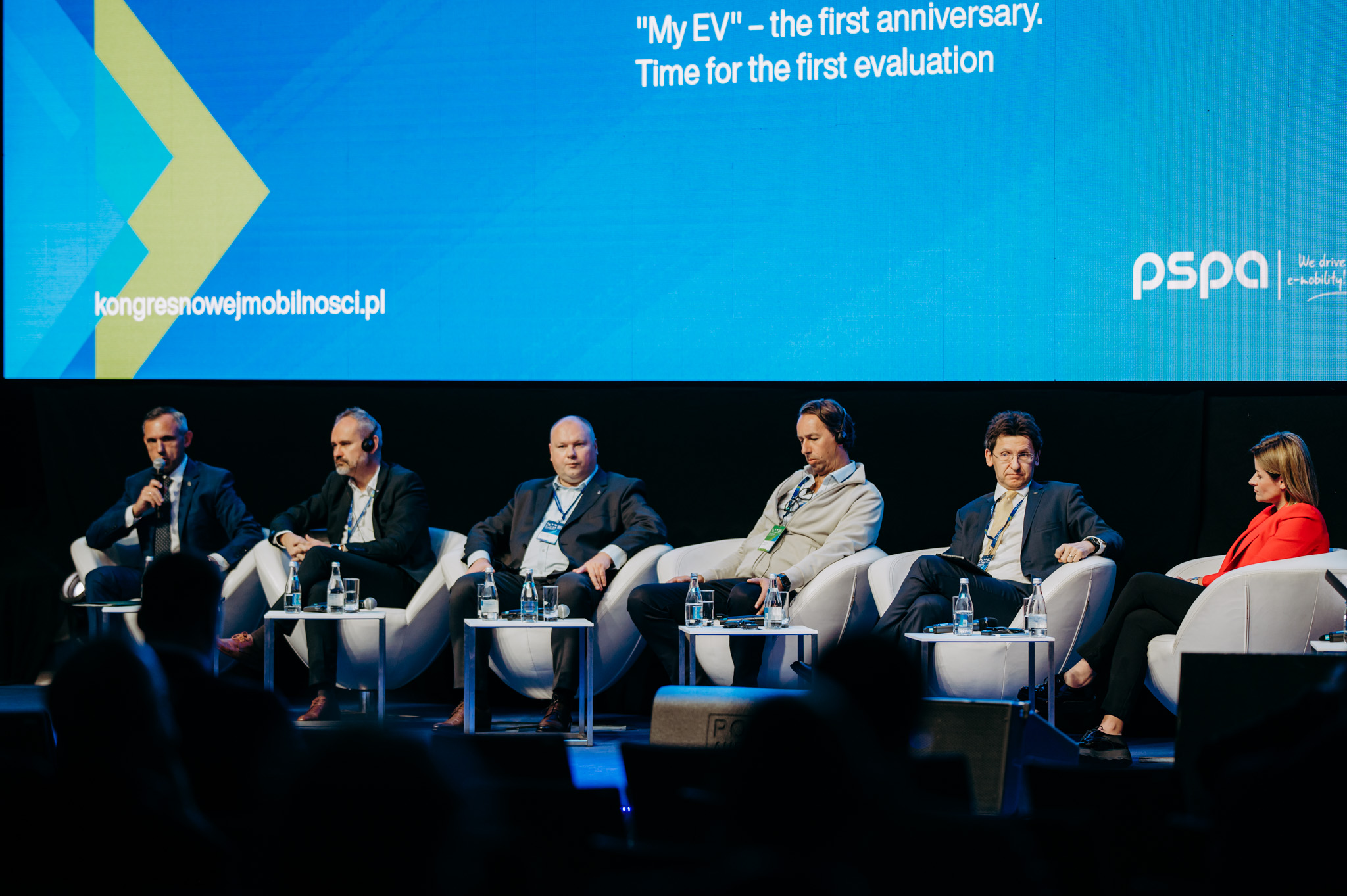
8. The “My Electrician” program is not perfect, but it dynamizes the development of the electric car market in Poland. More than a year has passed since the National Fund for Environmental Protection and Water Management launched the program.
“My Electrician” has been running for over a year. During the New Mobility Congress 2022, a discussion panel was held with the participation of representatives of OEMs, CFMs, and the National Fund for Environmental Protection and Water Management, the aim of which was to summarize the results of previous recruitment rounds and assess to what extent subsidies have contributed to the development of the e-mobility market in Poland. Participants pointed out that the subsidies offered under the program of up to 27,000 PLN (in the case of passenger cars) and up to 70,000 PLN (in the case of delivery vehicles) effectively encourage the purchase of EVs, but some elements of the support system should be modified (e.g., regarding complicated procedures, long waiting times for funds to be disbursed, or the maximum price of vehicles covered by support).
– 700 million PLN was allocated for the implementation of the “My Electrician” program. Considering all circumstances and the current market situation, we rate the year of the support system’s operation as a success. I take note of the arguments about the necessary indexation, but you will not hear a declaration from me now that due to inflation and rising vehicle prices, the amounts provided for by the program’s regulations will increase – said Paweł Mirowski, Deputy President of the Management Board of the National Fund for Environmental Protection and Water Management.
9. eHDVs are already available, time for the development of charging infrastructure and the introduction of a support system
Heavy-duty vehicles (HDVs) account for less than 3% of the total fleet of vehicles on European roads while being responsible for as much as 19.2% of CO2 emissions from road transport in the EU. The decarbonization of this sector is therefore crucial in Europe’s efforts to achieve climate neutrality. This is a particularly important challenge from the perspective of Poland, which has the largest fleet of vehicles with a GVW of over 3.5 tons in the European Union. Electric heavy-duty vehicles are already available on the market, as evidenced by the announcement during KNM 2022 of the start of deliveries to IKEA factories using zero-emission Volvo trucks belonging to the Raben company fleet. However, the main challenges for the development of the eHDV market in Poland remain the still insufficiently developed charging infrastructure and the lack of subsidies, which dynamize the electrified road heavy transport market in selected Western European countries.
– Our company already offers a full range of all-electric heavy-duty trucks. We are therefore already ready for the change. In the process of implementing zero-emission trucks into the fleet, the key issue remains the optimal planning of routes and charging infrastructure. It is high-power chargers that are a condition for the development of this sector. In Poland, there is a lack of the support available in Scandinavia or Germany in this regard – said Małgorzata Kulis, CEO of Volvo Polska.
10. Comprehensive education about electromobility is necessary
During KNM 2022, a lot of space was devoted to the issue of improving the qualifications of staff in Poland and better adapting the competencies of secondary and higher education graduates to the expectations of employers. It is necessary to tighten cooperation between the academic and business environments, and vocational and engineering curricula in Poland should focus on learning integrated and process-oriented thinking. Dual education could prove helpful, allowing for the acquisition of theoretical and practical knowledge, thanks to providing opportunities to attend classes both at universities and in potential, future workplaces.
– Electromobility is a very complex, multi-faceted trend, which is why higher education is the most suitable for specializing in this field. However, specialized education should start already at the secondary school stage – said Prof. Jacek Dybała, Ph.D., Eng., Vice-Dean for Development and Science at the Faculty of Automotive and Construction Machinery Engineering of the Warsaw University of Technology
11. Administrative barriers are holding back the development of the li-ion battery recycling industry
Along with the development of electromobility, as well as the limited supply and rising prices of essential raw materials such as nickel or cobalt, lithium-ion battery recycling is gaining importance. According to forecasts, the revenues of companies operating in this industry will grow to nearly 40 billion dollars by 2030. Poland – the European leader in the battery sector – seems to be an ideal location for facilities involved in recovery. Participants of the New Mobility Congress 2022 identified Poland’s potential in this area and a number of administrative barriers limiting its use at the current stage.
– All lithium-ion batteries that are no longer suitable for use in electric cars still have energy potential. Poland has the capacity to become a leader in recycling in the battery industry, but on condition of cooperation with manufacturers. Electromobility is developing very rapidly, and the recycling industry is not keeping up with this pace – the construction of a facility for recovering essential raw materials in theory takes 4 to 5 years. Public administration should think about implementing regulations that will limit the blocking of investments by often unjustified protests – said Robert Makieła, Managing Director of Rare Metals.
12. The payment system for electric vehicle charging services must be unified
According to IEA forecasts, the number of public charging points in Europe will increase from 334,000 in 2021 to over 1.5 million in 2025. At the same time, the number of infrastructure operators, which is already over 300, will increase. From the drivers’ perspective, the ability to freely travel by electric car around Europe is associated with the need to have dozens of RFID cards and mobile applications ensuring access to chargers. During KNM 2022, solutions aimed at unifying the payment system for EV charging services were presented.
– Visa’s mission and goals include facilitating payment processes for everyone, which also applies to electric vehicle charging. We must therefore adapt our offer to the new reality and customer expectations. To this end, we are developing solutions such as paying for charging services via card, contactless payments, applications, loyalty programs, or “destination parking” – we want to attract customers to those charging stations that provide a unified payment system – said Stephen King, VP Sustainability Solutions, Visa.
The New Mobility Congress 2022, the largest and most important industry conference in Poland entirely devoted to electromobility, is a place for the exchange of ideas and expert knowledge at the highest substantive level. On September 12-14, key stakeholders of the entire zero-emission transport value chain, people professionally associated with the e-mobility market in Poland and Europe, met in Łódź. Vehicle manufacturers, technology and infrastructure companies, energy and fuel corporations, transport operators, growing startups, and decision-makers discuss technologies being introduced to the market, as well as identify business models and partnerships that guarantee the implementation of new mobility projects. All this to reduce emissions from the transport sector in Poland and enable the safe and sustainable flow of people, goods, and services.
More information is available on the Congress website: https://kongresnowejmobilnosci.pl