








An interview with Arkadiusz Chęciński, Mayor of Sosnowiec, member of the Board of the Association of Polish Cities and the Local Government Movement TAK! For Poland
 Janusz Mincewicz: What, in your opinion, should the transport of the future look like for Sosnowiec and other Polish cities?
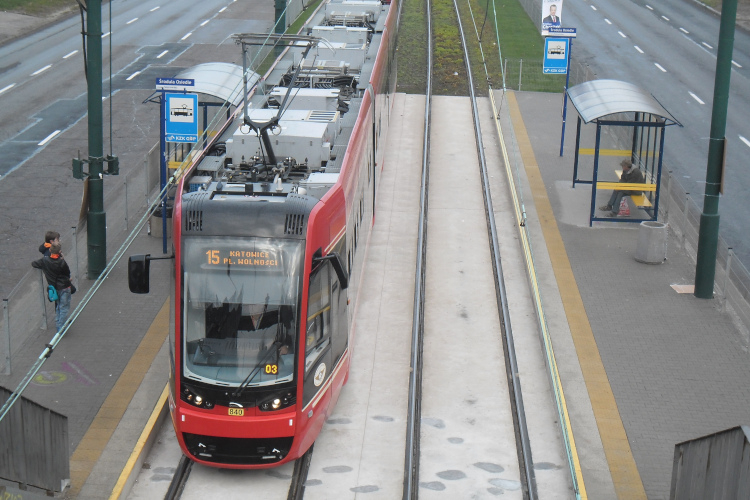
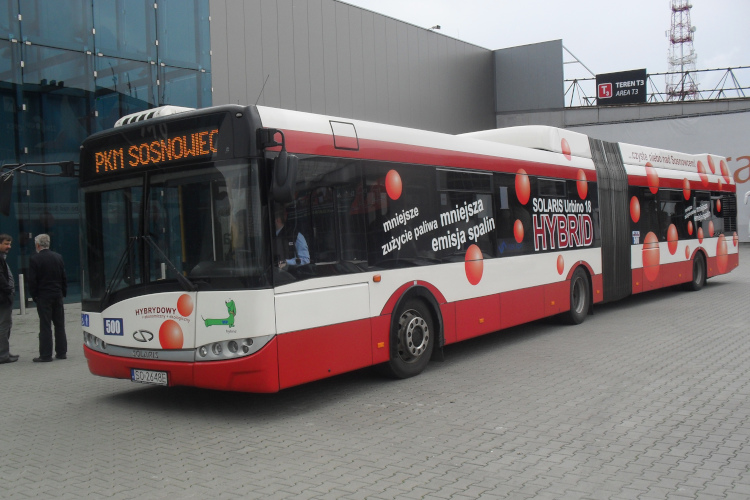
Arkadiusz Chęciński: Without a doubt, it will be broadly defined public transport. However, I think that today no one will hazard a guess as to what fuel will power it. PKM Sosnowiec has a dozen or so electric buses and all the infrastructure associated with them, as well as hybrid vehicles. More “hybrids” will be in the company by the end of the year. Regardless of the market situation, I think we are forced to switch to so-called “public transit.” Otherwise, cities will remain congested and simply unfriendly. That is why PKP in the region wants to build additional tracks for local connections, the GZM Metropolis has started to finance new rail connections, bus lanes and new metropolitan lines have been created in Sosnowiec, and a new tram line is also under construction. We recognize that public transport is the future – there is no turning back from this.
J.M.: Please try to evaluate – at what stage are Sosnowiec and other Polish cities in striving for an exemplary city of the future with ecological transport?
A.Ch.: Sosnowiec is in a state of transformation. We want to show the residents of Sosnowiec that public transport is a good and only alternative to the car. I think that cities such as Amsterdam, Brussels, Copenhagen or Berlin should be a model for us, and if we are to level up, we should compare ourselves to the biggest and best. However, it is a long way off, although we are definitely not at the beginning of it, and that is a big plus. Local governments are currently fighting for solutions that will bring us closer to European ideals. This also requires education, including ecological education. This should go hand in hand with financial resources, which, however, are increasingly being limited for us. This definitely hinders transformation. This is one of the demands of the Local Government Movement TAK! For Poland, which brings together several hundred local government officials from all over Poland, regardless of their political convictions.
J.M.: Most residents of Polish cities predict that autonomous cars will appear on the streets within the next 10-15 years. Do you share this optimism?
A.Ch.: It is probably inevitable. Even a good dozen years ago, no one believed in electric vehicles, which are now a part of everyday life, but I have doubts whether this will be the case for autonomous vehicles in such a short time. They will certainly appear, but I think they will remain something unusual for a long time.
J.M.: Zbigniew Wyszogrodzki, an expert on energy and urban mobility at the Business Centre Club, claims that Polish cities, following the German model, instead of buying expensive electric buses, should focus on so-called electrofit solutions, i.e., converting used internal combustion buses to electric ones. Is that a good idea?
A.Ch.: In theory – I have no doubt, but in practice, I have reservations. So-called e-conversion is already appearing in our cities, but it cannot completely replace new rolling stock. As a supplement, by all means – also as an element of decarbonization, but I have the impression that such buses will never completely replace new vehicles. This is undoubtedly a good trend and, from what I hear, economically justified, but it should go hand in hand with the purchase of new buses.
J.M.: Olsztyn decided to return to ecological trams, and Gliwice decided to liquidate them. Who did the right thing?
A.Ch.: The decision in Gliwice was made 11 years ago, and it is difficult to judge it today. It was probably determined by economics, but also by the characteristics of Gliwice. However, I would not want to judge other cities. In Sosnowiec, we are working for public transport with double the force, although it cannot be hidden that price increases and obstacles thrown in the way of local governments are somewhat slowing down this process. Trams, buses, suburban rail, and thus broadly defined public transport – this is the future not only of Sosnowiec, but of all Polish cities.
J.M.: Are you satisfied with the development of public transport in the cities of the Upper Silesian-Zagłębie Metropolis, including Sosnowiec, which is its organizer?
A.Ch.: I think that all passengers feel the difference. The connection network has been optimized, and new lines have been introduced connecting cities that until now could only dream of accessibility. Almost 1,700 buses, trams and trolleybuses operate daily in the Silesia and Zagłębie region under the ZTM banner. 500 lines serve 7,000 stops, covering more than 100 million kilometers annually. Tickets are changing – we are focusing on long-term ones, which are the most cost-effective. All this is to encourage the metropolis’s residents to switch to a tram or bus.
J.M.: Polish cities talk about the prospect of hydrogen-powered buses. But currently, the nearest station where you can refuel hydrogen for a car is in… Berlin. When can hydrogen buses become a reality in our cities?
A.Ch.: It is difficult to evaluate this unequivocally, but I think the revolution is at the gates. Just like with hydrogen, not long ago people talked about electric vehicles and the low availability of charging points, and meanwhile today in Sosnowiec we have several dozen chargers, and buses have their own infrastructure. It is not excluded that it will be identical with hydrogen vehicles. We will probably face more than one obstacle, but hydrogen is one of the greatest opportunities for transport in terms of ecological power. I will say more, it even convinces me more than electric ones.
J.M.: Can Gdynia, which is a leader in civil society and has for years been on the podium of the global LivComAwards competition, which promotes the best local environmental management and development, be an example for Polish cities in terms of public transport, given that, alongside Lublin and Tychy, ecological trolleybuses run through its streets?
A.Ch.: Ecological communication is our future, and it is clearly visible that cities are heading in this direction. Trolleybuses, hybrid and electric buses, trams and trains. Of course, in the era of crisis, rising electricity and gas prices, and raging inflation, this trend may collapse, for a simple reason – cities that have their revenues and funds limited face a dilemma: go towards ecology, but at the same time higher costs, or stay with cheaper solutions, but completely inconsistent with the decarbonization trend? Unfortunately, there is a fear that without quick and concrete solutions, some will choose the second option. However, in Sosnowiec, we will still try to introduce ecological solutions.
J.M.: To eliminate traffic jams, cities are focusing on public transport and building transfer hubs. I have the impression that despite the investments, traffic jams are not smaller at all. Why?
A.Ch.: Focusing on public transport is ambiguous. It must be accompanied by education – showing possibilities, as well as the impact on ecology, the environment and people. In spring and summer, the topic of smog is not very popular, but it returns in autumn and winter. Then we remember how important it is. This must also be accompanied by an appropriate ticket offer and a network of connections that will encourage changing a car for public transport. This path requires evolution, but certainly not a revolution. In Poland, there is still a belief that we must drive a car right to the door, and parking is an obligation, not a privilege. However, we have plenty of cases where opening certain places to pedestrians by closing them to car traffic brings only positives. Our cities must head in this direction.
J.M.: Have Polish cities taken advantage of the opportunities to improve transport that they have had over the last three decades?
A.Ch.: It is impossible to judge everyone by the same standard, but to a greater or lesser extent, certainly yes. When we look at the Tri-City, Warsaw, or even our Metropolis, that opportunity was certainly taken to a large extent, although we still have a long way to go. As I already said, evolution is underway, and its effects will be visible in some time.
J.M.: Katowice, as the first Polish city, was the organizer of the World Urban Forum in June. Is this a big distinction for the region and Poland?
A.Ch.: Katowice has changed a lot, and their development in recent years has certainly skyrocketed. From an industrial city, associated primarily with heavy industry, mines, it has become a city of students, business and entertainment. The very fact of organizing the World Urban Forum proves this transformation, which is happening throughout the region. Together with the Mayor of Katowice, Marcin Krupa, we are working in the Local Government Movement TAK! For Poland, so that our local governments can continue to develop. Today there is no talk of competition between cities, but of cooperation. Silesia and Zagłębie complement each other perfectly, and this is visible at every step. Katowice is the leader in the region, and I don’t think anyone would want to compete for that title.