The popularity of online shopping has been growing steadily for several years. This growth intensified particularly during the pandemic. Both the demand and supply sides are influencing the dynamic development of e-commerce. This sector is not saturated, and the number of customers continues to rise. Currently, eight out of ten Polish internet users shop online. The steadily increasing number of online retailers is also contributing to this development.
Placing orders online eliminates the need for the customer to physically travel to a store; goods are delivered directly to the customer (or to a nearby pickup point). This means that the scale of freight traffic increases, while the volume of passenger transport (both by private cars and public transport) decreases. Meanwhile, cities have historically been designed with passenger transport in mind. Urban development strategies do not adequately account for freight flows (in line with the visible trend). There is an urgent need to change our way of thinking about the future development of cities – towards considering these two streams simultaneously. The challenge is enormous, as cities have no prior experience in this area. Let’s look at the processes triggered by the change in the structure of retail sales.
Logistics and the last mile
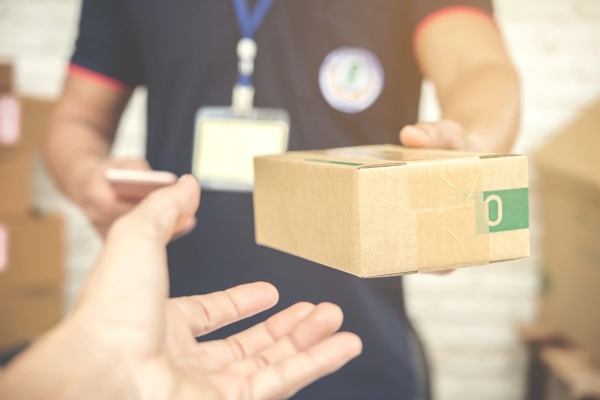
In e-commerce, the B2C (business-to-consumer) segment dominates in terms of the number of orders, where goods are ordered by individual customers. E-customers frequently make one-off purchases in small quantities. Once an order is placed, products are picked, packed, and prepared for shipment. They are transported by third-party logistics companies, specifically CEP (courier, express, and parcel) operators. Shipments are then transferred to sorting centers, from where they reach local branches. The final stage is the delivery of the parcel by a courier to the location specified by the customer.
Usually, the shipment arrives at the customer’s “door.” This is the so-called last mile. It is one of the most critical phases of the online order fulfillment process because this is most often where the only direct contact between the courier company and the recipient occurs. It is also the weakest link in the supply chain — the quality of service at the final stage is decided by the human delivering the parcel on time and in the right condition, while logistics processes at other stages (e.g., picking, packing) are often automated and optimized. The problem is that delivery hours for private individuals and businesses differ (when businesses are working, it is difficult to find private individuals at home). Delivery locations for such customers also differ — they typically live in hard-to-reach locations or areas far from the center.
The impact of e-commerce on urban logistics and the environment
Delivery to the end customer is not only the most complex process but also the one that most affects urban logistics. In 2021, approximately 700 million online orders were delivered. At this scale, traffic related to delivery is felt by the city, particularly in terms of a higher number of courier vehicles, and consequently, greater congestion, noise, CO2 emissions, and an increase in the number of accidents and collisions. Packaging materials securing the shipments are an additional factor influencing CO2 emissions. Nevertheless, the total balance of the environmental impact of e-commerce, compared to traditional retail, works in favor of the former. An analysis by Oliver Wyman shows that in-store shopping generates, on average, nearly 2.5 times the carbon footprint of the same purchase made online. The main “polluter” is energy (e.g., lighting and heating/cooling the retail space), which consumes 7 times more energy in traditional retail, and commuting by private car, which generates twice the carbon footprint of last-mile delivery (due to less efficient transport performed by the customer). Research results also indicate that transport related to the delivery of products ordered online accounts for only 0.5% of total traffic in urban areas. In contrast, traditional retail accounts for as much as 11% of such traffic. Therefore, e-commerce is not, in principle, more burdensome to the environment than traditional sales. However, each case must be approached individually, as a trip to a traditional store for large purchases using public transport may have a smaller environmental impact than home delivery of small items ordered online.
It might have seemed that the pandemic sparked some reflection on our life on Earth. That we now better understand our interdependence and the impact of our daily behaviors and choices on the entire ecosystem. This should have been followed by fewer thoughtless purchases and more attention paid to our environment. However, that did not happen. This is clearly evidenced by the results of studies conducted by the Mobile Institute, which show that our ecological awareness is still low. Awareness, moreover, is only half the battle; it should also be followed by a sense of responsibility. Meanwhile, Poles believe that governments and state institutions, and (to a slightly lesser extent) companies, have the greatest influence on improving the state of the natural environment. The problem in the development of ecological attitudes is primarily convenience. A large portion of Poles still treat an eco-friendly approach as an extra effort, in which they see no direct benefits. Education of the public is therefore needed. The burden of this education lies not only with schools and companies but also with government and local administration.
The phase of spontaneous solution-seeking
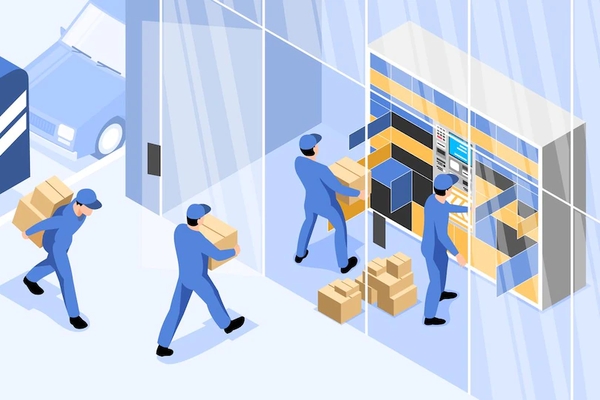
The dynamic development of e-commerce has redefined not only the models of logistics companies but also customer needs. Efforts began to find solutions that limit the problems of the last mile, and thus have a smaller negative impact on the environment. So-called out-of-home (OOH) deliveries have gained significance, i.e., pick-up and drop-off (PUDO) points and parcel lockers. Special points are located in places such as grocery stores, newsagents, kiosks, shopping malls, or gas stations. Thanks to these solutions, customers do not have to wait for a courier; they can pick up their parcel at a convenient time. The number of such points currently stands at approx. 55,000. A phenomenon in Poland is parcel lockers, of which there are approx. 20,000. We already collect almost 40% of shipments from them. On one hand, they limit the last-mile problem, and consequently, generate fewer trips in urban space; on the other hand, the avalanche growth in the number of parcel lockers and placing them in random spots sometimes disrupts spatial order.
An additional challenge is that the owners of “out-of-home” delivery networks are reluctant to allow others to use their infrastructure, as they consider it an element of competitive advantage. In some countries and cities around the world (e.g., Salzburg, Singapore), this situation is beginning to change along with the growing knowledge and ecological awareness of managers dealing with OOH deliveries, and with pressure from governments and local authorities for last-mile sharing. The change has even occurred in China, where the largest parcel locker network in the world (HiveBox) operates in an open model, which China Post recently joined. A huge role can be seen here for Polish city mayors, who should ensure that further development of parcel lockers is covered by greater control, especially in the context of creating new parcel locker networks to which various CEP operators will have access. These devices, like mailboxes, are systemic delivery points. Mailboxes were long ago treated as essential infrastructure and opened up through legislative and executive regulations. The same is happening in the mobile phone market, where individual operators share infrastructure (e.g., base stations).
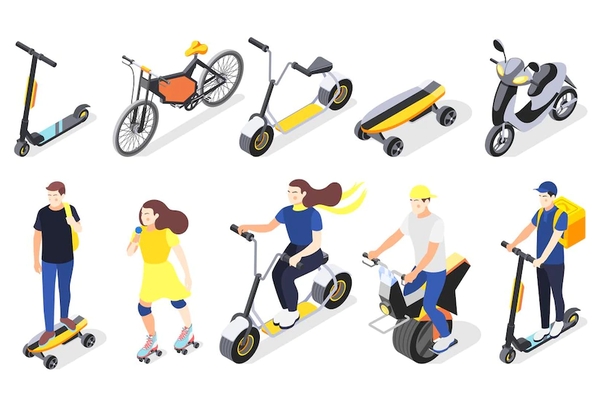
Attempts are also being made to solve last-mile problems using micromobility. Low-emission vehicles and zero-emission cargo bikes are being introduced. They enable fast transport on short routes as well as access to hard-to-reach places. Here, too, the role of the city is very important, as it can support and promote these means of transport for carrying loads throughout its entire territory or in specific areas.
Another idea for solving logistics problems is using the concept of the sharing economy, in particular crowdsourcing. In line with the philosophy that “access is better than ownership,” the public and their resources (e.g., private vehicles) are involved in fulfilling parcel transport services. Passenger transport services are the most popular. Recently, however, entities have emerged that also transport parcels. From the driver’s point of view, there is no special difference whether they are transporting John Doe or a parcel to Jane Smith from point A to point B. However, this is a solution that does not eliminate the problem of the last mile’s impact on the city. A certain solution to this problem is the creation of micro-hubs or mobile transshipment points. Such solutions are used successfully, for example, in Prague or Hamburg. This is once again a task for municipal authorities — to actively initiate, support, and develop such ventures.
Need for a holistic approach
In addition to the aforementioned parcel lockers, very fast delivery services developed during the pandemic — both within a few hours and even within a few minutes. In the case of grocery products, these are carried out from so-called dark stores. Their appearance (dark, covered windows) and the traffic they generate in their immediate vicinity raise many controversies. Additional warehouses are also being built to carry out ultra-fast delivery services. All these elements interfere with the spatial order of cities and are already the object of interest of city authorities (attempts are being made to create regulations in this regard). As Polish economic practice shows, however, restrictions alone are not enough, because over time they are bypassed to a greater or lesser extent. This is another example proving that a new, holistic approach is necessary, in which we will take into account both new models of human movement and new, just-becoming-popular, methods of transporting goods in the city. It is not just about infrastructure, but also about the proper organization of the flows of these two streams. A very important element enabling better management of transport in the city is, for example, ICT technologies. Thanks to them, it is possible to link city resources, vehicles, and passengers, and better organize urban logistics. As a result, congestion, noise, pollution, and costs are reduced.
No less important is taking actions that will influence changes in the behavior of city residents and transport company managers. Promoting solutions encouraging the former to use public transport or other “non-car” means of transport, and the latter to use low- or zero-emission solutions and implement the sharing economy in practice.
Finally, it is worth noting that the growing share of online sales does not mean that sales in stationary stores will disappear completely in the near future. The opening of stores after the lockdown showed that there is a group of customers who definitely prefer stationary shopping, while others prefer combining different forms. It is similar with order collection, which, depending on preference and availability, the customer wants to have an influence on. From the buyer’s perspective, the most convenient thing is freely “switching” between different sales channels (stationary, online) and collection of the ordered product (home delivery, to a parcel locker, stationary store, etc.). The city must be prepared for this change in the logic of trade, and thus to respond to the new logistics and transport processes associated with it.
Source: Pomorski Thinkletter no. 1(8)/2022