











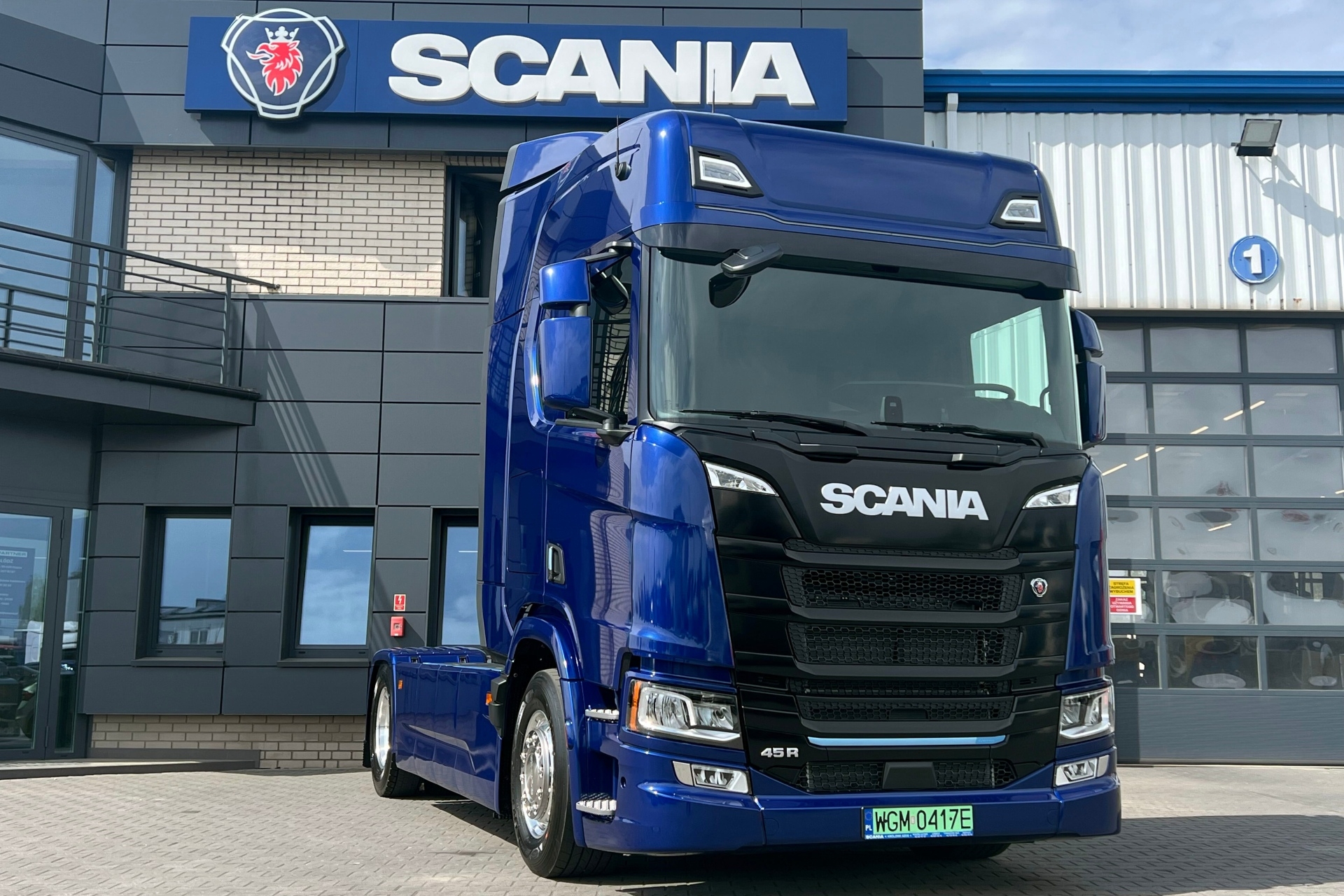
The truck manufacturer and one of the leaders in the snack and beverage market are establishing a strategic partnership aimed at reducing CO2 emissions in transport. The first stage of the project involves adding a Scania electric tractor unit to the PepsiCo fleet, which will replace a combustion-engine vehicle in daily trips between the company’s plants. This is an important stage of the pilot and testing phase on the road to achieving goals related to the energy transformation of the fleet and the pursuit of sustainable development. The initiative aims not only to reduce the carbon footprint but also to contribute to the wider adoption of electromobility-based solutions in the logistics industry.
In Poland, nearly 70 percent of companies do not have zero-emission vehicles in their fleets, and only 43 percent plan to implement them in the near future.[1] This is a serious challenge in the context of global efforts to reduce greenhouse gas emissions. In response to this problem, Scania and PepsiCo are collaborating to gradually electrify the transport fleet. The first stage of the project assumes that the Scania electric vehicle will replace a traditional truck in internal transport, serving the route between the PepsiCo plant in Tomaszów Mazowiecki and the company’s central warehouse in Mszczonów. The route operator and vehicle owner is P.H.U.T „Trans-PLUS” Robert Słomka, Izabela Słomka, a transport provider for PepsiCo. The vehicle was prepared at the Scan-Partner Sp. z o.o. service center in Łódź, an authorized Scania dealer responsible for executing the contract.
Nowadays, caring for the natural environment is becoming one of the key elements of the development strategy for companies striving for sustainable growth. As part of implementing the PepsiCo Positive strategy, we are taking a number of actions aimed at reducing the impact of our operations on the planet. By establishing cooperation with Scania Poland, we are not only electrifying our fleet and reducing CO2 emissions, but also raising the qualifications and awareness of our employees regarding energy transformation in logistics.
– comments Wojciech Osiadacz, Transport and Fleet Manager at PepsiCo Poland.
The cooperation between the two companies represents a significant step towards the development of transport independent of fossil fuels. The electric solutions offered by Scania Poland will play a key role in this process, supporting the transport sector in transitioning to more sustainable mobility.
Transport independent of fossil fuels
At Scania, we believe that the pursuit of sustainable mobility requires cooperation at many levels. When companies like PepsiCo support their transport partners in reducing emissions, they become a driving force for change across the entire industry. Thanks to this approach, our partners can more quickly develop and implement modern e-mobility solutions, supporting the transformation of the transport sector.
– comments Paweł Kurzawa, Electromobility Director at Scania Poland S.A.
Pilots like this one by PepsiCo Poland and Scania Poland allow for the assessment of efficiency, range, and the impact on daily logistics of electric trucks in real operational conditions. Through such actions, it is possible to better adapt charging infrastructure, optimize routes, and refine technologies related to e-mobility. Pilot projects are also an excellent opportunity to verify the results of range analyses, energy consumption, and charging infrastructure efficiency based on digital transport task models. They also enable the identification of potential barriers and challenges, which is essential for the effective implementation of electrified solutions on a large scale.
Partnership between manufacturers, companies using transport, and transport providers is essential for the energy transformation in the logistics industry to proceed smoothly. Electric truck pilots are a step towards sustainable transport that brings benefits to both business and the environment. Through the cooperation of key market players, it is possible to achieve ambitious carbon dioxide reduction goals and build a more efficient and ecological delivery system.
[1] Report “Sustainable development and fleet decarbonization. The state of the Polish fleet market”, Keralla Research Institute, 2024
Source: Scania Poland S.A.