








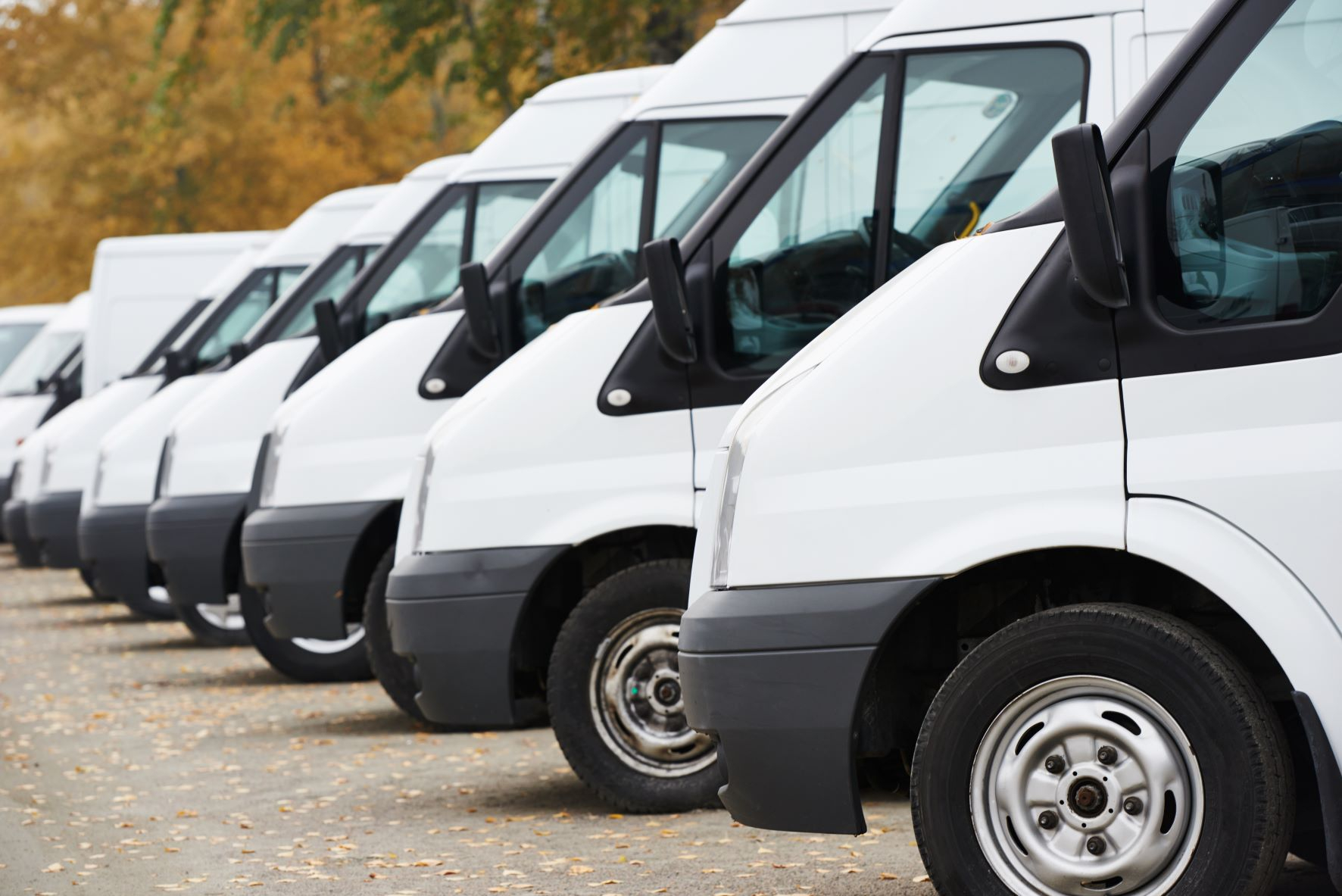
Success in the transport industry lies primarily in proper work planning and skillful data analysis. It is no wonder, therefore, that IT solutions are so popular in the TSL industry, as they use artificial intelligence to enable accurate data correlation and easy organization of daily tasks. A multi-stop route planning program works much more efficiently than even the most experienced and dedicated route coordinator. The system can automatically plan hundreds of points on a route simultaneously, taking into account business conditions, such as time windows, load capacity, vehicle type, or driver schedules.
What are the benefits of data analysis in the TSL industry?
Collecting, processing, and using data should be an inherent part of supply chain management. This applies to both companies offering transport over short urban distances and those carrying out long international routes. This is not an unfounded claim. Planning activities, routes, and making business decisions based on data collected from the market is essential for accurate and long-term forecasting of service demand and changing trends.
A route planning and optimization program not only helps in daily delivery management and increasing customer satisfaction with well-executed orders. Above all, it is a system that identifies areas where the vehicle fleet is unprofitable and enables cost savings in times of recession.
Analyzing data using a route optimizer enables:
- making sound business decisions in times of crisis,
- generating savings by reducing mileage and increasing fleet profitability,
- excellent organization of fleet work,
- increasing customer satisfaction with the services provided.
Vehicle fleet and algorithms – what connects them?
Systems used for route planning and optimization use algorithms to arrange optimal routes from point A to B. In theory, this is a simple process, but when running a transport company, you know how many difficulties your vehicle fleet faces every day. Determining a route so that it is simultaneously economical, convenient, and short is an extremely difficult task in the case of multi-stop routes. Jokingly speaking, mathematics is to blame for this. The network of connections between points is nothing more than a graph that can be examined using appropriate algorithms. Unfortunately, in real life, the equation includes the intersection of routes between “graph nodes,” which is already extremely difficult to price in terms of travel costs.
Mathematical algorithms such as the Bellman-Ford or Dijkstra algorithms are largely able to calculate the appropriate set of routes, but in reality, it would be unrealistic to calculate them manually every day. Therefore, a much more efficient solution is a multi-stop route planning program, in which mathematical algorithms have been adapted to plan visits to points in the best, most economical order.
What should a multi-stop route planning program be like?
A multi-stop route planning program is an intelligent system for arranging tasks and route sheets for a vehicle fleet. Software of this class should be multifunctional – serving both for planning and optimizing routes, as well as providing a function for monitoring the execution of orders in the field. Unlike high-quality TMS systems, a route planner does not require long implementation or the purchase of hardware infrastructure, and it also has a high ROI. What a functional multi-stop system should also be characterized by is a clear interface. This is particularly important for drivers who use a mobile application to effectively carry out tasks planned by the system. The mobile application installed on a mobile device is intended to guide the driver to subsequent visit/delivery points. Features such as attaching photos to a task or a digital signature, available from the application level, are effective forms of confirming a completed delivery/service.
Determine the optimal route with Routimo
The Routimo route optimizer for multi-stop routes is a system enabling perfect organization of the work of the coordinator and fleet drivers. Thanks to its compatibility with various types of devices and systems, it can be used by the entire team – including the sales manager, route coordinator, and the drivers themselves. Routes planned in the system are shared with field staff, enabling work on maps. Meanwhile, the real-time route tracking function provides access to a huge database that is constantly analyzed by the program.
Take advantage of the Routimo team’s over a dozen years of experience in designing applications that support the work of field teams.
Fill out the contact form and take advantage of a free consultation with a Routimo specialist to learn more about the system’s capabilities.