











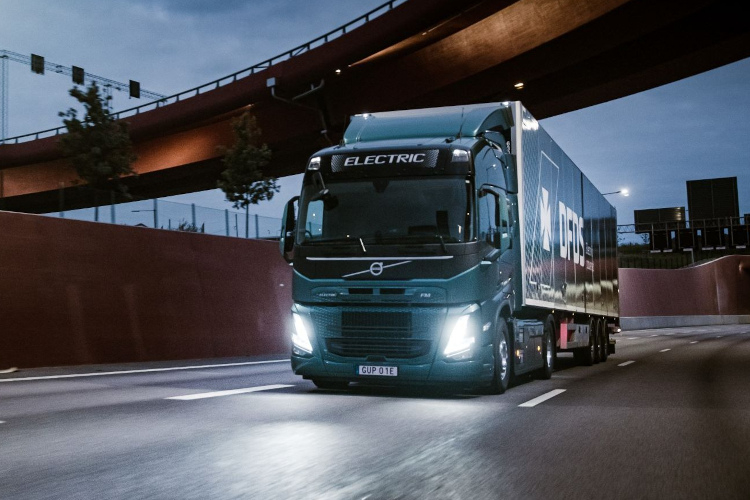
44 companies are calling for a 2035 target for all new freight trucks to be zero-emission, with a five-year extension for specialized trucks.
The EU must demonstrate leadership and ensure the well-being of the climate and the competitiveness of our bloc; these goals can be achieved by ensuring that all new freight trucks are zero-emission from 2035, says a broad business coalition of 44 companies. In a letter to the European Commission, signed by world-renowned brands including Siemens, Maersk, Unilever, and PepsiCo, the coalition writes that the 2035 deadline is not only achievable but also necessary to reach climate neutrality by 2050.
A zero-emission target by 2035 for new freight trucks is not only required due to the climate crisis but is also a business opportunity for truck manufacturers. Major truck manufacturers have already announced that half of their sales will be zero-emission by 2030, but binding regulations are needed to ensure investments and increased supply happen on time. A zero-emission target by 2035 for new freight trucks would give vehicle manufacturers the courage to scale up their offerings of electric and green hydrogen-powered vehicles. The coalition argues that some niche vehicle categories, such as construction trucks, could be given until 2040 to adapt. In the coming months, the European Commission will publish its proposal for new CO2 emission targets for trucks.
– Decarbonizing our logistics is crucial to achieving our net-zero emissions goal by 2039. As a cargo owner, we have made significant progress in reducing emissions through effective improvements and reducing the number of trucks on the road, but as an industry, we can do much more. Together with our EV100+ partners, we are sending a strong signal to the European Commission and the wider industry to put all new trucks on a zero-emission path from 2035. Decarbonization solutions already exist – but we need to increase the supply of clean trucks – says Michelle Grose, Vice President, Global Logistics and Fulfillment, Unilever.
To achieve this, we need higher intermediate CO2 reduction targets for truck manufacturers of -30% by 2027 and -65% by 2030, which will ensure an increase in the supply of cleaner trucks in the second half of this decade, the companies write. According to all market estimates, battery-electric trucks will begin to compete on price with diesel trucks as early as 2025. After this date, every carrier will be more willing to invest in battery-powered trucks to remain competitive.
– Decarbonizing heavy transport by 2035 is realistic, but it requires ambitious decisions and significant investments. With the launch of the first of DFDS’s 125 electric trucks and the arrival of the rest in 2023, our investments are impacting reality. However, we will not meet all challenges without the rapid deployment of charging and refueling infrastructure. To succeed in this transformation, we need an ambitious zero-emission truck target by 2035 and sufficient, timely electrical grid capacity – says Torben Carlsen, CEO of DFDS.
Companies are also calling on EU lawmakers to finalize charging and refueling infrastructure targets as soon as possible, in line with the Alternative Fuels Infrastructure Regulation. The 2024 review of the law should ensure that targets are aligned with the expected market rollout of electric and hydrogen trucks. Targeted financial support will also be needed for early adopters and SMEs to cope with the still higher purchase costs of zero-emission trucks.
– We support the European Commission’s policy favoring a shift away from fossil-fuel-powered trucks toward clean, zero-emission alternatives, which will not only ensure compliance with EU and international climate goals but also support Europe’s future industrial competitiveness. Members of our EV100+ initiative are leading the way by committing to transition their international fleets of the heaviest ICE vehicles to zero emissions by 2040. A clear target to phase out the sale of ICE MHDVs by 2035 will accelerate market development by providing investment certainty for all stakeholders – said Sandra Roling, Director of Transport at The Climate Group.
Trucks account for only 2% of vehicles on the road but are responsible for more than a quarter of CO2 emissions from road transport in the EU. Road transport and heavy-duty vehicles are also one of the largest sources of particulate matter (PM) and nitrogen oxides (NOx) pollution, which cause approximately 350,000 premature deaths annually in the EU.