











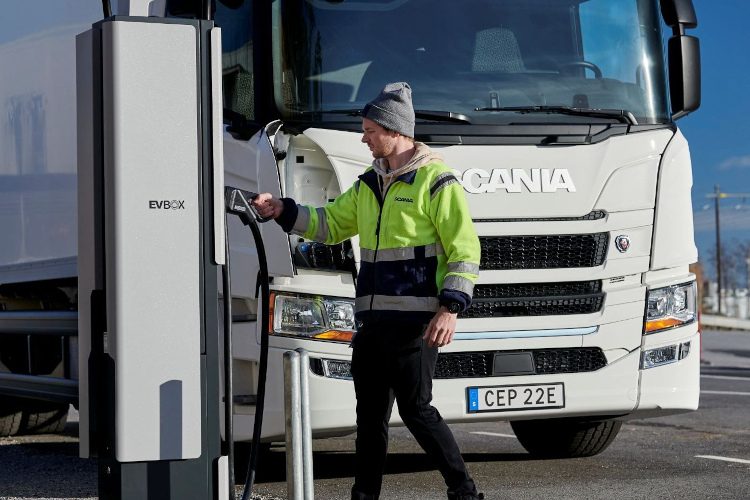
The lack of sufficient vehicle charging infrastructure is considered the main obstacle to the faster adoption of zero-emission trucks in the country, but a new analysis of EU targets in this area shows that Poland will be able to meet the new CO2 emission standards for heavy-duty vehicles. By 2030, the country will have 870 GWh of energy per year to power truck charging stations. This is 20% more than what will be needed by electric trucks and coaches operating in Poland, even if manufacturers meet the 45% CO2 emission reduction proposed by the EC for that year.
The entire EU will generate 13.79 TWh of energy annually for charging heavy-duty vehicles in 2030. This will cover 97% of the demand, even if EU policymakers tighten the CO2 emission reduction target for truck manufacturers to -65%. Recently adopted EU regulations oblige member states to install at least one charging hub for trucks every 60-100 km along main highways. According to T&E, Poland should follow in the footsteps of Germany, which plans to install more charging points than required by EU infrastructure law. By building less infrastructure for charging electric trucks than neighboring countries, Poland risks losing a significant share of zero-emission truck traffic, ultimately harming its own transport sector.
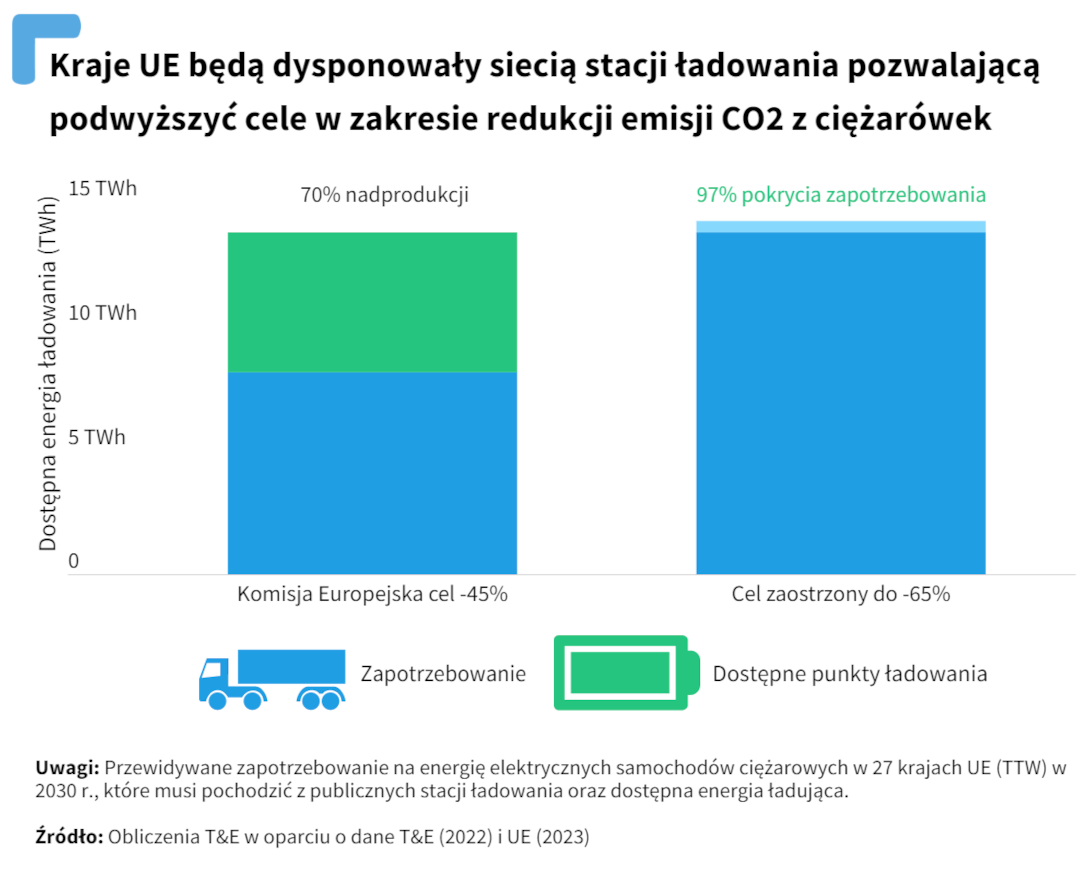
– The opinions of truck manufacturers claiming that there will not be enough public charging stations in the country do not align with the conducted analysis. It turns out that this will not be an obstacle to meeting more ambitious climate targets for heavy-duty vehicles. The new EU infrastructure regulation ensures a sufficient number of charging points in Poland relative to the CO2 emission standards proposed for 2030, even allowing lawmakers to tighten this target at the community level – said Rafał Bajczuk, senior analyst at the Electric Vehicles Promotion Foundation.
ACEA (European Automobile Manufacturers’ Association) is lobbying for the establishment of a charging point network four times more extensive than what is actually needed to achieve the EC’s CO2 emission targets for trucks in 2030. This would mean using these stations for an average of just over 30 minutes a day. According to T&E, such a solution would result in the need for massive reconstruction of charging infrastructure using public subsidies to make it profitable. Meanwhile, the analysis showed that tightening the CO2 emission standard for trucks for 2030 to -65% would result in public charging stations being used for 4 hours a day.
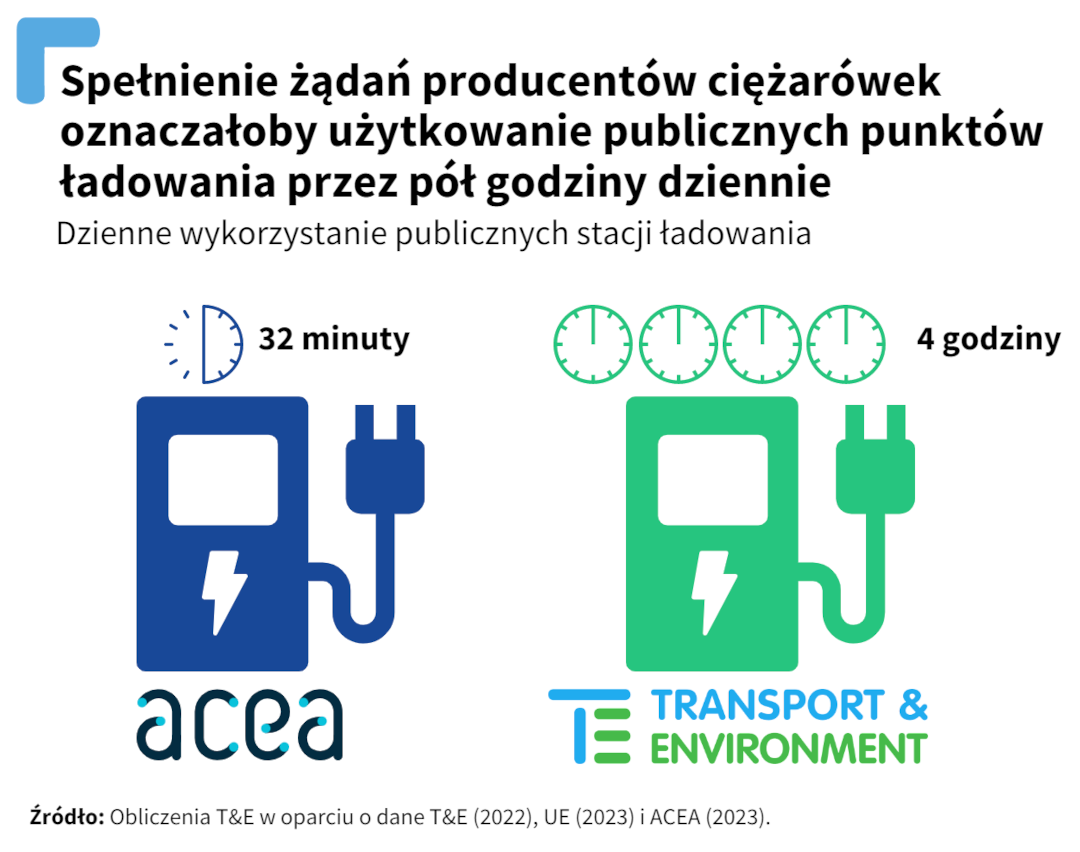
– Maintaining that EU targets for public charging points are insufficient ignores the fact that electric trucks will mostly be connected to private chargers. Such a significant expansion of the network would lead to underutilization of public stations and would require huge subsidies. Meanwhile, stricter CO2 emission standards will increase the fleet of zero-emission trucks in line with EU climate goals, while ensuring optimal use of public charging points – said Rafał Bajczuk.
It is expected that MEPs and EU governments will agree on new CO2 emission standards for trucks by the end of the term in 2024. This is important because trucks account for only 2% of vehicles on the road, but are responsible for more than a quarter of CO2 emissions in road transport in the EU.
More information in the analysis Fully charged for 2030
Source: European Federation for Transport and Environment