









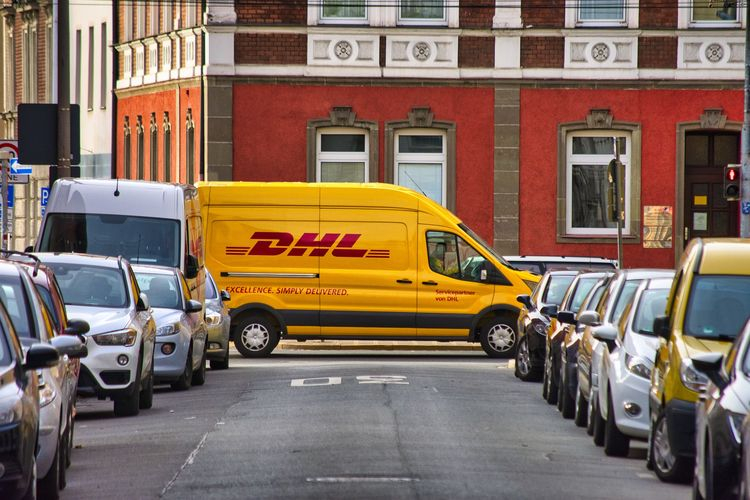
The transport sector accounts for a significant share of carbon dioxide emissions in Europe. Without decisive pro-environmental actions, these emissions could rise by 60% in the industry by 2050, according to estimates by the International Transport Forum. This is why an increasing number of logistics and courier companies are opting for green investments in electric delivery vehicles.
Beyond the ecological aspect, they also offer other benefits – they are almost silent, can use bus lanes, and allow for independence from fuel market price fluctuations. Couriers such as DHL Parcel are gradually switching to electric vehicles. In the coming years, the company will successively invest in a green fleet.
– By the end of the year, we plan to have nearly 150 such vehicles, and about 500 over the next three years – announces Bartłomiej Wnęk, Vice President of Operations at DHL Parcel Poland. – In line with our corporate “Zero Emissions 2050” strategy, we want to reduce our CO2 emissions into the atmosphere to zero, which is why we will continuously invest in such vehicles. Every year, several dozen to 100 vehicles will be added to our fleet.
According to the “Fleet Barometer 2020” by Arval Mobility Observatory, 30% of Polish companies are already using alternative drive technologies (electric, hybrid, LPG). However, only 3% of enterprises have introduced electric cars into their fleets so far. Nevertheless, the courier industry is increasingly aware that investing in electric vehicles is slowly becoming a necessity that brings many benefits.
– Courier vehicles cover an average of 100 to 200 km per day, driving constantly within the closed territory of a given city’s agglomeration. They reach homes and carry out a great many deliveries that should indeed be zero-emission. Therefore, it is very important to electrify this fleet step by step – says Maciej Mazur, Managing Director of the Polish Alternative Fuels Association.
The electric vehicles that will power the DHL Parcel eco-fleet this year are eVANs manufactured by MAN Truck & Bus Polska. They were provided by Arval as part of a full-service long-term rental. The vehicles are characterized not only by zero emissions but also by a very low noise level, which will help increase the comfort of couriers during long routes.
– One of the features of the eTGE models is that they are equipped with an electric motor with a lithium battery, which is charged via an external network, but also through energy recuperation during braking. The vehicle’s range is approximately 170 km. We can also boast an impressive load capacity of 10.7 cubic meters. Another aspect is that the eVAN will help DHL significantly reduce operating costs, lower maintenance costs, and also reduce noise and carbon dioxide emissions due to zero emissions. It is also worth mentioning lower insurance costs and tax breaks – lists Marc Martinez, Managing Director of MAN Truck & Bus Polska.
According to the European Commission, the transport sector contributes about 5% of the EU’s GDP and employs over 10 million workers in Europe. This is one of the reasons why it is of key importance for European enterprises as well as global supply chains. In Poland – partly due to rapid economic growth – emissions from the transport sector are growing even faster than on a European scale. Between 2005 and 2017, they increased by a total of 76%, while in the EU there was a 3% decrease during the same period, according to data cited in a report prepared as part of the LIFE Climate CAKE PL project.
– Transport sector emissions are among the most significant in the total number of emissions generated both in the entire EU and in Poland. This sector accounts for approx. 15% and its share is constantly growing, which results from the fact that the number of vehicles is increasing at a rapid pace year by year. Over the last 10 years, the number of vehicles in Poland has increased by as many as 10 million. Therefore, it is important to reduce these emissions faster and curb their growth – emphasizes Maciej Mazur.
The e-commerce industry also plays a part in this. Further rapid development of online retail could increase global transport volumes by 2-11% by 2050 (depending on the mode of transport used). CO2 emissions related to parcel deliveries would increase by approx. 4% (“ITF Transport Outlook 2019”).
– Each of us, if we hadn’t used courier services to a large extent before, had to deal with them much more often during the pandemic. These tens of thousands of trips made within cities can and should be carried out using zero-emission vehicles. Therefore, the courier industry has an important role in reducing emissions, and the last year was a confirmation of this – says the Managing Director of the Polish Alternative Fuels Association. – We hope that companies operating in these industries will be examples of positive change.
DHL Parcel is implementing the global GoGreen environmental protection program and the “Mission 2050: Zero Emissions” strategy, which provides that by 2050 the company will reduce CO2 emissions in its logistics processes to zero. The company’s Vice President of Operations, Bartłomiej Wnęk, points out that investments in an eco-fleet are not the only way the courier industry can contribute to reducing emissions and improving the state of the environment.
– This also includes, among other things, improving the operational infrastructure of sorting centers and terminals, investing in photovoltaic installations, and other environmentally friendly systems, such as rainwater recovery – lists Bartłomiej Wnęk.
According to the Electromobility Counter launched by PSPA and PZPM, a total of 18,875 electric passenger cars were registered in Poland at the end of December. Last year, 9,879 units were added (which is 140% more than in 2019). In turn, the fleet of electric delivery and heavy-duty vehicles amounted to 839 units at the end of December, and the number of registrations increased by 13%.
Experts predict that in the coming years, electric vehicle registrations will reach the level of several thousand, or even several tens of thousands of units per year. Already in 2021, the amendment to the Electromobility Act, the introduction of an e-tariff, or the launch of a support system for electric vehicles from NFOŚiGW funds should contribute to the growth of their popularity.
Source: Newseria
Read also about other actions for ecology:
– Polish Circular Economy Leaders selected!
– SEGRO opts for green energy
– Panattoni switches to green energy
– Hillebrand implements modern methods of flexitank recovery and recycling
– Kraków moves towards climate neutrality