











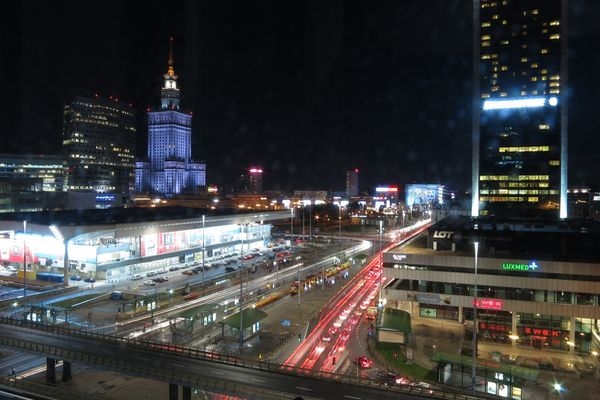
Smart cities attract new investors and tourists curious about the world. They become more attractive for hosting cultural and business events. They also improve the quality of life for residents. The term “smart” covers not only modern technology but also an entire social mechanism – a friendly and open administration, new interesting jobs, and amenities that citizens can use on a daily basis. It is important to consider now what Polish cities will look like in the near future.
Challenges of the future
According to information gathered by the UN in 2014, it is estimated that about 50 percent of the global population lives in urban areas. By the middle of this century, this indicator is expected to rise by another ten percentage points. Already, we can identify more than 28 cities in the world with a population exceeding 10 million. Such dynamic development of the urban fabric creates entirely new challenges – reducing energy costs, supplying clean water, healthcare, etc.
In Poland, until the 1980s, more than 80 percent of our compatriots lived in rural areas. Currently, the trend has reversed, and 60 percent of citizens already live in cities, and this value is naturally increasing year by year. Furthermore, Polish metropolises have great aspirations to join the global competition in smart solutions that improve the functioning of urban space, making life easier for their residents. Polish cities are increasingly willing to invest in new technologies. The main reason why local authorities are interested in them is the significant pool of EU funds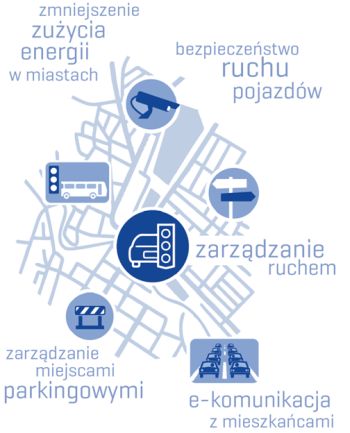 allocated for such activities. The Horizon 2020 program provides over 80 billion euros to support member states in research and innovation. In addition, funds for the development of new technologies can also be obtained from the following programs: Infrastructure and Environment, Eastern Poland, Digital Poland, and Knowledge, Education, Development.
The necessity to meet the requirements imposed by EU regulations sets new priorities in creating local policy, which is why creativity and innovation must follow the money. There is little time to use the capital, and this is the last such significant injection of EU finances for Poland.
Technologies of tomorrow
New technologies will dominate the Polish urban space in the near future. Some of the solutions are already present and have naturally blended into the environment, making our lives easier. Just look at the intelligent traffic management system. The idea came from sunny Spain, where Barcelona, using social media, geolocation, and big data, intelligently manages the flow of people in the city. The system monitors the movement of all public transport and controls traffic lights. On home ground, we can also boast of such implementations. Lublin, Szczecin, and Rzeszów have created the foundations for an efficient traffic management system. The mechanism of intelligent signaling began to be implemented more widely by Łódź and Toruń, while the largest project of this type in Poland is Tristar, implemented in the Tri-City by the Warsaw-based company Qumak.
Speaking of traffic, it is impossible not to mention how our mobility is changing. It is predicted that in the coming years, there will be a significant increase in the number of electric cars. This has a decisive impact on the environment, but also on energy infrastructure and the need for a new way of managing energy.
– For these types of cars to move freely, it is necessary to build a network of charging points available in various cities. This, in turn, involves an even greater load on the power grid than at present. Therefore, we must prepare the entire energy system for these changes. A way to ensure the safe functioning of local energy networks could be energy storage facilities being built in Poland. These are solutions used to store energy and use it to balance the energy system and improve the quality of electricity – says Tomasz Turczynowicz, an expert in the field of Smart Cities at Qumak.
Of course, smart cities also mean innovation in public transport. Poland has huge achievements in this field. It is worth mentioning, for example, the Solaris Urbino from Poznań, which introduced a hybrid solution as early as 2008 and has been consistently developing this technology. Vehicles of this brand operate in Poznań and Warsaw, meeting the most stringent exhaust emission requirements. Interestingly, this is the first mass-produced hybrid bus in Europe.
The way urban space is created is also changing. New building materials will have many interesting properties. We can already find solutions capable of absorbing carbon dioxide emitted into the atmosphere by car exhaust fumes. One of the tangible examples of amenities could be the glowing bicycle path near Lidzbark Warmiński, where the surface is enriched with so-called phosphors that absorb solar energy to release it after dark in the form of light for almost 10 hours.
– Modern systems for measuring and reducing harmful compounds in the atmosphere, which are connected to a central measurement database, will also gain importance, allowing for the determination of air pollution levels and the implementation of preventive measures, or enabling the location of the source of contamination – says Michał Wierzbicki, Director of the Development Department at Qumak. – Solutions for monitoring utility consumption, i.e., heat, gas, water, and energy in buildings, testing water quality, noise levels, and even light pollution in urban spaces are also becoming more common.
The key to the success of building a smart city, however, will be the way the urban organism is managed effectively, so as to optimally use its resources. The so-called Internet of Things will play an important role in urbanization. More and more devices will be connected to the network to acquire and process information. Homes that “learn” the habits of residents? Such solutions are already being implemented through building automation systems. Efficient management also means the gradual elimination of bureaucracy by simplifying the work of offices and moving many activities to virtual reality.
One of the priorities in the 21st century is the issue of security. Already today, the question arises about the use of artificial intelligence algorithms in city management – directing public transport or emergency services. Imagine a cohesive system connecting urban monitoring, mobile devices, and computer networks, reacting in real-time to all dangers, from fires, health and life threats to terrorist attacks. The described examples are not science fiction or a distant future, but a reality that is also entering Polish cities.