








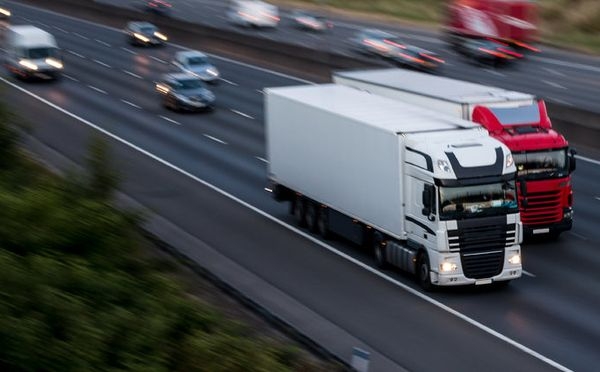
Polish transport companies are dynamically expanding their truck fleets. In the first half of this year alone, 12% more such vehicles were registered in our country than in the corresponding period of the previous year [1]. Our carriers also possess some of the most eco-friendly vehicles. Almost 100,000 trucks in Polish transport companies meet Euro 6 standards, and almost 80,000 meet Euro 5 standards [2]. We have checked the condition of the road transport fleet in Poland and who drives Polish trucks.
Although Polish trucks largely meet the relatively strict standards in the European Union, they are not among the youngest vehicles. The largest group, nearly 40%, consists of vehicles aged between 11 and 20 years. One-fifth of the entire machinery park is older than 20 years. For comparison, trucks that are 4 years old or younger make up the smallest group, at only 17% [3]. However, Polish companies are investing in new machinery, as shown by both registration data and production statistics. In the second quarter of 2018, more than 15,000 trucks were registered [4]. Domestic factories also produced 170,000 new commercial vehicles last year [5].
– The Polish transport industry has a very interesting period ahead. The market is developing dynamically. In Europe, about 11 million people work in this sector, which accounts for 5% of all European employees [6]. It is also predicted that within the next 30 years, the transport of goods may increase by as much as 60% [7]. Poland is one of the leaders in Europe in this regard – last year there were over 34,000 transport companies operating in our country [8]. Where there is dynamic growth, there is also risk, because the level of insolvency has increased significantly in the industry [9] – says Jakub Ordon, an expert at OCRK. – Transport companies in Poland are usually small enterprises with a fleet averaging fewer than 10 vehicles. According to the 2018 GITD report, the number of licenses is over 34,000, while the number of issued extracts, indicating the number of vehicles, is close to 218,000. In a company transporting goods, there are on average 6 trucks per license. This huge number of small enterprises is largely exposed to both economic market fluctuations and the burdens of a dynamically changing legal environment. In an industry as complex as transport, bankruptcies are simply inevitable.
Experience first
We checked who “manages” the Polish transport fleet on a daily basis, that is, who the truck driver is. According to the latest OCRK report, the average age of a driver in Polish companies is 42 [10]. Most truckers are experienced people, aged between 31 and 50. Most of them are Poles (86%), although considering that the industry has recently been struggling with serious staffing problems and, according to conservative estimates, is missing up to 100,000 employees [11], this proportion may change in favor of foreigners. OCRK data shows that Polish drivers spend on average more than half a year on business trips [12] and cover an average of nearly 100,000 km per year. And here, the condition of the vehicles they drive is of great importance due to work comfort, lower failure rates, and modern equipment.
Is there a driver driving with us?
And what awaits the industry in the near future? Above all, electrification, which is the rapid development of electric vehicles. Many leading truck manufacturers are planning to introduce such solutions into their offer within the next few years [13]. Electric trucks will be able to easily enter strictly guarded zero-emission zones, which are becoming more common in European cities. Thanks to this, drivers of such vehicles will save a lot of time because they will not have to avoid them, and carriers will save money because they will not pay for entry into designated zones.
A serious problem for drivers, in turn, may be the development of autonomous vehicle technology. According to some forecasts, by 2025, it can be expected that every third new truck will be essentially unmanned [14].
– There is no turning back from autonomous cars, including trucks – this is an obvious matter. However, I would be very cautious about predicting the rapid demise of the driver profession, because these technologies are still in their infancy. The largest automotive players, despite being in an advanced testing phase, cannot even dream of implementation yet. There is, of course, the problem of legal regulation of such solutions and the simply human fear of entrusting one’s life to a machine, not to mention the enormous costs [15] – says Mateusz Włoch from Inelo, which provides advanced IT solutions for the Polish TSL industry.
Optimism regarding these technologies is also somewhat tempered by experts from OCRK: – Autonomous vehicles and trucks could work perfectly on long and straight roads, for example in the United States or Australia. In Europe, however, where the infrastructure is much denser and most roads lead through urban areas, this becomes a serious problem. The usefulness of such vehicles is certainly greater during maneuvers in warehouses and on short sections between them, but on longer routes, nothing will be able to replace a Polish, experienced driver for a long time – notes Jakub Ordon.
Source: OCRK, INELO
[1] PZPM press release, 05.09.2018
[2] GITD data, via: https://www.rp.pl/Transport/305089904-Polskie-TIR-y-wciaz-dominuja-w-Europie-ale-rosna-problemy.html
[3] All calculations above come from the 2018 PZPM yearbook
[4] KPMG/PZPM 2018 quarterly report
[5] Yearbook 2018, op.cit.
[6] https://planeta-transportu.pl/kondycja-branzy-tsl-podsumowanie-2017-r-analiza-i-prognoza-na-2018-r/
[7] Ibidem
[8] GITD, via: Rzeczpospolita, op.cit.
[9] Euler Hermes via: Rzeczpospolita, op.cit.
[10] OCRK report
[11] https://planeta-transportu.pl/kondycja-branzy-tsl-podsumowanie-2017-r-analiza-i-prognoza-na-2018-r/
[12] OCRK, op.cit.
[13] https://www.energetyka24.com/do-europy-wjezdzaja-elektryczne-ciezarowki
[14] McKinsey & Company, https://antyweb.pl/autonomiczne-ciezarowki-perspektywa/
[15] https://antyweb.pl/autonomiczne-ciezarowki-perspektywa/