









Everything indicates that 2019 will go down in history as the year when the Polish TSL industry seriously began to think about ecology. This is due to global trends and technological progress, but also to economic calculations. There is more and more talk today about autonomous vehicles, roads powered by electricity, but also about preferential conditions on routes across Europe for vehicles that emit fewer pollutants.
What will be the fuel of the future for transport? There is little doubt that it will be electricity. Analyses by DKV Euro Service show that currently fashionable alternative fuels, such as CNG and LNG, represent more of a transitional stage before the industry shifts to electric energy on a large scale.
– Electric energy is a strategic direction for us, which is why we are investing in partnerships with companies in this segment, e.g., Innogy, to settle vehicle charging with the DKV card. However, we take a flexible approach to the current needs of carriers, hence the parallel development of the DKV station network offering LNG and CNG – says Michał Bałakier, General Director of DKV Euro Service Polska.
Is electricity the future?
This direction seems to be confirmed by market data. According to the Polish Alternative Fuels Association, there were over 668 electric vehicle charging stations operating in Poland in the spring. 34% are fast direct current (DC) charging stations, and 66% are slow alternating current (AC) chargers. Currently, GreenWay Polska offers the most points (270), but fuel concerns and energy companies are announcing intensive development plans. If we are to believe the declarations, there will be over 3,000 such points by 2022.
In Europe, the development of services for professional transport is not lagging behind. With DKV, one of the more popular fuel cards in the TSL sector, you can now pay at 28,000 charging points in Germany, Austria, France, Belgium, and the Netherlands, and the company announces such functionality soon in the UK, Italy, and Switzerland.
– In Poland, the development of infrastructure must be linked to subsidies. Today, setting up a fast-charging station costs about half a million zlotys. In a situation where subsidies begin to function on the market, we anticipate rapid development of this network – adds Michał Bałakier.
LNG also has its advantages
Among alternative fuels, hot discussions are currently taking place around LNG. DKV offers fuel card payments in its 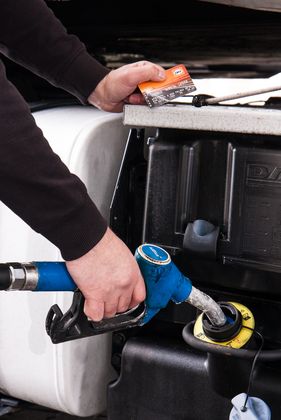 network at several dozen such points in Europe already. This number is expected to grow next year with the opening of new stations in Germany. According to NGVA Europe data, the most LNG stations are located in Spain (22), the Netherlands (21), the UK (18), Italy (10), and France (9).
In Poland, for now, we only have two public LNG stations. Perhaps by the end of 2019, their number will increase to 10. Arguments regarding the attractiveness of LNG are divided today. On one hand, it is a more ecological fuel that offers long ranges, but a long-term approach raises questions.
– Interest in LNG is growing, which is related to the zero toll rate in Germany for gas-powered vehicles. However, it must be remembered that the reduced rate will only apply for two years, while gas-powered cars are about 60% more expensive. In terms of the amount, we are talking about a price that is about 45,000 euros higher – that is a lot. Companies are therefore concerned about whether, by investing in such cars, they will manage to amortize them – notes Michał Bałakier.
In the case of LNG, the refueling process itself is very problematic. At mobile stations, it takes a lot of time, and it also takes place at very low temperatures, which can result in freezing and risks for those handling this operation. A separate issue is the servicing of gas-powered vehicles. This is a dangerous fuel under high compression. For truck manufacturers, the challenge today is to provide service for the installation. Leading manufacturers currently provide only individual points in their network that handle this.
However, carriers are taking up the challenge and are increasingly investing in LNG. An example is a DKV client – the company WOJTEX from near Białystok, specializing in long-distance transport of goods using refrigerated trucks, present on the market for 20 years.
– We started implementing LNG technology in the first quarter of this year. We are testing it with good results in Scania trucks on routes 7-10 thousand km long, leading, among others, through mountainous areas. We are satisfied with the fuel consumption, which is lower than diesel. Additional incentives are the better price of LNG compared to diesel throughout Europe and the exemption from tolls in Germany – says Wojciech Kuśnierz, CEO of WOJTEX.
– Refueling itself, despite the requirement to wear protective clothing, is not longer or significantly more complicated than refueling diesel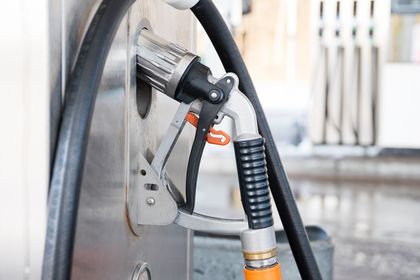 gasoline, or LPG. At the moment, we are in the process of planning fleet modernization, and LNG-powered vehicles are being seriously considered as an alternative to traditional “diesels” due to operating costs, environmental impact, and the expectations of our clients – adds Kamila Filipowicz, fleet manager at WOJTEX.
CNG is good for short distances
For shorter distances, CNG seems to be a good alternative. It is significantly cheaper than diesel, safer to refuel, ensures quiet vehicle operation, and generates almost 23% less CO2 into the atmosphere. However, the vehicle’s range is limited to 300-400 km, which eliminates this fuel from servicing transit routes. From the point of view of the ability to settle purchases with a fuel card, we have a large network of CNG stations at our disposal. DKV currently offers 1,350 such points, located mainly in Germany, Austria, and Italy. Meanwhile, there are 15,000 LPG stations in the DKV network, which are attractive for passenger vehicles.
In summary, settling the purchase of alternative fuels with fuel cards is a derivative of infrastructure development in a given country that enables their use. In the case of DKV alone, we have a total of about 30,000 points for electric charging and refueling CNG, LNG, and hydrogen in Europe. In Poland, the development of a carrier-friendly network is the future, although electricity will be able to be settled with a DKV card within 1-2 years. Card operators react quite quickly to the needs reported by clients in various markets, but strategically they are committed to solutions that are attractive in the long term, i.e., electric energy and the integration of various technologies based on big data.