











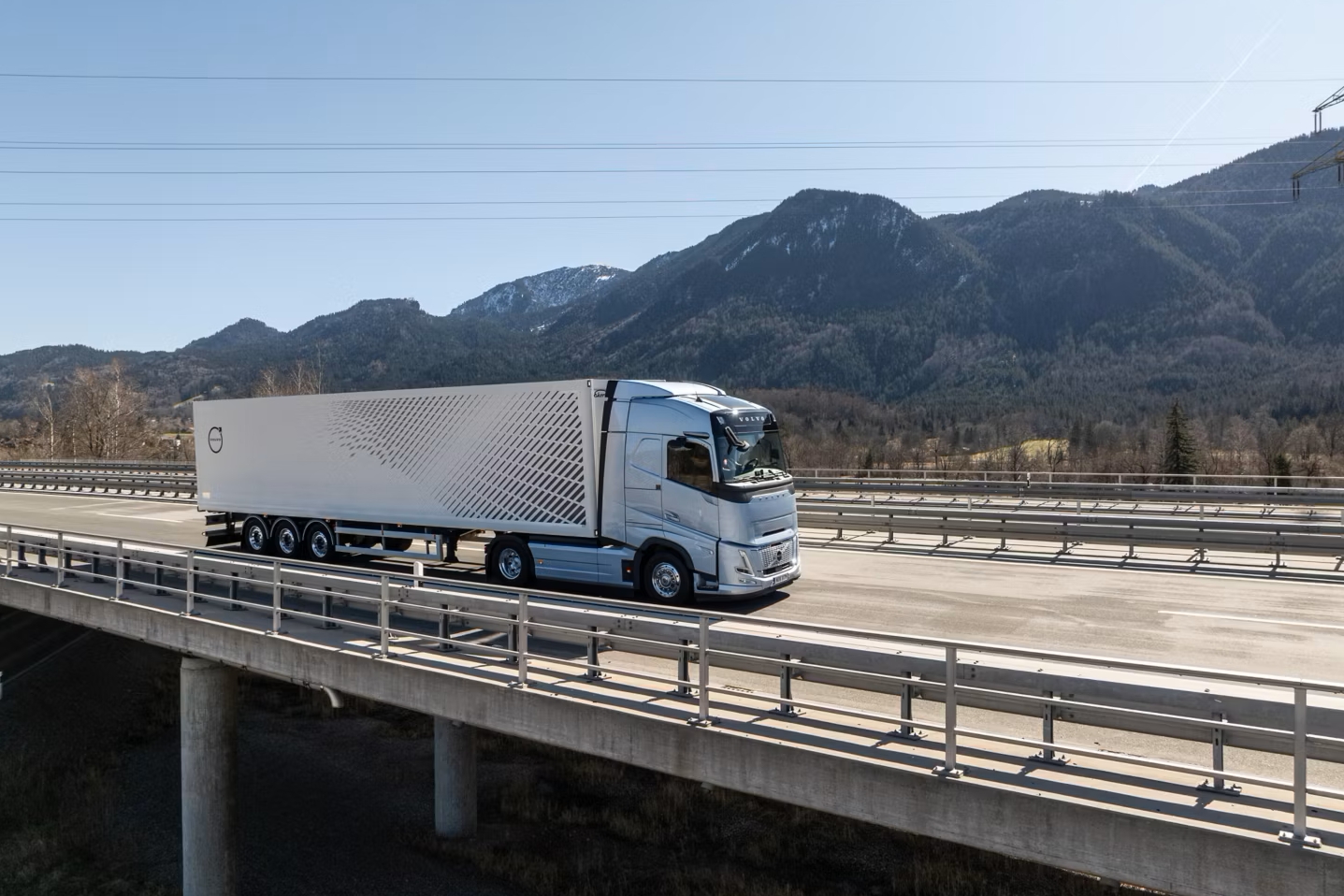
Volvo Trucks is introducing new aerodynamic improvements, utilizing a proven concept from the aviation industry in its products. Subtle yet significant modifications to the vehicle cab will allow for a significant reduction in air resistance, fuel consumption, and CO2 emissions.
Volvo recently won the Green Truck Award 2025 for the Volvo FH Aero model – largely thanks to its exceptionally efficient engine and the new, aerodynamic Aero cab. However, this was also the first real test of Volvo’s latest technology in the fight against air resistance.
Airflow stabilizers around the cab, extended air deflectors, and modified chassis fairings are discreet yet effective changes that realistically improve aerodynamics. Thanks to them, it is possible to further increase range, lower fuel consumption, and reduce CO₂ emissions by up to 2% – on top of the efficiency already achieved. This means that the Volvo FH Aero with the new aerodynamic improvements can achieve up to 7% better fuel efficiency compared to the previous version of the Volvo FH model.
The new solutions will now be available to customers looking for the latest technologies in fuel-efficient heavy transport – offered in various configurations for the Volvo FH, FH Aero, and FM* models. The benefits of the new solutions apply to all types of powertrains – electric, gas, and diesel.
All the time spent on simulations and wind tunnel testing has paid off – thanks to these new changes in the cab, we are further developing last year’s aerodynamic improvements, which will translate into real benefits for our customers.
– says Jan Hjelmgren, Director of Product Management at Volvo Trucks.
The most important new element is the airflow stabilizers around the cab, located in the upper corners, next to the windshield. Thanks to a precisely designed system of small diagonal strips, the stabilizers control how air flows around the corners of the cab.
We approached the topic out of the box, using a technique commonly used in aviation, Formula 1 cars, or wind turbines. The upper corners of the cab are crucial for aerodynamics, and thanks to our new CMS camera system, we were able to discover new possibilities in this area – by using small strips to micro-control airflow, we achieve an effect on a macro scale. These experiences also open the way for us to introduce further aerodynamic solutions in the future.
– says Anders Tenstam, Senior Expert in Technology and Aerodynamics at Volvo Trucks.
The airflow stabilizers around the cab improve aerodynamics in the front of the vehicle, but at the same time enable more effective operation of two additional improvements: air deflectors extended by 50 mm to reduce the gap between the cab and the trailer, and modified chassis fairings that ensure a better fit to the rear fenders.
These three new solutions complement each other, according to the 1+1=3 principle – which means that their combined positive impact is greater than the sum of the benefits resulting from the operation of each element separately.
The new FH Aero model from Volvo is proof of how much impact aerodynamics can have on improving fuel efficiency in a modern truck cab. By extending the cab itself by 24 cm and introducing several modifications to reduce air resistance, the Volvo FH Aero provides a significant improvement in fuel economy, especially at high mileages typical of long-haul transport.
*Airflow stabilizers around the cab are available only on Volvo FH and FH Aero models.
Source: AB Volvo