








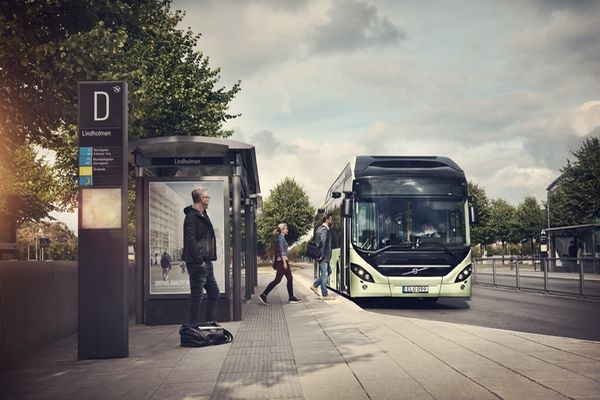
The Volvo 7900 Electric Hybrid will be officially unveiled at the IAA Commercial Vehicles trade fair in September. Quieter, cleaner, and with significantly lower fuel consumption, it represents a new generation of public transport. Volvo has already signed contracts with several European cities for the supply of these buses.
Volvo Buses is taking the next step in electric vehicles by launching the Volvo 7900 Electric Hybrid. Plug-in technology reduces fuel consumption and carbon dioxide emissions by up to 75% compared to conventional diesel engines used in buses. Total energy consumption is 60% lower. Last year, three Volvo electric hybrid vehicles underwent field tests in Gothenburg. The results showed lower emissions and lower energy consumption.
Noise is a growing problem in many cities. The noise level near the Electric Hybrid is 65 decibels, the same as a normal conversation. The Volvo 7900 Electric Hybrid operates in electric mode for an average of 70% of the route, is quiet, and emits no exhaust fumes.
The Volvo 7900 Electric Hybrid offers great operational flexibility; it can operate on electric power in selected areas, as well as as a hybrid on any route. Charging at terminal stations takes 6 minutes. The Volvo 7900 Electric Hybrid contains the same proven technology as the Volvo 7900 Hybrid, ensuring reliability and availability.
Many European cities are showing interest in electric hybrid vehicles. Hamburg, Luxembourg, and Stockholm have already signed up for bus deliveries in 2014 and 2015. Serial production is scheduled to begin in early 2016.
Coach: Leader in increased safety
At IAA, Volvo is strengthening its position in safety by introducing automatic braking technology for coaches. Volvo’s collision warning and emergency braking system enables braking even for stationary objects. The feature is already being implemented, three years ahead of the 2018 legal requirements. It is part of the Volvo Driver Support System, which includes Adaptive Cruise Control (ACC), which automatically adjusts the distance to the vehicle in front, and the Lane Keeping Support System.
ACC uses radar to determine the distance to the vehicle in front. When approaching a slower-moving vehicle, ACC, as a system overriding the cruise control speed setting, adjusts the speed to the vehicle in front. The Lane Keeping Support System informs the driver if the vehicle is drifting out of its designated lane.
Visitors to the IAA trade fair will also have the opportunity to learn about Volvo’s broad portfolio of services aimed at increasing fuel efficiency, as well as vehicle uptime and reducing maintenance costs.
Volvo Buses at IAA 2014 will present:
• Volvo 7900 Electric Hybrid (including charging system)
• Volvo 7900 Articulated Hybrid
• Volvo 9900
Volvo Buses will be showcasing its products at stand A05 in hall 17.