








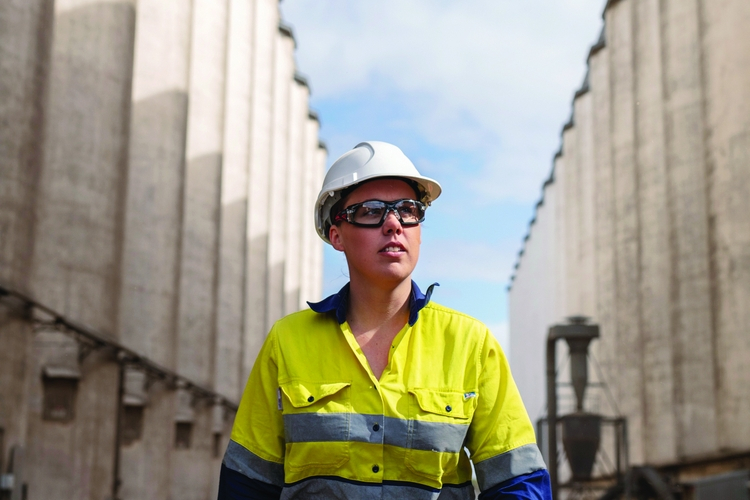
In recent years, the pace of development of Polish agriculture has been steadily increasing, which is confirmed by record harvests and increased exports of Polish products. Nevertheless, many farmers still struggle with transport exclusion or limited access to specialized warehouses where they could safely store their crops. In response to these challenges, Viterra, a global leader in grain and oilseed trading, plans to expand its storage capacity by at least 100,000 tonnes and invest in railway infrastructure in areas furthest from ports.
One of the key challenges currently facing Polish agriculture is the lack of adequate warehouses for storing surplus crops. The situation is particularly difficult in the south of the country, where infrastructure is not keeping pace with the dynamic development of the sector. Grains produced in this area require proper storage conditions to maintain their quality and commercial value. The shortage of suitable warehouses limits the possibilities for storing surplus crops and can lead not only to waste of resources, but above all to a reduction in the competitiveness of the entire Polish agricultural sector, which in turn directly affects the situation of farmers.
– During our 26 years of presence on the Polish market, we have been constantly observing how domestic agriculture is developing, but we also notice new challenges and identify the needs of the Polish farmer. Today, many of them, especially in the south of the country, emphasize that due to poor logistics solutions in the region, there is no possibility to store their crops. This, in turn, in connection with the year-on-year increase in harvests, is becoming an increasingly serious problem. To meet these challenges, we have started work on, among other things, expanding the storage network, which will allow us to increase the efficiency of receiving and releasing goods to up to 5,000 tonnes per day – says Adam Turoń, member of the board of Viterra Polska.
More efficient unloading at warehouses means less time loss and lower logistics costs for farmers. Shorter queues at collection points improve the efficiency of the crop sales process, which is particularly important during the harvest season. The modernized warehouses will be equipped to accept both standard crops such as wheat and rye, as well as those gaining popularity, such as soy and sunflower. The high flexibility in the selection of the assortment will also be evidenced by the possibility of receiving soybean, rapeseed, and sunflower meal. Furthermore, with the dynamically growing interest in corn cultivation in Poland, the company also plans to build large-scale wet corn dryers in various parts of the country. Such dryers will be able to dry between 1,000 and 1,500 tonnes of corn daily, which, in the face of the still insufficient number of such facilities in Poland, will provide huge support for farmers, especially during the harvest period. Rapid drying allows for shortening the storage time of corn in a moist form, which reduces the risk of quality loss and allows for delivering the quality and quantity of products that meet market needs. Moreover, thanks to the possibility of rapid drying and storage of corn, farmers can adjust the timing of sales to more competitive market prices.
– Due to changing climatic and market conditions, the structure of crops and farmers’ preferences are constantly evolving. As a key partner for farmers in Poland, we are committed to providing comprehensive solutions that respond to these changes, hence, for example, the idea of expanding our facilities with corn dryers, of which there are still very few in our country. We also know that Polish farmers are increasingly paying attention to low-emission transport of agricultural products and are looking for companies that provide such solutions – adds Adam Turoń.
As industry representatives emphasize, companies participating in the food supply chain must shift to the widespread use of more sustainable means of transport that will be equally accessible to all farmers. A significant step in this direction was taken by Viterra, which last year alone transported over 300,000 tonnes of grain using rail transport. The company is constantly striving for further growth in this area, aiming to reach the level of transporting one million tonnes of grain by rail over the next few years, while developing local transshipment terminals that will enable cheaper and faster transport of goods to ports, especially from southern Poland.
Investments in eco-friendly means of transport are not only beneficial for the environment, but also directly for Polish farmers, especially those who have so far been heavily dependent on inefficient road transport. It is in regions where logistics infrastructure has not always been sufficiently developed that more favorable rail transport prices can be a significant incentive for farmers. A developed railway network also means a number of other conveniences, such as more efficient unloading and significantly shorter queues at collection points. Thanks to this, the entire transport process is maximally streamlined, and the products delivered by farmers are fresher and maintain high quality, which in turn translates into their higher commercial value.
– When planning investments, we focus on ensuring that they create synergy and, above all, give farmers the tools to operate more effectively, influence the market, and contribute to the sustainable development of the entire industry. This is an important step towards greater independence for farmers, but also towards increasing the competitiveness of Polish agriculture – concludes Turoń.