











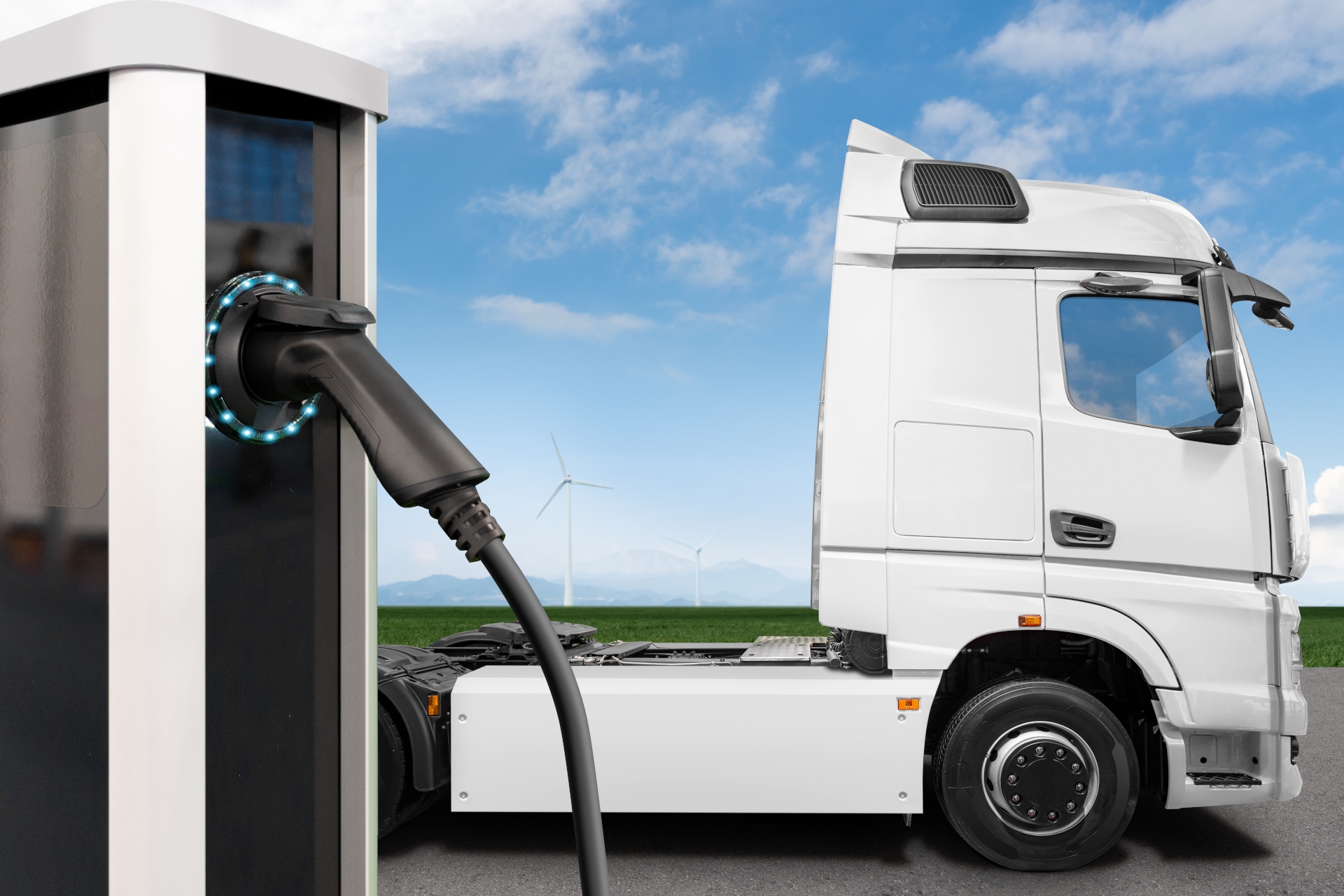
SNAP, a company specializing in digital solutions for international mobility, has conducted a study on the scale of savings for European fleet operators. The study compared the costs per 100 km of powering trucks with electricity versus traditional fuel.
Icelanders save as much as 260.66 PLN (€61), while Croatians save less than 85.46 PLN (€20), illustrating the disparities between countries in terms of savings resulting from the use of electric trucks, according to the latest data. Iceland performed best in this ranking, with savings of 260.79 PLN (€61.03) per 100 km, while Croatia recorded the lowest savings – 85.29 PLN (€19.96). Poland ranked 30th, with savings of 103.49 PLN (€24.22) per 100 km.
Currently, there are approximately 10,000 charging stations for small and large trucks available across Europe. According to estimates by McKinsey & Company, to support full mobility, this number will need to grow to over 300,000 publicly and privately available stations by 2030. The transition to electric trucks involves many challenges. To facilitate this process for fleet operators and drivers, further investments and research in this area will be needed.
10 countries in Europe with the highest savings:
Savings (in PLN) on powering trucks with electricity compared to diesel fuel per 100 km
- Iceland – 260.79 (€61.03)
- Norway – 210.71 (€49.31)
- Finland – 209.89 (€49.12)
- Albania – 203.61 (€47.65)
- Denmark – 189.00 (€44.23)
- Sweden – 180.49 (€42.24)
- Serbia – 177.76 (€41.60)
- Netherlands – 177.76 (€41.58)
- Portugal – 174.81 (€40.91)
- Belgium – 166.01 (€38.85)
10 countries in Europe with the lowest savings:
Savings (in PLN) on powering trucks with electricity compared to diesel fuel per 100 km
- Croatia – 85.29 (€19.96)
- Cyprus – 90.42 (€21.16)
- Moldova – 97.08 (€22.72)
- Czech Republic – 100.46 (€23.51)
- Georgia – 103.45 (€24.21)
- Poland – 103.59 (€24.22)
- Hungary – 110.12 (€25.77)
- Luxembourg – 112.25 (€26.27)
- Malta – 117.04 (€27.39)
- Bulgaria – 119.95 (€28.07)
A future without emissions
Between 2005 and 2023, greenhouse gas emissions in Poland fell by 9.3% – this is significantly below the European Union average, which stands at 30.5%.
Undoubtedly, electric trucks and the level of fuel and biofuel usage are crucial on Poland’s path to achieving climate goals. However, to create a reliable and accessible network of charging stations across Europe, investments in battery production technology, MSC (megawatt charging system), and eHGV vehicle performance are also needed.
The wider this network, the lower the drivers’ concerns regarding power supply and the greater the willingness to use electric trucks. To facilitate this change for drivers, fleet managers can organize training for them on planning charging stops and charging procedures.
Our study found that the differences in savings related to charging eHGV vehicles between countries in Europe are as high as 54%. In our industry, we are constantly taking initiatives to meet climate goals. We also cannot lose sight of fleet operators and drivers – they need to be supported so they can gain confidence and have ready-to-use infrastructure that will enable them to use electric vehicles seamlessly. As a result, this will bring tangible savings in every market. We are committed to ensuring that leaders in our industry help fleet operators and drivers deal with the challenges that arise from introducing electric vehicles into fleets. These challenges include a limited and unreliable network of charging stations and high initial investment costs. Every industry must contribute to achieving climate goals in Europe. We believe it is our responsibility to facilitate these changes for fleet operators and drivers. Although we are pleased with the savings resulting from the use of eHGV vehicles, we know that fuel will continue to be an important source of power. However, we assume that biofuel will be one of the factors contributing to achieving these goals.
– comments Nick Renton, Head of European Strategy & Business Development at SNAP, on the study.
The full study conducted by SNAP can be found at: https://snapacc.com/pl/newsroom/fuel-vs-charge-is-the-switch-to-electric-cheaper-or-just-greener/
Methodology used in the study
The study took into account 35 European countries. Energy/fuel expenditures per 100 km were calculated by comparing a fuel-powered truck (with an average fuel consumption of 35 l/100 km, assuming the average price of diesel in each country) with an electric truck (with an average energy consumption of 108 kWh/100 km, assuming the average price per kWh for businesses in each country, excluding VAT and other deductible taxes). These are average charging and refueling costs, without taking into account fleet size, negotiated rates, or future changes in the fuel and electricity markets. Some sources use the name “Great Britain”, while others use “United Kingdom”. For the purposes of this study, both names were used.
Source: SNAP