












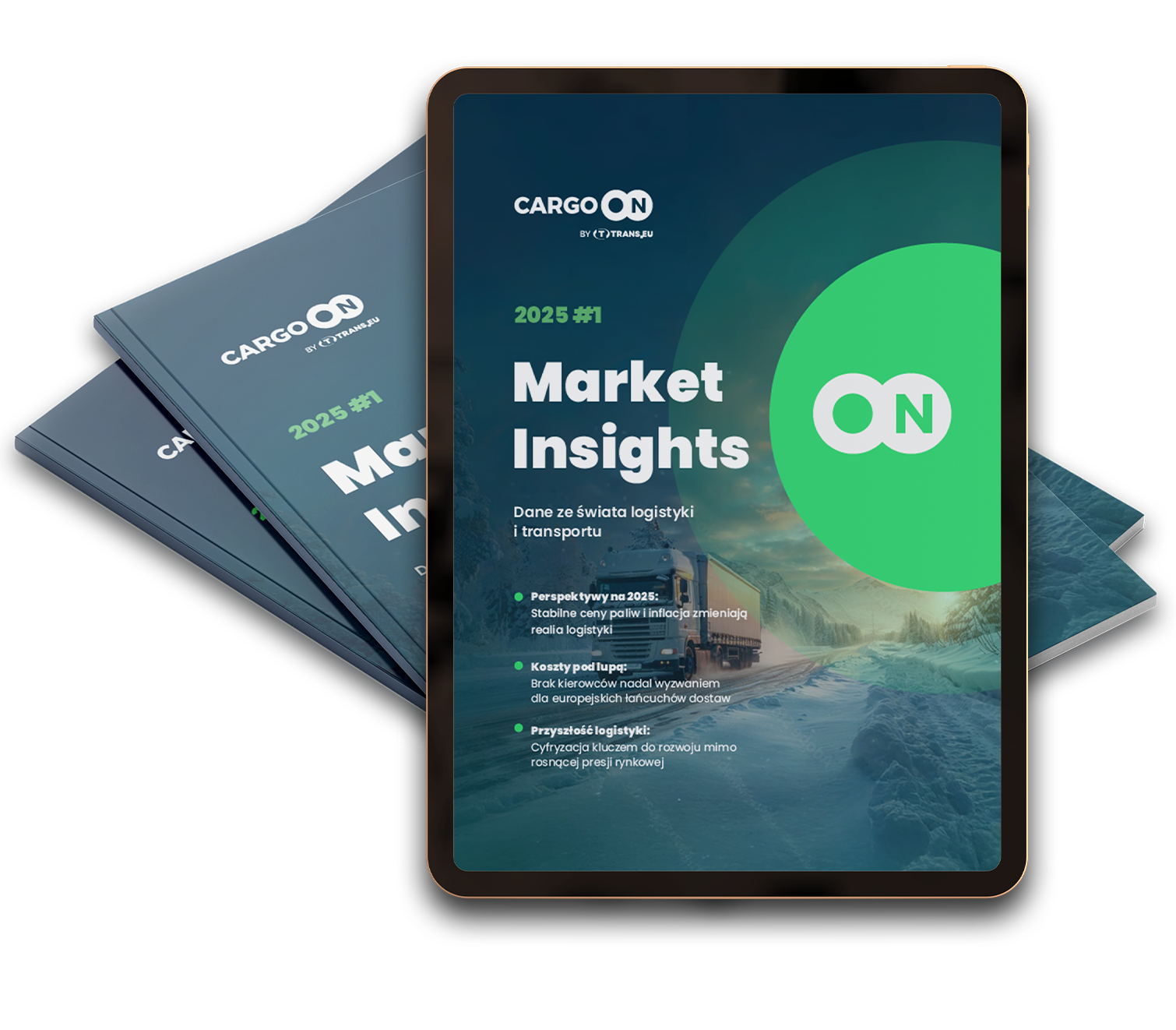
CargoON has presented the latest edition of the “Market Insights ON” report, which outlines the key factors influencing the European logistics sector in 2025. The report discusses economic changes, digitalization, environmental regulations, and the importance of industry collaboration, providing practical insights for supply chain managers.
Stabilization or continued uncertainty?
The European logistics sector continues to face instability, despite signs pointing toward stabilization. Inflation fell to 2.1% at the end of 2024, but supply chains remain exposed to geopolitical risks, shifting trade policies, and uneven economic recovery across Europe.
– Undeniably, the biggest challenge for the transport industry, affecting the condition of both shippers and carriers, is the stagnation of the European economy and the resulting limited consumption. Moreover, the ongoing war in Ukraine, political instability in key European countries, and uncertainty regarding the effects of the US administration change do not favor an improvement in sentiment – Bartosz Baca, Head of Product at DONE Deliveries, Board Member of Polish Supply Management Leaders.
While some markets are beginning to recover, others continue to face challenges such as the recession in Germany, infrastructure inefficiencies in Southern Europe, and rising operating costs. Whether 2025 will bring stabilization depends on the sector’s ability to adapt.
Digitalization and AI in logistics
New technologies, such as artificial intelligence, automation, and real-time transport monitoring solutions, are changing the way logistics is managed. Companies are increasingly using predictive analytics and AI to improve supply chain transparency and efficiency.
– The dynamic development of AI in 2025 and the wide availability of digital tools are revolutionizing transport management. Automation of processes such as route planning, load allocation to carriers, transport monitoring, or financial settlements increases efficiency and allows for cost reduction – Piotr Roczniak, Head of Business Consulting and Data at CargoON.
Companies that do not invest in data-driven technologies may lose their competitive edge, as customer expectations regarding speed and service flexibility continue to rise. The key to success in 2025 will be the integration of intelligent analytical tools into daily operations.
Regulatory changes and new challenges
Transport companies across Europe must adapt to increasingly stringent environmental and labor market regulations. In Italy, new regulations are affecting the labor market, and Spain is intensifying efforts toward green transport. However, adapting to regulations is not everything – industry collaboration is also becoming crucial.
– Approaching the value chain as a coherent whole, where all participants strive for common goals, allows for building a business based not only on productivity but also on efficiency and sustainable development. The best examples on the market show that strategic partnerships – horizontal, vertical, or cross-sectoral – have become a key element of competitiveness – Oriol Montanyà, Professor at UPF Barcelona School of Management.
Resilience and collaboration in the logistics of the future
The logistics sector in 2025 will have to adapt to economic, technological, and regulatory changes, while simultaneously seizing opportunities related to digitalization and inter-company collaboration.
– The growing complexity of the supply chain forces the implementation of modern technologies such as IoT, artificial intelligence, and blockchain. In addition to improving efficiency and reducing costs, digital innovations ensure better data management, greater flexibility in responding to changes, and greater transparency, which facilitates meeting ESG standards and improves communication between partners – Damiano Frosi, Director of the Contract Logistics Observatory, Polytechnic University of Milan.
Supply chain resilience, technological innovation, and strategic partnerships will be key elements of the future of logistics. Companies that adapt to these trends will turn challenges into a competitive advantage.
The full report is available at the link.