











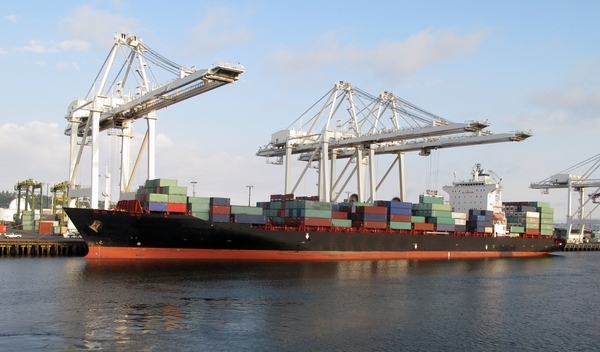
The publication analyzes trends in the development of transport, handling, and storage techniques in land-sea transport systems in the context of creating the technical and service potential of seaports that corresponds to these trends. The issue is significant, if only because the last few years have seen revolutionary changes in transport and storage techniques related to two important factors.
The first is the widespread use of intermodal transport units (ITU) in global transport, where the large ISO-class container reigns supreme, as well as in continental transport, where semitrailers and swap bodies are widely used. The second factor is the development of global and continental supply chains, where transport is one of the elements of logistics processes aimed at cost reduction, starting from the acquisition of raw materials to the final product, so that the price for the final customer is competitive. The analysis of changes allowed for the determination of basic techniques for the transport, handling, and storage of various categories of cargo, indicating where changes will occur in the coming years and where a certain stability of the technical side of transport processes should be expected in the context of the infrastructural and superstructural equipment of seaports. The analysis was part of a development project funded by the National Centre for Research and Development and carried out in 2010-2012 at the Department of Organization and Management of the Maritime University of Szczecin
Cargo categories as an expression of changes in land-sea transport processes
Cargo transport, as well as other activities carried out in transport processes, are possible thanks to the use of specific technical solutions in the construction and operation of transport means, warehouses, handling equipment, and transport infrastructure. This is of particular importance in the case of land-sea cargo transport processes, where services such as: moving cargo by various means of transport, handling in seaports and other transport hubs, and storage always occur. Due to the widespread use of ITUs in land-sea transport processes, but also in continental transport, for many cargoes, their physicochemical properties have ceased to be important, and the method of unitization for the duration of transport and storage has become essential. As a result, in European statistics for the analysis of cargo turnover volumes in seaports and maritime transport, cargo has been grouped into categories where the technical and organizational side of the transport process determines the classification of a given commodity into a specific cargo group. Adopting the principle that the method of handling, storage, and transport of cargo is paramount is, on the one hand, an effect of containerization, and on the other, of the organization of transport processes, within which various intermodal integration techniques are used to increase the efficiency of land and land-sea transport chains. The basis for the analysis of the technical aspects of transport, handling, and storage of cargo and the results presented in this publication is the methodology used by Eurostat for statistical purposes.
The article contains 39,210 characters.
Source: Logistyka Magazine