











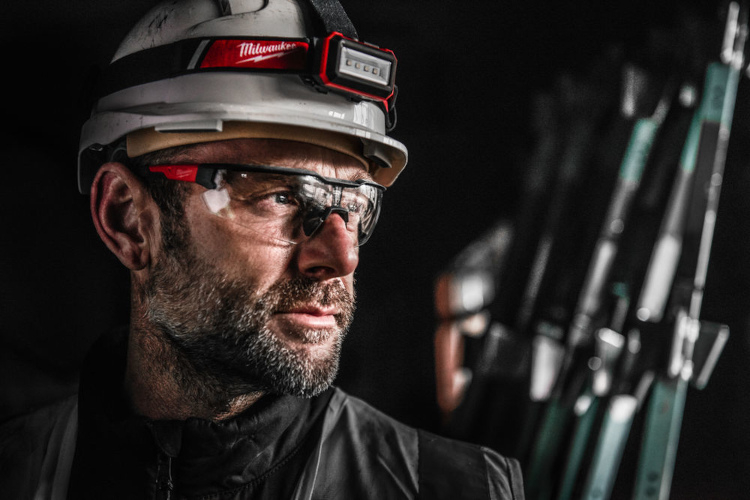
The latest Eurostat data from 2023 reveals alarming statistics regarding workplace safety in Europe, particularly in the construction industry. The reported figures shed light on the challenges associated with protecting employees and emphasize the importance of adhering to OHS regulations and using appropriate personal protective equipment. A Milwaukee expert shares tips on how to improve workplace safety and reduce the risk of injuries, especially head injuries.
Transport and storage in second place for number of accidents
In its latest report, Eurostat published disturbing statistics regarding workplace safety for the year 2021. The data is particularly alarming for the construction industry, which recorded the highest number of accidents – accounting for 22.5% of all fatal incidents and 12.9% of other accidents. Following this are the transport and storage industry with 16.7% of fatal accidents and the manufacturing sector with 14.7% of fatal accidents. The statistics show that there is still room in these industries to strengthen safety measures and education regarding OHS compliance.
Poland is in 8th place in terms of the occurrence of workplace accidents. Out of the 27 European Union member states whose data was analyzed by Eurostat, Poland ranks 8th in terms of the number of non-fatal accidents, with an accident rate per 100,000 employees of 482.75.
Almost 20% of workplace injuries involve the head
Among the data published by Eurostat was a breakdown of the types of injuries that most frequently affect employees in the European Union. The largest share, at 28% of accidents, resulted in wounds and superficial injuries. In second place were dislocations and sprains – 26% of all workplace accidents. The third group of most common injuries were concussions and internal injuries, which accounted for nearly one-fifth of all injuries (19.5%), demonstrating the prevalence of these types of injuries at work and highlighting the need for education on the use of appropriate personal protective equipment, including safety helmets.
Too cold, too hot, uncomfortable
Why do we ignore this crucial protection? The reasons vary greatly. Employees do not wear helmets because it is too cold in winter, and thick hats do not fit underneath them. Conversely, in the heat, high temperatures can discourage the wearing of a helmet.
– Eurostat data shows that a significant portion of accidents could be avoided with proper head protection. The failure to use appropriate helmets sometimes stems from issues of comfort, which an employee may prioritize over their own safety. And sometimes even from reasons such as aesthetics. The way to overcome these doubts is to provide solutions that not only ensure protection and comfort but can even significantly increase work efficiency and convenience. A good example of a modern solution that does not hinder but supports employees is the Bolt 200 safety helmet. The helmet’s design allows for the use of many accessories, making it easy to adapt to specific tasks and needs. The helmet is equipped with six special slots that provide great possibilities for compatible connection with accessories. Additionally, the helmet features a smooth dial adjustment system for sizing from 52 cm to 68 cm, ensuring a comfortable and secure fit to the user’s head. And the use of a replaceable sweatband and suspension liner, which can be removed and washed or replaced, provides additional comfort and increased hygiene – says Andrzej Wieder, Head of Sales PPE Milwaukee CEE.
Effective protection above all
High-quality helmets are constructed from durable materials. An important feature is also their ability to absorb impact energy, which minimizes the risk of concussions and internal injuries. To ensure that a helmet has been made according to safety standards, one should check if it meets the standard for unventilated helmets intended for industrial use EN 397 or the EN 12492 standard for helmets intended for work at heights.
– The factors that are crucial in ensuring the appropriate level of safety provided by a helmet are the materials and technologies used in it. In the construction of our helmets, we use an ultra-impact-resistant Lexan shell, which is a polycarbonate with exceptional parameters. To provide additional head protection, the interior of the helmet is lined with special foam that ensures even pressure distribution across the entire head, regardless of the point of impact – says Andrzej Wieder.
The Eurostat report is available at the link.
Source: Milwaukee