











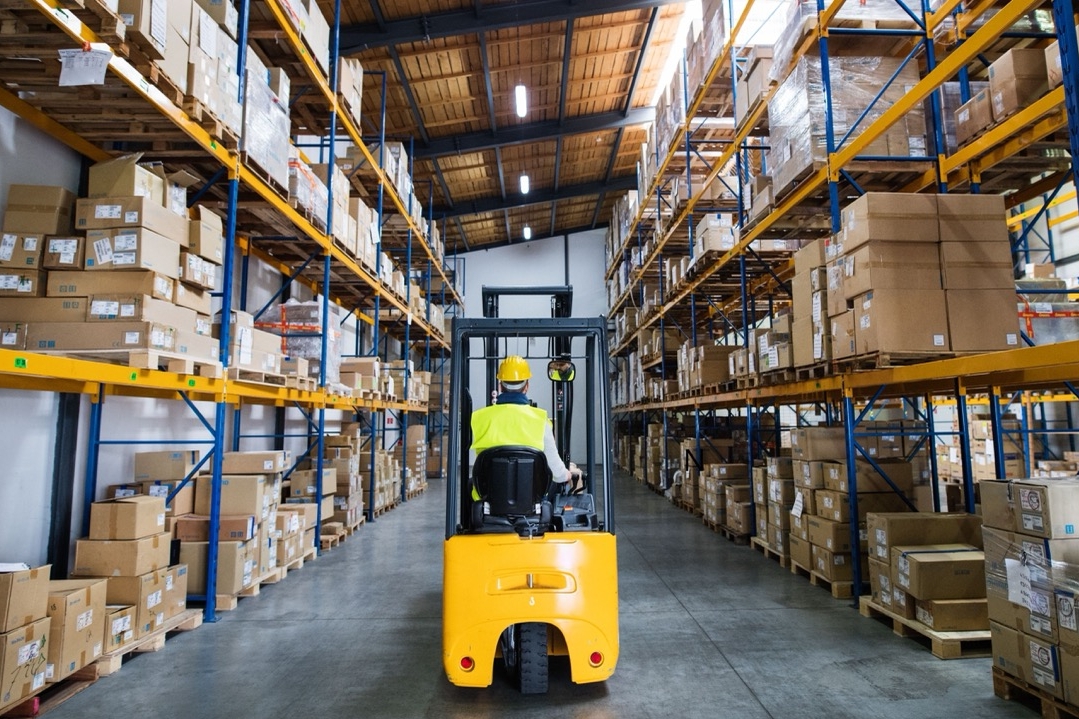
Warehouse space resources in Poland have exceeded 36 million square meters and are growing by 7.5% annually, even though developers are approaching new investments with caution. Companies are moving away from treating warehouses as mere storage areas, transforming them into “optimization centers” where every rack can generate savings. Tenant demand remains high – in the second quarter of 2025, it exceeded 1.84 million square meters, which was the fifth-highest result in the history of the Polish warehouse market. As emphasized by Jarosław Kamiński, Director of RAJAPACK, modern equipment is no longer an operating cost, but a strategic element of logistics that determines competitive advantage.
Increasing needs
The demand for modern warehouse space in Poland is constantly growing. According to data from BNP Paribas Real Estate Poland for the second quarter of 2025, the sector’s total resources exceeded the 36 million square meter threshold, representing a 7.5% increase compared to the same period last year. This dynamic development translates into increasing investments in the organization and retrofitting of warehouse spaces to meet the growing demands of the market.
Today, a modern warehouse is not just a storage space, but also a place where technology, ergonomics, and sustainability meet. Companies are increasingly optimizing hall layouts, investing in safe workstations, and solutions that allow for better utilization of every square meter.
The warehouse as a center of optimization
Rising labor and energy costs, along with pressure for faster order fulfillment, are making the warehouse one of the key areas for building operational advantages today. Companies are increasingly abandoning ad-hoc improvements in favor of thoughtful process modernization. It is becoming increasingly clear that it is not additional square meters that determine efficiency, but the way workstations and workflows are organized.
Real warehouse productivity is now determined by ergonomics – not as an “extra,” but as a cost factor. In many companies, a lot of packing process time is wasted on unnecessary movements, unintuitive material placement, or a lack of equipment integration. Modernizing a well-designed workstation can noticeably shorten the time it takes to pack a single parcel. That is why companies are increasingly focusing on rebuilding packing and picking zones. Ergonomic height-adjustable tables, accessory modules, precisely selected lighting, or the integration of void-fill production equipment – both large systems and compact solutions like the Fillpak Mini – allow for minimizing the number of movements needed to pack a single shipment. During the busiest periods, such as the pre-Christmas season, this difference determines whether the warehouse meets its plan or carries over backlogs to subsequent shifts. – says Jarosław Kamiński, Director of RAJAPACK.
Investing in people, processes, and operational resilience
Changing purchasing models, shorter delivery times, and increasing volume volatility have forced companies to take a more mature view of logistics. A warehouse must be resilient to demand spikes while remaining predictable – and this requires investment not only in equipment but also in work methodology.
We most often see that companies wanting to shorten lead times start by investing in ergonomics. This is the fastest way to improve indicators without having to change the entire infrastructure. A well-designed packing station can increase their throughput. Integrating void-fill systems with the workspace eliminates chaotic material retrieval, and compact solutions allow for easy scaling of capacity during peak season without blocking space. However, ergonomics is not just about saving time or increasing productivity; it is primarily about a real improvement in work comfort and employee well-being, as well as a lower risk of musculoskeletal disorders, such as back or wrist pain. – says Jarosław Kamiński, Director of RAJAPACK.
This approach is increasingly visible in the industry. Modernization and retrofitting of warehouses are ceasing to be a “fixed cost” and are becoming an investment project with measurable ROI. It is no longer just about shortening operation times, but about reducing physical strain, fewer errors, lower absenteeism, and process stability during difficult periods.
The growing scale of investment shows that the logistics sector is maturing and starting to design warehouses in a way similar to production – with process thinking, load forecasting, and ergonomics planning at the design stage, rather than only during operation. Companies that implement such changes adapt faster to demand spikes, reduce costs, and build a better employee experience, which becomes a key asset in a difficult labor market.
Source: RAJA Group