











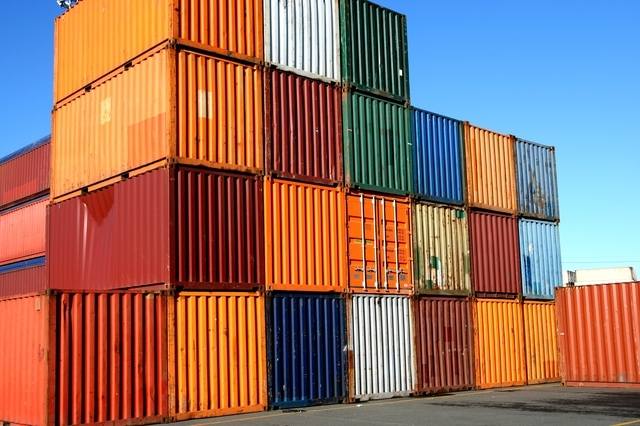
According to the definition contained in [16], intermodal transport is the movement of goods in one loading unit using at least two different, successive modes of transport.
The advantages of intermodal transport are primarily:
– simplification of loading operations;
– reduction of labor intensity of transshipments;
– reduction of costs for the transport task;
– shortening of the transport task execution time;
– reduction of the risk of cargo damage during loading operations;
– reduction of cargo storage costs (due to the characteristics of intermodal transport loading units).
The disadvantages of this type of transport certainly include the necessity of incurring high investment expenditures on specialized transport means and intermodal transport infrastructure (it is also possible to adapt existing infrastructure for the needs of intermodal transport).
Usually, intermodal transport is identified with combined transport, but the latter concept is much narrower. Combined transport is classified as intermodal transport, in which the loading unit is transported between terminals on the main part of the route by rail, inland waterway, or sea, and its collection and delivery are carried out by road transport over the shortest possible distances. Analogously to intermodal transport, during the execution of the transport process by combined transport, transshipments are carried out without changing the loading unit.
As J. Wronka [13] points out, combined transport combines the advantages of different modes of transport, i.e., the ability to transport large loads over long distances, characteristic of rail transport and inland and sea shipping, with the good accessibility and flexibility of road transport over short distances, which is necessary in collection and distribution systems. In addition to the previously mentioned advantages of intermodal transport, the positive features associated with it also include:
– use of environmentally friendly modes of transport;
– reduction of external costs associated with road transport that are negative for humans and the natural environment;
– reduction of road traffic intensity;
– reduction of the phenomenon of road congestion;
– improvement of road safety;
– compliance with the idea of shaping sustainable transport.
According to the classification presented in [12], among combined transport systems we can distinguish:
– “rolling road” technology;
– large and specialized container technology;
– swap body technology;
– ACTS (Abroll Container Transport System) container technology;
– bimodal transport technology;
– combined transport semi-trailer technology.
Each of the above-mentioned technologies has specific characteristic features, and the selection of the appropriate technology is crucial from the point of view of organizing the transport process in intermodal transport.
The article contains 29,550 characters.
Source: Logistyka Magazine
067_Murawski_Jacyna-Golda_Problem_wyznaczania_optymalnej_lokalizacji.pdf