











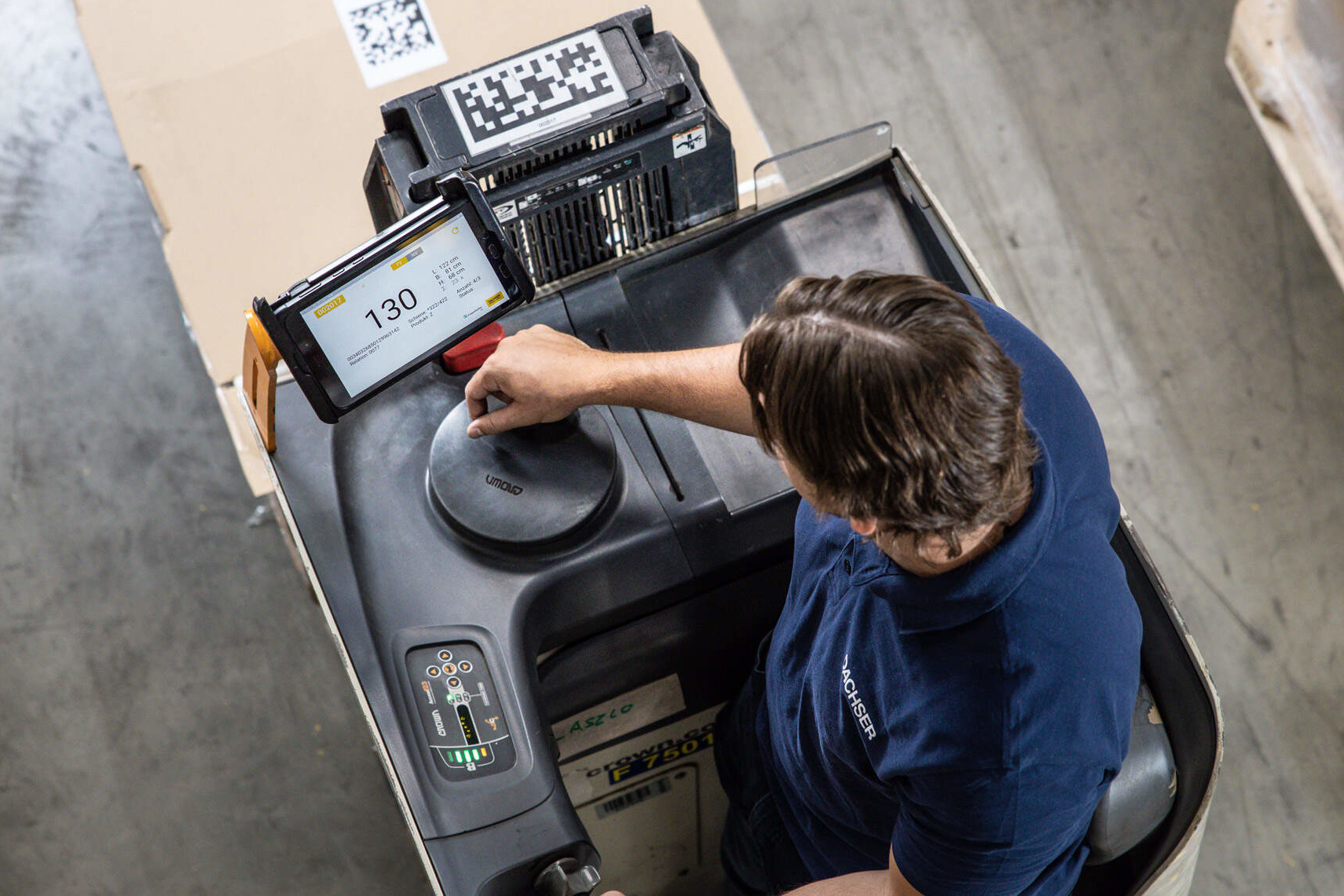
In today’s increasingly complex world, ensuring top-class groupage logistics in the chemical industry means continuously improving the services offered. AI applications play a major role in this constant and lasting transformation. Michael Kriegel, Department Head DACHSER Chem Logistics, explains the potential of artificial intelligence in logistics and how it supports DACHSER in overcoming current challenges.
At a very early stage of its operations, the logistics operator prioritized digitalization. By introducing the SSCC barcode and highly integrated core systems, the company helped shape the digital course that logistics has taken. Today, machine learning and artificial intelligence (AI) are the most important elements of this process at DACHSER.
To ensure quality and meet challenges such as the shortage of drivers and other skilled workers, logistics urgently needs a digital transformation. Moreover, the industry is being called upon to further increase its pace in implementing new technologies and incorporating social megatrends that are changing the way we live, such as digitalization, urbanization, e-mobility, and connectivity. This requires a strategic mindset and strong control, because it all comes down to actively shaping the future by anticipating what will be necessary.
The need and benefits resulting from the use of artificial intelligence are also recognized by Ewelina Staszewska-Kobiela, Business Development Manager at DACHSER Chem Logistics Poland – For both DACHSER and our customers, this is definitely a step towards sustainable development and increased safety. Artificial intelligence enables effective monitoring and risk management by identifying threats and minimizing environmental impact. Furthermore, it offers the possibility of optimizing supply chain management through data analysis, which in turn translates into the efficiency and competitiveness of the entire logistics process. Therefore, the use of artificial intelligence in the chemical industry and the transport of chemical products is a key factor driving innovation and progress, which is so important at the moment.
At DACHSER, we are exploring three key use cases for AI-based applications that will also benefit our customers in the chemical industry. These are the automation of groupage services, process planning, and emission reduction.
Digital transformation of groupage logistics
Groupage logistics is a key element influencing competitiveness in the industrial sector, and thus also within chemical production. In this case, the volume of cargo transported on pallets and in big bags is also decreasing, which means that sharing cargo space with other shippers is a better solution. This is the only way to deliver goods quickly and economically while keeping CO2 emissions to a minimum. However, broken supply chains and the rapid growth of deliveries to end customers are putting pressure on even the most efficient groupage networks. This is where intelligent data management, algorithms, and artificial intelligence come to the rescue, which, using mathematical models capable of “learning” patterns and structures present in training data, can generate the best possible solutions.
The need and benefits resulting from the use of artificial intelligence are also recognized by Ewelina Staszewska-Kobiela, Business Development Manager at DACHSER Chem Logistics Poland. – Everything starts with logistics practices – based primarily on the expert knowledge of specialists and physical resources, such as network and terminal infrastructure, necessary to provide services. Efficiency largely depends on what happens in logistics hubs, where long-haul and short-haul transports connect. The logistics operator plays a major role, especially the employees involved in loading and unloading goods. Optimizing the load capacity of trailers and swap bodies is like a game of Tetris and requires solid preparation. For example, considering only the level of an employee’s experience, the difference in cargo space utilization can be as much as 15%. Furthermore, due to demographic changes and the associated shortages of qualified personnel and space, it is necessary to adopt smarter and more efficient ways of dealing with available resources. DACHSER already has clear achievements in this regard. At the end of 2023, DACHSER and Fraunhofer IML received the German Logistics Award from the German Logistics Association (BVL) for @ILO, a technological innovation that significantly digitizes groupage logistics processes.
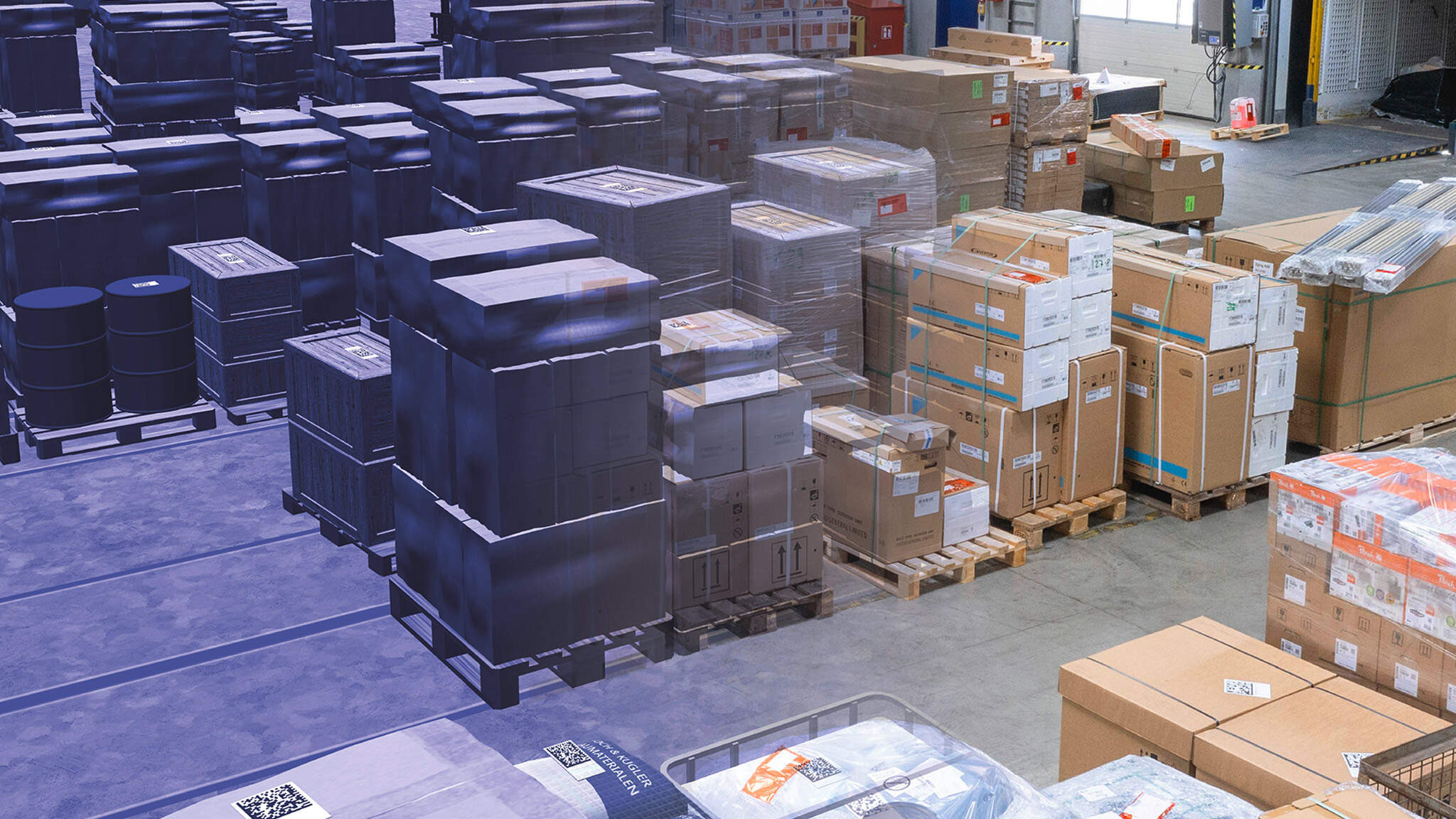
Digital twin @ILO: a technological quantum leap in groupage logistics
@ILO (short for Advanced Indoor Localization and Operations) is a technological innovation that can provide a comprehensive digital map of a transit terminal in real time. To identify the environment, @ILO uses two-dimensional Data Matrix codes, similar to QR codes, placed on top of every pallet and several hundred optical scanning units mounted on the terminal ceiling. Within seconds, with the help of AI-based algorithms, this technology creates a digital twin, i.e., a representation of all processes occurring in the terminal in real time. The system provides identification, measurement of all packages, and their location with an accuracy of one meter. The resulting image is constantly updated, and information is displayed on monitors and devices operated by employees. Thanks to this, forklift drivers and warehouse staff know exactly where each pallet is and where it needs to go. This can reduce the time of individual processes by 15 to 35 percent. The same applies to dangerous goods, which of course must still be labeled in accordance with regulations. However, what has changed in this case is the fact that the new system provides this information in a much more transparent and efficient way than previous solutions.
@ILO is the result of over six years of joint research conducted by DACHSER and Fraunhofer IML. DACHSER has already implemented this technology at four of its European locations and will introduce it in further branches across Europe over the next few years.
Transit terminals are not the only places where artificial intelligence can help provide useful solutions. An example is warehouse automation. Automated Guided Vehicles (AGVs) equipped with sensor systems, such as cameras, lidar, and radar sensors, move precisely with the help of artificial intelligence. These autonomous transporters work independently, performing simple, repetitive tasks such as moving pallets from the warehouse to the transit terminal.
AI for intelligent planning
Another key factor for achieving efficiency and quality in logistics is the ability to plan. In this case, too, artificial intelligence can make a real difference, the best example of which is PAnDA One – DACHSER’s first machine learning project. This is an acronym for Predictive (P) Analytics (An) DACHSER (DA), where “One” signifies that it is the first solution of its kind in the company. The PAnDA One model was specifically designed to forecast the volumes of goods delivered to our European logistics branches, which provides significant decision-making support in terms of capacity planning. Thanks to this, it is possible to obtain the appropriate load capacity in a given market at an early stage of planning or to properly manage resources in the transit terminal. To this end, the forecasting model provides relevant information regarding incoming cargo volumes up to 25 weeks in advance. PAnDA One therefore gives DACHSER branches another valuable tool – one that serves to verify forecasts made by experienced operational managers and confirm insights gathered during conversations with customers. This technology helps to make sound decisions.
Reducing transport emissions
Sustainable practices, in ecological, social, and economic dimensions, pave the way for a safe and economically stable future. DACHSER aims to achieve net-zero CO2 emissions for its own facilities and vehicles as quickly as possible. For this reason, the company has established special e-mobility hubs located at branches in Freiburg, Hamburg, and Malsch near Karlsruhe. These are places where we focus on researching and testing emission-free battery-electric trucks and their charging infrastructure, the use and self-production of electricity from renewable sources, and intelligent energy management and consumption. Although it may not seem obvious at first glance, data collection and its intelligent use play an important role in this process. Especially since developing reliable models and use cases for implementing emission-free short- and long-haul transport requires collecting information on a massive scale. This is an exciting use case for artificial intelligence by DACHSER with the future in mind.
What DACHSER has learned while using AI applications is that machine learning often involves trial and error. It is about checking test data for as long as necessary to achieve the level of accuracy and quality desired for a given use case. Unlike conventional coding, this requires one thing above all: patience. Artificial intelligence can also have its downsides, such as loss of control or liability risks. Therefore, it is important to critically analyze every process, guided by simple common sense. Nevertheless, digital transformation offers unique opportunities for sustainable, future-oriented development. Meanwhile, a reasonable dose of artificial intelligence and machine learning, instead of replacing people, will help them make more informed and thus better decisions. Logistics is created by people, for people – and that will not change. This means that every company has everything it needs to shape its digital future.
Source: Dachser