











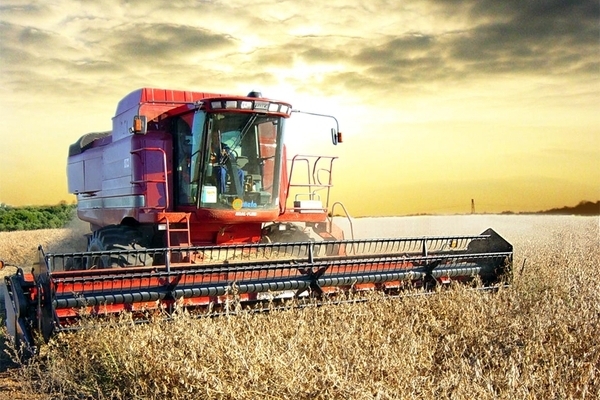
The first definition of agribusiness from 1957, provided by American scientists, defined it as a “system of integrated American farmers with units of their supply, processing, and food distribution, which allows for establishing effective control over all interdependent links.”
A. Woś stated that the separation and development of agribusiness were mainly related to the division of labor. We can distinguish the following parts of agribusiness: agriculture, forestry and hunting, fishing and inland fisheries, industry producing means of production for agriculture and the food industry, primary processing of agricultural raw materials and the food industry, trade in agricultural products and ready-made food, services for agriculture, food trade, and agritourism.
The results of the research presented in the article concern agri-food processing. Agriculture is becoming a less significant part, as evidenced by its decreasing share in global trade (a decline from 50% in 1950 to 9% in 2000). Additionally, changes are occurring within agribusiness, as the share of agriculture is decreasing in favor of the food industry and food trade. Changes in the economy have made the food industry the leading link in agribusiness. Globalization also has a significant impact on changes in the agribusiness sector. This process takes place both at the level of countries and regions of the world, as well as at the level of enterprises, industries, and sectors. The organization of enterprises should change according to market needs and, to some extent, create them. It is becoming necessary to introduce innovative solutions, including new products, technologies, and product labeling. Globalization also leads to an increase in the number and intensity of contacts between individual elements of agribusiness, as well as to an increase in the geographical reach of the markets in which individual enterprises operate.
Agribusiness entities that directly compete but also cooperate in international markets are agri-food processing and food trade enterprises. The food supply chain connects agriculture, food processing, and distribution. Its primary goal is to ensure customer satisfaction and profit for the enterprises forming the links of the chain. Therefore, companies take actions aimed at improving the level of customer service, better responding to changes occurring in the environment, and achieving higher efficiency.
The article contains 28,650 characters.
Source: Logistyka Magazine