









Biomass is gaining importance as one of the main sources of renewable thermal energy in Poland. According to data from the Energy Market Agency and the Energy Regulatory Office, the share of biomass in heat production in Poland grew from 7% to 14% between 2014 and 2023. In 2025, units powered by such fuel generated 90% of heat from RES in Poland. Analyses published last year indicate a demand for 6 million tons of biomass annually by 2035. Laude Smart Intermodal SA offers comprehensive logistics services related to biomass, covering much more than just transport.
We transport a variety of biomass, from sunflower husk pellets from Ukraine, through domestic wood pellets, but also those sourced in the Baltic republics or imported by sea, and finally domestic wood chips. And it is wood chips that are the dominant fuel used in professional power engineering.
– emphasizes Krzysztof Orkwiszewski, Commercial Director at Laude Smart Intermodal SA
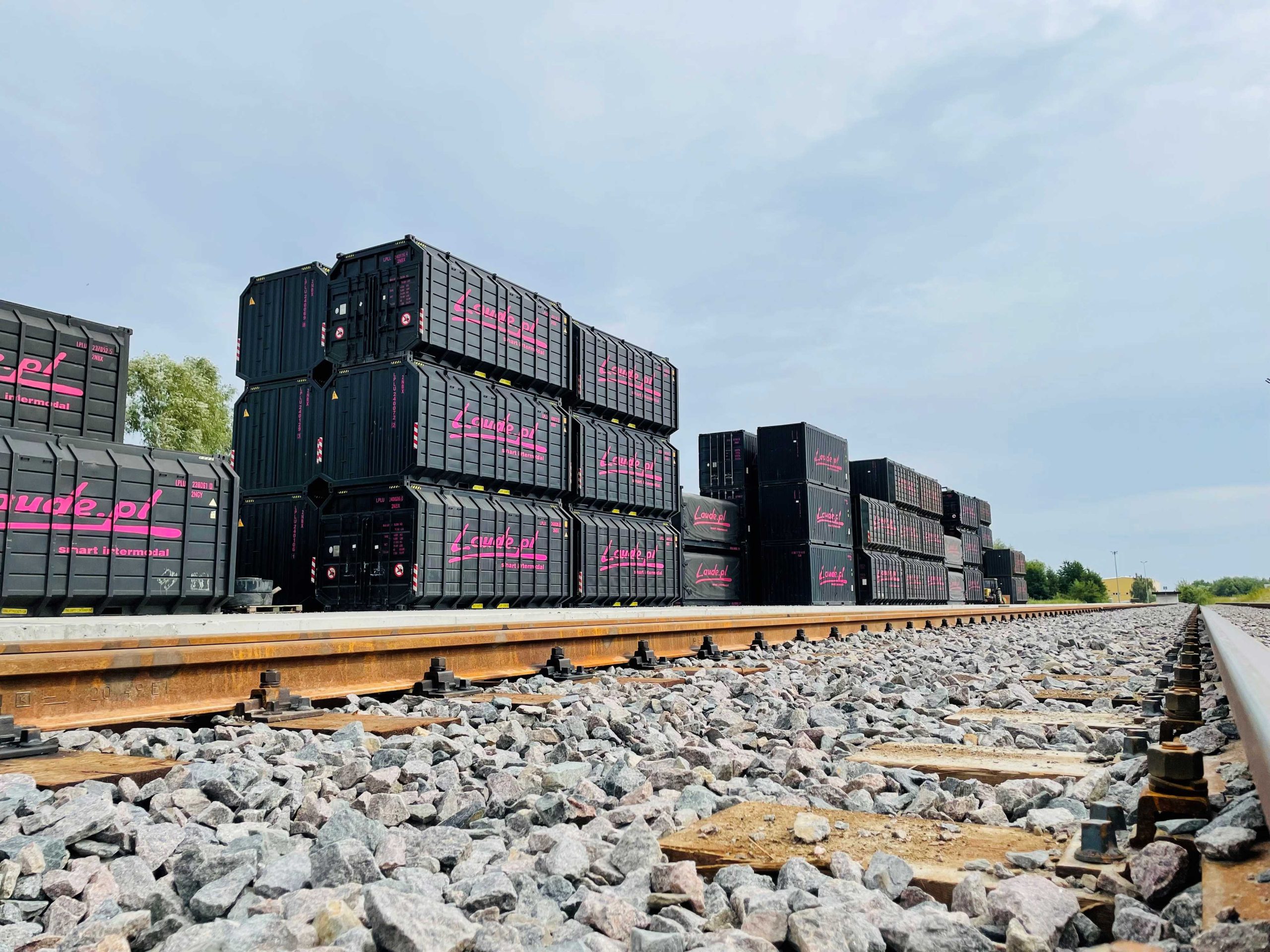
Transporting this type of biomass, due to its characteristics (bulk cargo), requires appropriate rolling stock. Transporting biomass in open wagons under tarpaulins is a highly debatable solution, which, unlike containers, absolutely does not allow for securing the product. That is why Laude has been carrying out wood chip transports using its own specially designed containers for over five years.
In one train set consisting of 60 30-foot containers, Laude is able to transport 4,500 cubic meters of biomass, which significantly increases transport efficiency compared to classic coal wagons, which allow for the transport of only about 3,000 cubic meters in a train set of the same length.
Combined transport, using containers, is another important aspect of biomass logistics, especially where conventional rail transport is difficult, such as due to wider track gauges and limited availability of transshipment infrastructure, which we face in Lithuania or Latvia.
– explains Krzysztof Orkwiszewski.
In Poland, according to various data, up to 3 million single-family homes already use solid biomass central heating boilers (pellets, wood, wood chips). This is more than the percentage of people using heat pumps, solar collectors, and photovoltaic installations combined. In turn, professional combined heat and power plants, which generate electricity and system heat, use installations burning wood chips and industrial pellets.
We have observed in recent years that the growing demand for biomass in Poland significantly increases its import. Consequently, the demand for transport is also higher. This was especially visible during this year’s winter, when demand exceeded the availability of the local raw material base and influenced the increase in the volume of biomass imported from the EU and beyond. In the case of Laude Smart Intermodal, the container system allows for flexible and quick retooling of train sets with containers carrying steel, grain, fertilizers, or general cargo to biomass and sending as many train sets on the route as needed.
– reminds Marcin Witczak, CEO of Laude Smart Intermodal
The diversity in types of biomass and the instability of local production and availability of biomass result in a high demand for logistics, especially in ports and at the eastern border. Transport to recipients using Laude’s intermodal systems, additionally supported by specially prepared tractor units, is gaining importance through the possibility of transporting containers with higher load capacity, which is crucial in the context of the need for fast and efficient logistics.
This enables the transport of containers with a load capacity of up to 30 tons, which is 25% more than in conventional road transport.
– reminds Marcin Witczak.
This possibility may gain additional importance thanks to the idea – promoted by the Polish Pellet Council – of wider use of agro-pellets in heating, a product made from raw materials sourced from mills and other agri-food industry plants.
Global pellet consumption has also reached a record level of 51.5 million tons, and here too Europe is at the forefront – over 6.5 million households use pellets. Consumption in the residential sector alone has grown to 15.3 million tons, which is 5% more compared to 2024. Most eco-fuel is produced in Europe, where, despite the exclusion of Russia and Belarus, 24.1 million tons of pellets were produced in 2025. This is 10% more than the year before.
Laude Smart Intermodal builds its market position on flexible transport solutions and a strong market position in Poland and Ukraine. We are prepared to meet practically any transport challenge. The growing demand for biomass requires the expansion of imports. Transport costs clearly show that in this comparison, our solutions offer the most attractive conditions, and customers want to take advantage of this.
– concludes CEO Witczak.
Source: Laude Smart Intermodal