








The COVID-19 pandemic, the situation at borders, and dynamically changing prices are just a few situations that have rapidly disrupted the relationship between supply and demand. As a result, entire production processes are struggling, leading to the blockage of global supply chains. What can be done to make a business resilient to this? Advanced analytics comes to the rescue. Combined with a digital twin, it creates more stable processes and helps to react faster in a crisis.
Difficult to predict, often abstract situations are causing more and more companies to notice problems in the functioning of their supply and production facilities and are signaling the need for changes in creating supply chain strategies. Almost ¾ of entrepreneurs needed more than three months after the COVID-19 pandemic to recover from losses caused by supply chain disruptions, according to a report by the Capgemini Research Institute, which summarizes supply chain resilience in a post-pandemic world. This shows how susceptible existing methods of production and distribution of goods are to external factors.
The best way to react to unplanned events is to predict them, and the best way to predict them is to model potential reactions in advance, says Brian Kilcourse, Managing Partner at Retail Systems Research.
In global supply chains, manufacturers must balance the appropriate flow of suppliers, raw materials, and specialized processes with unforeseen changes in consumer demand. The number of variables means that production specialists will not be able to stay ahead of the competition and generate profits if they rely only on spreadsheets and other traditional planning methods.
How will combining technologies help logisticians?
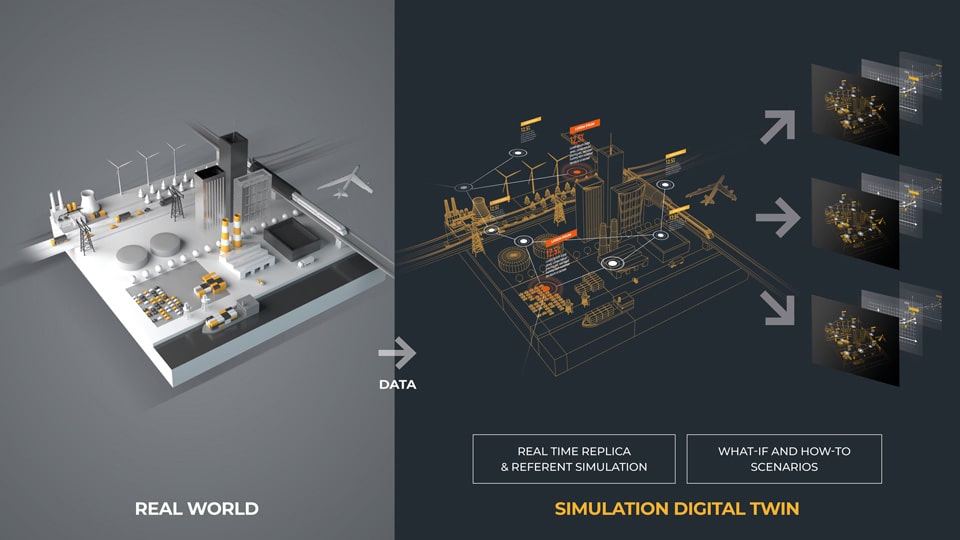
A digital twin supported by advanced analytics will help protect against potential events. In this case, a digital twin is a virtual copy of the entire supply chain that we deal with in the real world. However, it is powered by AI, which helps to connect demand planning and forecasting with production and inventory planning. Experts from SAS and Cosmo Tech behind this solution estimate that it will enable a more accurate insight into the future of operations. It will also allow for running operational “what-if” scenarios before implementing decisions, and most importantly, before a given risk materializes.
It is difficult for supply chain managers to predict the impact of decisions, disruptions, or unexpected events on the entire organization, says Hugues de Bantel, co-founder and CEO of Cosmo Tech. – The combined technologies of SAS and Cosmo Tech allow us to understand in real-time not only how organizations work, but how they will work, even in situations they have never experienced before.
Partnership for the development of advanced technology
Thanks to the cooperation between SAS and Cosmo Tech, the digital twin has been equipped with additional applications that will enable effective simulation of supply chain operations.
Consumer goods manufacturers typically rely on just a few analysts and planners who create multiple forecasts. Using intelligent automation with machine learning, such as digital twins, allows companies to automate complex tasks, so analysts can focus on more critical work, says Dan Mitchell, SAS Global Director for Retail and CPG.
The solutions obtained as a result of the partnership give entrepreneurs the ability to predict key supply chain performance indicators. They also give companies the chance to identify corrective actions that will maximize profits and improve resilience. The supply chain digital twin also serves as a virtual laboratory for assessing the impact of disruptions, operational policies, and investment decisions. It helps in maintaining production quality and reducing waste.
Source: proscience.pl