











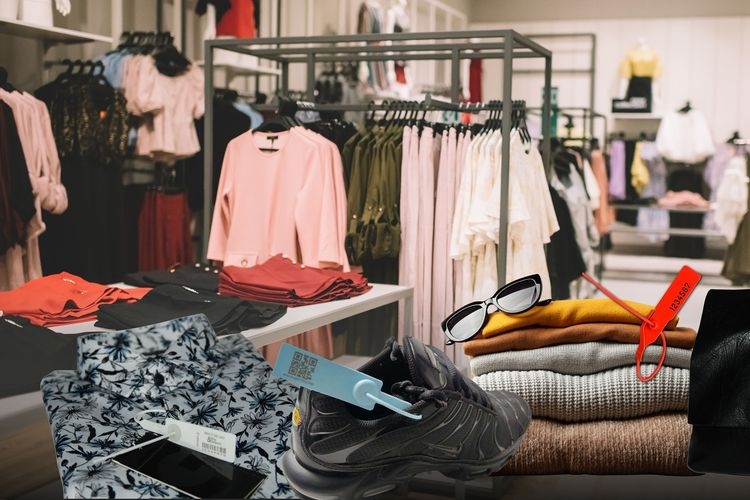
The fast fashion trend makes logistics in the clothing industry highly demanding. Fashion changes rapidly, which means that the efficiency of clothing manufacturers and retail chains depends on the smooth management of operations, warehouse processes, transport, and e-commerce returns. Examples of Silny&Salamon clients well illustrate the diversity of challenges and needs in this sector.
Logistics processes in the clothing industry focus on the pursuit of minimizing time – from product design to placing it in a brick-and-mortar or online store. This allows for maximizing turnover to stay ahead of the next trend. Managing returns is also crucial in this industry. It is estimated that in the e-commerce channel, the level of clothing returns is as high as 30-40%, and handling them generates additional costs and requires efficient infrastructure.
Logistical mosaic
The fashion industry requires optimized supply chain processes, as with such complexity of operations, every element that can increase product security and process efficiency has an impact on profit levels, time savings, and customer satisfaction. The Silny&Salamon team deals with such challenges on a daily basis, supporting major clothing brands whose managers expect effective solutions to secure the supply chain.
For a leading online store offering footwear, accessories, and handbags, which operates in a multibrand model, we provide security seals in both classic versions and for premium products. These practical solutions are intended to protect products against unauthorized use, and consequently, reduce return costs and streamline logistics processes. They are also a clear message to the customer that the product is intact – says Katarzyna Bieńkowska, CEO of Silny&Salamon.
Such security measures as plastic, ribbon, or string seals can be easily placed on the product by the seller. They provide a high level of protection because any attempt at tampering is visible on them, but above all, they act as a barrier to prevent the customer from using the product when they actually have no intention of finally purchasing it. The practice known in the e-commerce industry as “wardrobing” is based on customers using sellers’ policies. It consists of buying clothes, wearing them without removing the tag, and then returning them to the store as unused goods in order to get a refund. In the light of consumer law, wardrobing is not considered a crime, but such customer behavior complicates and increases the cost of handling returns.
Another client, a well-known clothing company offering a wide range of clothing and accessories, uses security measures selected by the Silny&Salamon team in the form of arrow seals for reusable transport items (RTI). In this way, they protect products transported between the central warehouse, regional warehouses, the fulfillment center, and brick-and-mortar stores.
3 aspects in fast fashion logistics
It may seem contradictory to combine the fast fashion trend with the growing customer expectations regarding the sustainability of clothing manufacturers, including ecological and ethical practices. However, this is everyday life, which is why the role of security in the supply chain is growing and has several dimensions. Products must be secured and labeled on multiple levels, e.g., through sequential numbering of individual items, seal color coding, barcodes, and RFID seals, which in turn is reflected in inventory and warehouse systems adapted to internal processes.
Beyond efficient logistics, this is an element of caring for sustainability aspects, playing an important role, as product security is also about caring for the customer and the certainty of delivering an intact product to them. In technologically advanced markings, such as RFID tags, one can also include information such as the source of raw materials – adds Katarzyna Bieńkowska.
The needs of the modern fashion industry also include fast transport and distribution, where same-day and next-day delivery models often determine competitive advantage and gaining the recognition of a demanding customer. However, this requires modern technologies and advanced security measures to minimize losses and enable real-time monitoring, which will ensure effective inventory management and logistics. This is where electronic seals come in, using technologies such as RFID to provide a higher level of protection, product tracking, and information delivery.
A secure supply chain in the face of change
Undoubtedly, logistics in the clothing industry, especially in fast fashion, is based on many factors that increase the sensitivity of the supply chain. These are rapid changes in fashion trends and assortment, often burdened with demand unpredictability, the need for short order fulfillment times, but also the management of returns or unsold products.
It is also worth remembering that from the beginning of 2025, municipalities in Poland are required to introduce selective collection of textiles, including clothing, footwear, bedding, and other textile materials. This is another element of the product life cycle that must be collected separately and sent for recycling or disposal. Subsequent logistics entities are required to have appropriate security and labeling, which is why cooperation with a partner who has knowledge of the needs of various industries and security in the supply chain is valuable.
Source: Lawenda Public Relations Sp. z o. o.