











The logistics industry, crucial for international trade, was valued at over 8.4 trillion euros in 2021 and is projected to exceed 13.7 trillion euros by 2027. In this sector, delays are unacceptable; facility managers must ensure operational fluidity for the global supply chain to function without disruption. Paul Garthwaite, Commercial Director at the geotechnical firm Geobear, discusses the financial impact of subsidence in logistics centers, the potential costs of disruption, and strategies for effective management while meeting operational goals.
Subsidence poses a serious threat to logistics centers, causing uneven floors and cracks in concrete slabs. These issues disrupt operations, damage equipment and stored goods, and compromise employee safety. Failing to identify early signs of subsidence and choosing invasive repair methods can result in costly downtime and disrupt the efficiency and profitability of these critical facilities.
Subsidence as a threat to logistics centers
Subsidence occurs when the ground beneath a building collapses, shifts, or creates voids, causing foundations to settle. In logistics centers, this often results in uneven floors, which can disrupt automated systems, violate safety protocols, and lead to significant operational inefficiencies.
Depending on the intended use of the floors in logistics centers, each must meet specific standards. Precision is key in logistics environments.
Automated systems, such as conveyor belts and storage systems, require stable, level surfaces to function smoothly. Subsidence can cause unplanned downtime, equipment failure, and additional, unforeseen repairs.
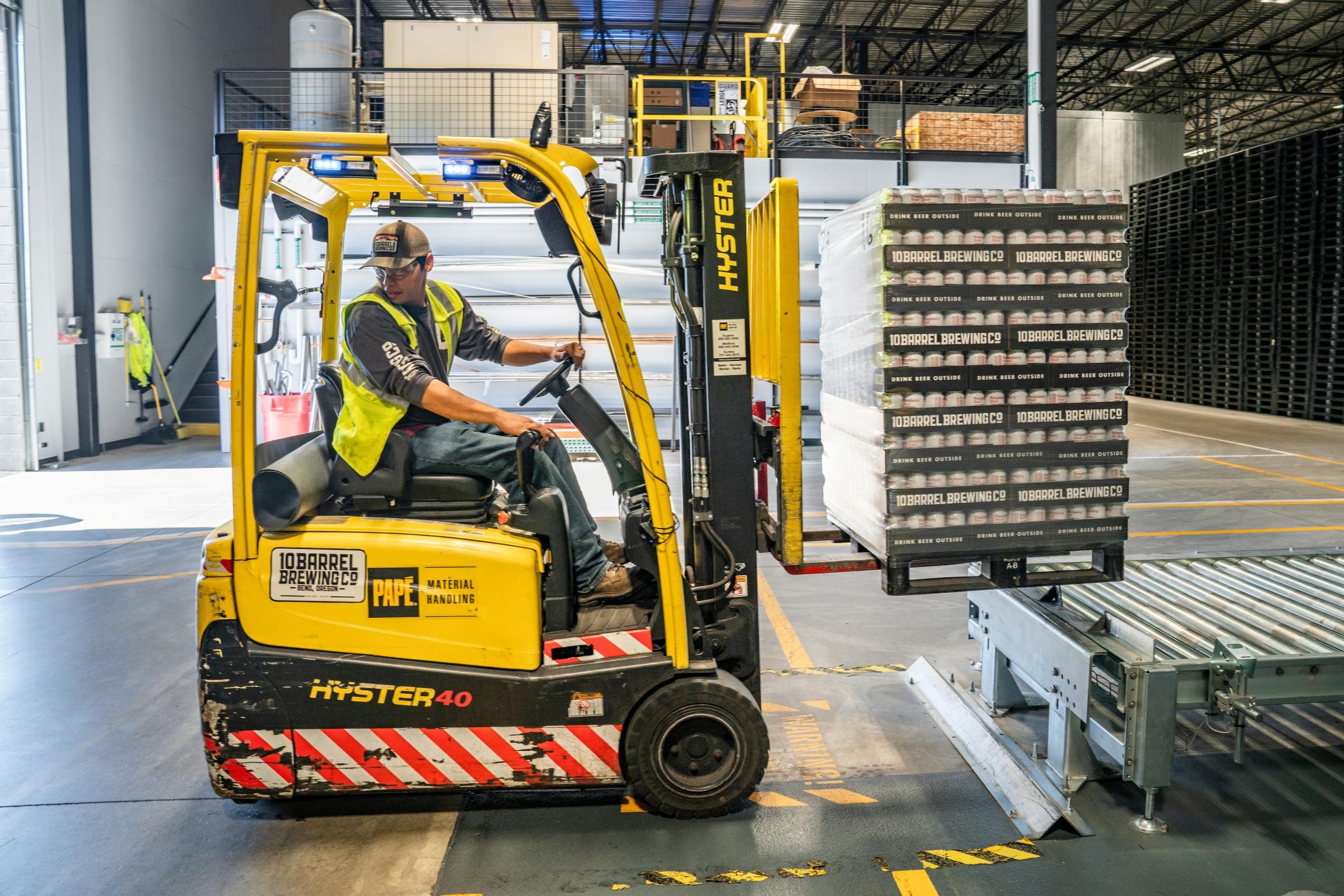
Uneven or shifting floors can cause warehouse racking to tilt, reducing its safety, and in the worst case, leading to collapse. Similarly, forklifts operating on uneven floors can make certain areas unusable, forcing changes in traffic routes and impacting operational efficiency.
Continuing to operate forklifts on cracked and uneven floors increases the risk of accidents and further damage, endangering employees, goods, and causing further unplanned downtime.
Identifying early signs of subsidence
Subsidence does not always manifest with immediate negative consequences. Facility managers should look for early warning signs, such as cracks in walls and floors or uneven door frames and problems with closing doors and windows. Neglecting these signs can lead to serious operational disruptions and safety hazards.
Financial impact: a real-life example
Subsidence can have severe financial and operational consequences. An example is one of the largest bottling plants in Europe, located in southwest England, where a subsidence difference of up to 36 mm disrupted the facility’s operations.
Traditional stabilization technologies, such as underpinning, would have required months of downtime, which would have resulted in massive financial losses.
Meanwhile, the use of geopolymer injection technology does not require the use of large equipment or machinery. Instead, Geobear implemented a customized solution using small, mobile pumping units designed to fit into the facility’s narrow corridors. By injecting geopolymer material, the floor slabs were restored to a level within a 4 mm tolerance.
This approach allowed for uninterrupted operations while meeting all health and safety criteria. Since the process only required electricity to power the pumps, it posed no environmental threat or risk of water contamination.
Non-invasive solutions for modern facilities
Traditional floor replacement is often impractical for operating logistics centers that cannot afford long-term downtime.
Replacing a floor requires access for heavy equipment, relocation of automated processes, noise and dust control, and disruptive construction work. Repairs can take weeks.
Meanwhile, Geobear’s geopolymer technology offers a faster, non-invasive alternative. This method improves ground conditions in hours, not weeks, without the need for major excavations or operational downtime. This provides added value for facilities where any unplanned downtime negatively impacts daily or weekly KPIs. This allows facilities to deal with subsidence without compromising revenue, safety, or service delivery.
To secure their facilities and operational goals, logistics center managers should incorporate subsidence monitoring into their maintenance plan. If problems are detected, immediate action is recommended. By choosing non-invasive alternatives, facility operators can ensure the long-term integrity of their logistics centers while maintaining smooth operations and achieving business goals.
Source: Geobear