









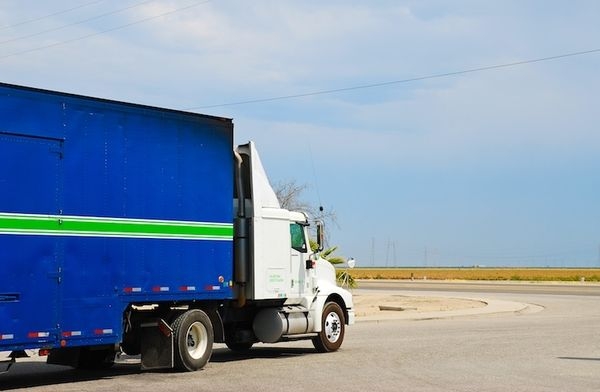
There has been a lot of talk lately about the crisis in the construction industry. General contractors for road and motorway projects are reporting significant losses. Some of them have declared bankruptcy, dragging many subcontractors and their contractors down with them. The problems of this sector are not without impact on other related branches of the economy, including the transport industry.
Been there, done that…
In 2010 and 2011, the transport industry (tractors and semi-trailers) experienced dynamic growth, contributed to by investments related to Euro 2012 and the use of European funds for domestic investments. Compared to 2009, the value of tractor unit purchases increased by over 50 percent in 2010, and by over 70 percent in 2011. As for financing the purchase of semi-trailers, we are talking about increases of 25 and 75 percent.
After the first half of this year, the market for financing the purchase of tractors and semi-trailers accounted for one-third of all money spent on vehicle purchases through leasing companies. Comparable values also applied to the number of vehicles purchased.
In 2010-2011, there was also a noticeable increase in the number of transports of construction equipment, such as crushers, excavators, and wheel loaders. Consequently, some transport companies also began investing in heavy equipment – specialized low-loader semi-trailers and cranes.
Despite the difficulties associated with rising fuel prices, the introduction of the ViaToll road toll system with simultaneously poor national road infrastructure, despite payment bottlenecks associated with long payment terms of contractors, and rising costs of equipment service and insurance – the transport industry did not slow down in the first half of 2012. To maintain profitability, transport companies are looking for effective ways to manage commercial risk, including through careful selection of contractors in Europe, thereby becoming independent of domestic partners. Their main directions of operation are: Germany, Italy, Belgium, Austria, Lithuania, and opening up to new markets, such as Serbia and the East. Transport companies are using receivables insurance and payment monitoring more frequently, and are also making greater use of fuel cards, which allows for deferring payments by making cashless purchases.
Forecasts for the future
The results after the first half of the current year clearly indicate that the transport industry is slowing down. Sales growth for tractors fell to 7 percent, and for semi-trailers to 17 percent. This reflected the demand mainly from the construction industry for transport. Delivering raw materials, machinery, and equipment – needed for the implementation of road or construction-industrial investments – was largely related to the organization of Euro 2012 in Poland.
Currently, it is evident that the number of enterprises operating in the transport industry that are struggling with financial problems is increasing.
The completion of most road investments in Poland and the lack of new investments (with such potential as in 2010 and 2011) may cause another collapse of the transport market in the next dozen or so months. The situation may be further aggravated by the payment bottlenecks created in the market, caused by the construction industry, and many arrangement and liquidation bankruptcies among nationwide and large regional construction companies.
The problems of the construction industry may be reflected in the transport industry. A significant portion of carriers has not yet received all the money for services performed during the implementation of road, industrial, or stadium projects. A significant part of transport companies financed their own fleet through leasing agreements, and – as the most important element of their financial condition today – they cite the solvency of their contractors. These entities will have huge problems with regular payment of leasing installments, and consequently – maintaining their position in the market.