











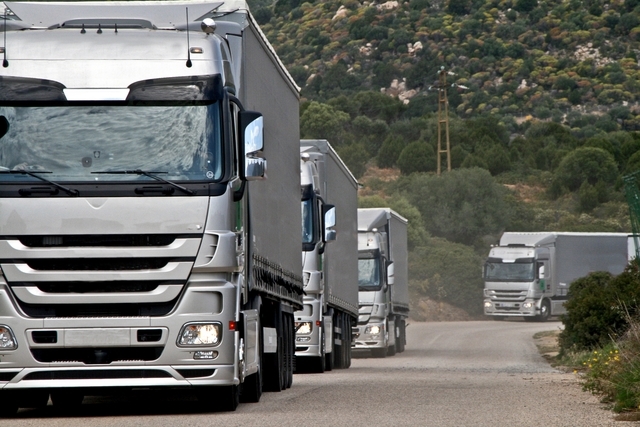
Transport is a branch of the economy that plays a significant role in economic and social development. At the same time, transport has a destructive impact on the surroundings and contributes to the degradation of the natural environment, as well as having a negative impact on human health. Due to the negative impact of transport, it is extremely important to seek ways to meet the transport needs of society while simultaneously limiting and minimizing the negative impact of transport on the environment and human health.
According to the assessment of pollutant emissions from the transport sector published by the European Environment Agency in 2013, the transport sector is responsible for, among other things:
– 57% of total nitrogen oxide (NOx) emissions, of which 33% is attributed to road transport,
– 30% of carbon monoxide (CO), of which 7% is attributed to road transport,
– 18% of non-methane volatile organic compounds (NMVOC), of which 13% is attributed to road transport,
– 22% of PM10 particulate matter and 27% of PM2.5 particulate matter (particulate matter with a fraction of 10 and 2.5 μm respectively), with road transport accounting for 7% and 10% respectively,
– 21% of SO2 emissions, with maritime transport having the largest share of this toxic substance at 18.7%, while road transport accounts for only 0.1%.
In Poland, alongside the fuel and energy sector, the dynamically developing road transport sector has a particularly significant share in air pollution. All other types of transport combined have a clearly smaller share in the emission of these pollutants than road transport. Road transport is one of the main sources of emissions responsible for air pollution, which poses a threat to human life and the natural environment.
Based on data published by the National Centre for Emissions Management (KOBiZE) for 2012, against the background of national emissions of harmful substances, road transport generates 33.19% of nitrogen oxides (NOx), 23.2% of carbon monoxide (CO), 23.1% of non-methane volatile organic compounds (NMVOC), and 9.6% and 16.6% of particulate matter (PM10 and PM2.5 respectively). Sulfur dioxide (SO2) emissions amounted to 0.15%. It should be noted that only in the case of PM10 and PM2.5 particulate matter was a decrease in emissions recorded compared to 2011 by about 1%. In other cases, the annual recorded emission remains at the same level. The decrease in particulate matter emissions in road transport was influenced by lower consumption of liquid fuels.
Analyzing the negative impact of transport on the environment, its magnitude can be expressed in terms of external costs. There are several types of external costs, among which the most significant are costs resulting from:
– air pollution,
– negative impact on climate and landscape,
– time consumption and transport congestion,
– noise,
– land use and accidents.
A number of actions are being taken to limit the negative impact of transport on the natural environment. The article is limited to examining the impact of road transport from the point of view of the external costs of air pollution, which are the result of emissions of harmful substances generated by the combustion of conventional fuels.
The article contains 29,880 characters.
Source: Logistyka Magazine