











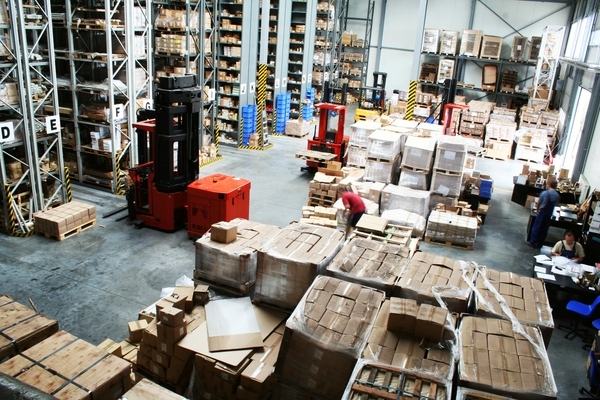
According to the dictionary definition, a distribution centre (DC) is an organizational unit involved in storing goods owned by suppliers and distributing them to recipients according to the specific instructions of the goods’ owner.
Making decisions about choosing the location of a distribution center requires conducting advanced, comprehensive economic analyses based on appropriate mathematical models. The results of such analyses are primarily of interest to potential investors. However, this knowledge is equally useful to local government authorities, who can use it to pursue an active policy of entrepreneurship development in their area. Selecting the right model to assess the profitability of a given distribution center location is usually an individual matter, depending on the nature of the planned venture. When creating a mathematical model of the considered problem, one can apply a standard procedure that includes:
– identifying external and internal factors influencing the functioning of the future distribution center,
– gathering information to estimate the costs of the projected activity and the streams of products flowing through the distribution center,
– analyzing the distribution network and customer service principles,
– developing a quantitative mathematical model allowing for the selection of the best location.
Therefore, knowledge about the expected functioning of the venture is essential for making a rational decision. The methods for solving the resulting mathematical models constitute a separate issue.
The article contains 14,340 characters.
Source: Logistyka Magazine