










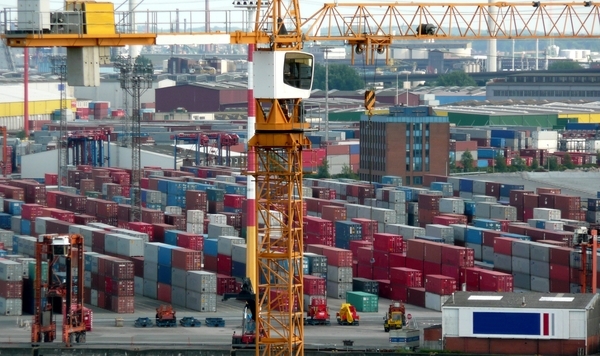
Over 90% of global trade is handled by maritime transport. It is believed that the development of maritime transport, as well as the development of information and communication technologies, are the main factors that have contributed to globalization, the development of individual regions of the world, the growth of production and consumption, and foreign trade.
Today, international distribution is based on the movement of container flows in sea-land supply chains between major global economic centers located in Asia, Europe, and the United States. In the global distribution system, 152 million containers were transported by sea in 2008. Global container handling in seaports is developing at a much faster pace and reached a level of 535 million TEU in 2008. In maritime transport, a container is therefore handled on average 3.5 times before it reaches the final port of discharge. This is a result of the development of international distribution systems and the accompanying extensive and complex logistics networks. Their configuration in the maritime part is based primarily on the hub and spoke concept, i.e., the concentration of container transport on main ocean routes directed to a few central ports (hubs) and on an extensive network of short-sea shipping connections (spokes), on which smaller streams of containers are moved to regional and local ports. This requires an increased number of container handlings, including so-called transhipments, handlings in ports in ocean vessel-yard-vessels employed in feeder services relations. Sea-land container transport processes are subject to coordination and adaptation to the needs of servicing international supply chains. This causes a number of changes in the functioning of seaports. A seaport, traditionally an important point for cargo handling and a place for servicing maritime and land transport means, increasingly fulfills the role of a node in a logistics network and, from this point of view, is subject to logistics management in sea-land supply chains. The optimization of total logistics costs in supply chains contributes to the increasing importance of exogenous factors, independent of the port, that shape their functioning and development. At the same time, actions are being taken in seaports to adapt their functioning to the changing requirements set by supply chain managers. Each port strives to be included in the service of as many supply chains as possible. In doing so, it competes both with neighboring ports in the region and with other participants in the supply chain. As an active participant in supply systems, the seaport diversifies the types of services provided and expands its activities to other links in the transport chain. In parallel, actions are taken aimed at maintaining/increasing the value added generated in the seaport in the form of the development of various types of logistics services. (…)
The article contains 38,681 characters.
Source: Logistyka Magazine 5/2012
Seaport in the supply chain management system – PDF file for download