









Scheduling deliveries of alcoholic products in the EU – problem identification – part 1
Scheduling deliveries of alcoholic products in the EU – problem identification – part 3
The optimization criteria that should be taken into account when planning are:
1. Minimization of inventory levels throughout the supply chain, which consists of the following sub-criteria:
a. Minimization of inventory levels in the recipient’s warehouses. Depending on the product type and turnover rate, this criterion can be expressed in two ways. For products with the highest demand, due to the high percentage share of such products in the total occupied warehouse space, minimizing the occupied warehouse space is important. For products with limited and short shelf life, a better measure than occupied warehouse space seems to be the inventory coverage ratio expressed by the formula [Kisperska-Moroń, Krzyżaniak, 2009]:
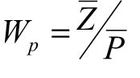
where:
Z – average inventory in the period under review,
p – average forecasted demand in the period covered by the measurement.
The discussed criterion would therefore take the form:
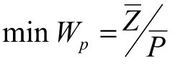
Of course, the proposed indicators are only a significant generalization of inventory management issues. To comprehensively approach the optimization of inventory levels, it would be advisable to specify in detail the storage costs and inventory holding costs. However, these indicators are not only related to the size of the inventory, and therefore cannot be controlled solely by scheduling deliveries.
b. Minimization of inventory levels in the supplier’s warehouses. One of the assumptions made by the author in this case is producing a production batch exactly according to the recipient’s demand. This assumption is also reflected in the constraints, where a minimum order size corresponding to the minimum production batch was imposed (constraint 5). The criterion described in this way significantly simplifies the considerations and allows for managing inventory throughout the supply chain by the recipient, which is consistent with the adopted assumption.
c. Minimization of in-transit inventory levels. Proper scheduling allows for minimizing transport time, as well as the need for storing goods by a transport company or logistics operator, thereby minimizing the size of in-transit inventory. However, proper scheduling in this case is understood only as the selection of the appropriate loading date and delivery date, which in turn can be achieved in a simple way by adding a number of constraints allowing for the most favorable use of transport means (constraints 2. d and 3). Introducing such constraints will allow for scheduling deliveries so that transport can take place without unnecessary downtime, and unloading can occur immediately after the transport is completed.
2. Balancing warehouse load:
a. Balancing the supplier’s warehouse load. Every real logistics system is characterized by certain limitations resulting from real loading, production, etc. capabilities. Usually, sudden, large, and abrupt increases in demand are highly undesirable, causing the system to be overloaded in a certain period of time, only for the system to remain underutilized in the next period. One of the elements preventing such situations is uniform loading scheduling. This is a criterion that takes into account the expectations of the supplier (uniform, and therefore better use of production, loading, etc. capacities) and the transport company (uniform load on the fleet). For the criterion to be quantitative, the difference between the maximum and minimum number of loadings over a specific period of time can be taken as a measure of uniformity.
b. Balancing the recipient’s warehouse load. This is a criterion analogous to the uniform distribution of the number of loadings described above, but important from the recipient’s point of view. It only occurs when the recipient transports goods from different locations, and therefore the transport time is significantly varied. Otherwise, both criteria will be strongly correlated, as any differences in the uniformity of the distribution of loadings and unloadings will result only from time differences in transport on the same route. In some cases, this may mean the need to abandon one of the uniformity criteria to avoid their redundancy [Roy, 1993].
The article comes from the magazine “Logistyka” 6/2011.